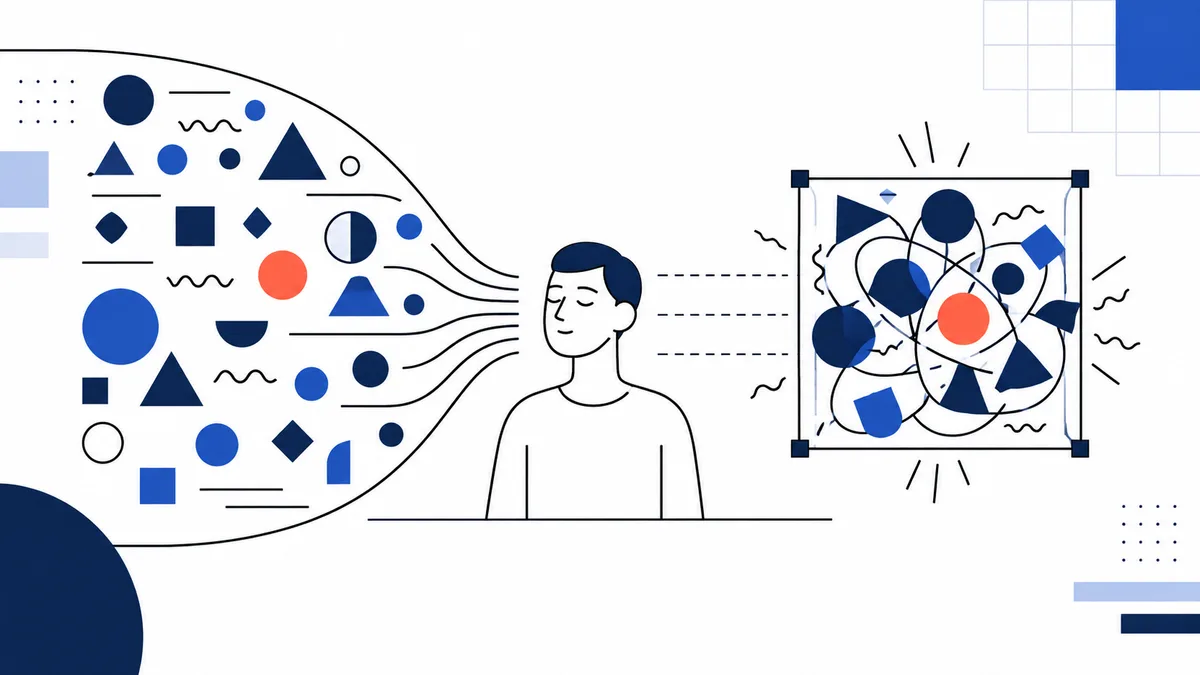
Empathy can help you notice or understand another person’s feelings without determining how you handle your own emotional response. Perspective-taking, emotional concern, personal distress, and observable behavior are different signals. A high empathy result therefore cannot explain a defensive reply by itself. Look at where the exchange shifted, what conditions were present, and which observable response you can try next.
Empathy can identify emotion without steadying your response
Yes. Empathy can help you notice what another person may be feeling while leaving open what happens to your own reaction. Imagine an explicitly illustrative work exchange: a colleague says a delivery arrived late and affected their part of a project. You understand why they are frustrated, yet hear the comment as blame and answer, “I did what I could.” The recognition may be accurate; the reply may still close down the conversation. Those are different points in the same exchange. Emotion regulation means influencing how an emotional response unfolds and what you do with it. It does not require feeling nothing. A person can register disappointment in someone else, become defensive, and still have a choice about whether to explain, ask a question, pause, or return to the issue later. The useful question is where the sequence shifted: Did you miss a cue, feel your own response intensify, act on the first impulse, or leave the interaction unrepaired? Naming that point gives practice a concrete target. The workplace review “I feel your pain”: A critical review of organizational research on empathy describes empathy as involving cognitive, affective, and behavioral dimensions, and notes disagreement about how researchers define and measure it. In plain terms, understanding a colleague’s perspective, feeling concern, and showing a response they experience as helpful are related but not identical. Its review of organizational research is a conceptual synthesis, not evidence that one dimension causes a defensive reply. The chapter “The positive psychology of emotional intelligence” describes an ability model in which perceiving, using, understanding, and managing emotional information are related abilities assessed with tasks. That account clarifies why a broad “high empathy” description does not settle how someone will regulate emotion in a live conversation. One score, especially without knowing what its measure asks, cannot explain the gap by itself. First distinguish what was noticed from what was felt and done; then examine the point of choice and the conditions around it.
Sources: “I feel your pain”: A critical review of organizational research on empathy; The positive psychology of emotional intelligence
Empathy names several different processes
A label such as “high empathy” can hide different experiences. Cognitive empathy is an effort to understand another person’s point of view. Affective empathy concerns an emotional response, such as empathic concern or sharing some of another’s feeling. Behavioral empathy is what someone expresses or does. These processes can meet in one conversation, but noticing a colleague’s disappointment, feeling unsettled, and choosing a helpful reply are distinct steps.
The organizational review “I feel your pain”: A critical review of organizational research on empathy describes empathy as multidimensional, with cognitive, affective, and behavioral dimensions. It also distinguishes a person’s own account from empathy judged by an observer, and notes that workplace research has not settled on one definition or measurement approach. That matters when someone reports being empathic: the label may reflect how accurately they think they read others, how strongly they respond emotionally, or how they believe they behave. Those are related questions, not interchangeable evidence of what happened in a particular exchange.
Affective response needs a finer distinction. Empathic concern is directed toward the other person; personal distress describes discomfort in oneself when confronted with another person’s distress. These terms do not diagnose what any individual feels. They clarify why strong emotion can be mistaken for effective support: feeling another person’s strain may draw attention to them, while one’s own discomfort may create pressure to end the moment quickly. Rushing to reassure, offering an unwanted solution, or becoming defensive are possible responses to consider, not proof of motive.
The 2018 study “Individual differences in emotion regulation moderate the associations between empathy and affective distress” helps show why the broad label is insufficient. In a survey of 844 adults, trait affective empathy was generally associated with greater reported depression, anxiety, and stress; the reported associations varied with emotion-regulation strategies. Cognitive empathy was associated with lower distress on average, with some associations differing among people who reported habitual suppression. The study measured self-reported traits and distress at one point in time. It therefore cannot show that empathy caused distress, or establish what happens during feedback at work.
A separate two-study paper, “Cognitive and Affective Empathy Relate Differentially to Emotion Regulation,” adds a complication. In its first study, cognitive empathy was associated with lower self-reported dysregulation; affective empathy was not related to the overall score, though it related to difficulty with some regulation tasks. In the second study, involving 92 participants completing emotional attention tasks, affective empathy tracked greater interference on one task, while cognitive empathy tracked less on another. These studies suggest empathy components may relate differently to regulation, not a simple rule about who will react badly.
When someone says their empathy is high, ask what that description captures: perspective-taking, concern, personal discomfort, or feedback about behavior. Strong emotion alone does not show someone understood another person or responded helpfully. Separating these processes sharpens the next question: where, between reading another person and choosing one’s action, did the exchange become difficult?
Sources: “I feel your pain”: A critical review of organizational research on empathy; Individual differences in emotion regulation moderate the associations between empathy and affective distress; Cognitive and Affective Empathy Relate Differentially to Emotion Regulation
Why sharing another person's feeling can add load
Empathic concern can keep attention on what another person needs. Sharing that person’s distress may also make the exchange feel urgent: the listener can become upset, want to remove the discomfort quickly, or lose track of what the other person actually asked for. These are possibilities, not inevitable effects. Feeling another person’s emotion does not guarantee a steady response. In “Cognitive and Affective Empathy Relate Differentially to Emotion Regulation,” two studies tested those components with different methods. The first surveyed 137 University of Reading students, average age about 21. Cognitive empathy had a small negative association with reported regulation difficulties; affective empathy had no significant association with the overall difficulty score. In the second study, 92 undergraduates completed emotional Go/NoGo and Stroop tasks, which compare performance around emotional and neutral stimuli. Greater affective empathy was associated with more interference in the Go/NoGo task. Greater cognitive empathy was associated with less interference in the Stroop task. The pattern changed with the task, suggesting different relationships rather than a general rule about who regulates well. Both were small university studies using self-reported empathy; neither studied workplace conversations or established cause. Philip Powell’s 2018 survey, “Individual differences in emotion regulation moderate the associations between empathy and affective distress,” adds a different outcome. Its 844 participants completed survey measures of empathy, regulation strategies, and symptoms of depression, anxiety, and stress. Affective empathy was generally associated with greater distress; habitual reappraisal, or reconsidering an event’s meaning, offset some reported links with depression and anxiety. Cognitive empathy was associated with lower distress on average, though some associations were absent among people who typically suppressed emotional expression. This cross-sectional, self-report study concerns distress symptoms, not observed work behavior, and cannot establish that empathy causes distress or reactive replies. Workplace evidence also resists a simple “more empathy means more strain” conclusion. “Where Is the Take in Give and Take? A Review of Empathy Effects on Workplace Outcomes for Both Givers and Receivers” reviews 234 conceptual and empirical articles. The review describes possible giver-side costs such as emotional demands alongside benefits; most reported findings were beneficial, while detrimental pathways remain less established. The review’s proposed mechanisms do not prove that empathic employees generally struggle to regulate themselves. An urge to fix, apologize repeatedly, or defend oneself may be a clue to inspect, not proof of cause. Ask whether you understood the other person’s position, began carrying their distress as your own, or moved quickly to end your discomfort. Depending on the answer, a useful next step may be a pause, a clear boundary, or one question about what help is wanted. Sometimes the aim is not to feel more for the other person; it is to stay present long enough to respond deliberately.
Sources: Individual differences in emotion regulation moderate the associations between empathy and affective distress; Where Is the Take in Give and Take? A Review of Empathy Effects on Workplace Outcomes for Both Givers and Receivers; Cognitive and Affective Empathy Relate Differentially to Emotion Regulation
Regulation unfolds before, during, and after the reply
Regulation does not begin when a sentence is already leaving your mouth. It can start before a difficult conversation, continue as you notice your reaction, and include what you do after the exchange. In “Toward a Personalized Science of Emotion Regulation,” Doré, Silvers, and Ochsner argue that the effects of a strategy depend on the person, the situation, and the strategy itself. Their review says the field still cannot specify one best strategy for every person in every situation. That is a useful limit for workplace advice: “stay calm” names a desired outcome, but gives no clue where to intervene. Consider an illustrative feedback exchange. Before a one-to-one about a missed handoff, someone can write down the work question they need answered and ask to discuss sensitive feedback privately. That changes the conditions in which the conversation happens. When a colleague says the handoff left them without information, the first impulse may be to explain why the delay was unavoidable. A pause or a clarifying question, such as “Which detail did you need before the deadline?”, creates room to identify the issue before defending intent. Later, a brief repair can acknowledge the practical impact and confirm who will send the missing information next time. These are possible choices, not guaranteed techniques; the useful one depends on what is making this exchange difficult. One way to reconsider the moment is reappraisal: changing the interpretation attached to an event. “They think I am careless” might become “They are describing the missing information they needed.” That second reading may make a task-focused response easier, if it fits what was actually said. Suppression means holding back outward expression, such as keeping irritation out of your voice. It can prevent an immediate sharp reply, but it does not itself resolve the work question or explain what you feel. Neither term labels a universally right move. Reframing a real problem as harmless can obscure it; holding back may be useful briefly while you choose a more deliberate response. The review “Interpersonal Emotion Regulation in the Workplace” by Troth and colleagues helps clarify another distinction: sometimes people influence their own feelings, and sometimes they try to influence another person’s feelings. In the example, noticing the colleague’s frustration is not the same task as managing one’s own defensiveness. Nor does taking responsibility for a response mean that one employee must make the other person feel better. Keeping track of whose emotion is being addressed helps prevent empathy from turning into an obligation to absorb or fix everything. A practical experiment is to locate the earliest workable point in the sequence. If the setting reliably raises the stakes, request a private conversation or prepare the task question in advance. If the sharp reply comes after a particular interpretation, check what the other person actually asked for before answering. If the response has already landed badly, return to the concrete impact and repair it. Someone who only sets a goal to “stay calm” is aiming at the last visible moment. A smaller, earlier choice gives them something observable to try and review after the next exchange.
Sources: Toward a Personalized Science of Emotion Regulation; Interpersonal Emotion Regulation in the Workplace: A Conceptual and Operational Review and Future Research Agenda
One difficult exchange can contain three different signals
A useful read separates what the other person may be feeling, what you feel in response, and what you do next. Agreement with the first does not guarantee skill in the second or third. “I feel your pain”: A critical review of organizational research on empathy distinguishes cognitive, affective, and behavioral dimensions, while noting that workplace research has not settled on one definition or measurement approach.
Consider an illustrative project handoff. A colleague says the draft arrived too late for them to check a key decision before a client meeting. You infer that the delay left them anxious and exposed. That may be a fair reading. Hearing the criticism may also bring up your own embarrassment or fear that your effort is being dismissed. These are separate signals: what you understand about the colleague, what is happening in you, and what your response communicates.
Suppose you answer, “I sent it when I said I would; you had the latest version.” The sentence might be accurate and still land as a refusal to engage with the problem. It defends the timeline without showing whether you understood the colleague’s concern. That gap does not establish that you lack empathy. You may read the other person’s frustration accurately while reacting to a threat to your own competence or standing. The exchange alone cannot tell you which feeling was active; this example is an illustration, not a research finding.
A useful review asks what each signal contributed. What did you notice in the other person’s words or situation? What did you feel as you heard them? What did you do with that feeling, and what effect could the other person observe? These questions separate intention from impact. You may have meant to clarify the record; the colleague may have heard a defense that left the missed decision unresolved.
A repair might acknowledge the impact and return to the work: “I can see the timing left you without a chance to check that decision. I got defensive about when I sent it. Which part needs to be confirmed before the meeting?” It names an observable consequence, owns the defensive reply, and asks for the missing work detail. If the colleague identifies a different concern, listen before insisting your first interpretation was right.
Troth and colleagues’ review, Interpersonal Emotion Regulation in the Workplace: A Conceptual and Operational Review and Future Research Agenda, distinguishes processes aimed at influencing one’s own emotion from those involving another person’s emotion. Here, you can regulate your response and ask what the handoff needs; the colleague remains the authority on what they feel.
Afterward, assess behavior rather than issuing yourself a global verdict. Did you recognize the cue? What happened in your response? What did you say or do? Did the conversation return to the decision that needed attention? If unclear, ask for feedback about the specific reply or handoff, not whether you are “empathetic.” One interaction is worth examining, but cannot establish a fixed capacity or explain every factor shaping that particular exchange.
Sources: “I feel your pain”: A critical review of organizational research on empathy; Interpersonal Emotion Regulation in the Workplace: A Conceptual and Operational Review and Future Research Agenda
What can an EQ result actually tell you?
An EQ result can tell you only what its questions and scoring method were designed to capture. A task-based ability measure, a self-report about typical behavior, and another person's observations answer different questions. They may all use the label “emotional intelligence,” but that label does not make their results interchangeable. If you describe yourself as highly empathic yet react defensively to criticism, one result cannot explain the gap.
The chapter “The positive psychology of emotional intelligence” presents an ability model with four related capacities: perceiving emotion, using it to support thought, understanding emotion, and managing emotion in oneself and others. Its authors argue that this model is best assessed through tasks rather than self-judgment scales. A task asks what someone can do with emotional information in a defined problem; a self-report asks what the person believes they usually do. That distinction matters here. Reporting that you often notice others' feelings is evidence about your self-perception. It does not show how steadily you can respond while your own frustration is rising. Nor does a task result reveal what happened in a particular meeting. The chapter summarizes the authors' model; it is not a universal definition shared by every EQ instrument.
For a work interaction, a colleague's observation adds another view: what you said or did, and how it landed with them. “I feel your pain”: A critical review of organizational research on empathy distinguishes cognitive, affective, and behavioral dimensions, as well as observer-rated and judged empathy. The review also finds that researchers have not settled on one definition or measurement approach. That makes an outside report useful as specific feedback, not an objective final score. Someone might accurately understand a colleague's disappointment, feel concern, and still interrupt or rush to solve the problem. A self-description, a task result, and that observed response concern different parts of the episode. None alone identifies why the reply went that way; workload, the stakes of the conversation, or the person's own emotional response may matter.
The current Emotional Skills Profile at EQ Test is a private, 32-item educational reflection profile. Its recent-behavior summaries and judgments about authored scenarios are kept separate. It has no validated population norms and is not a standardized ability instrument. Read its output as a prompt to inspect a recent exchange and select a behavior to practice, rather than proof that empathy is high while regulation is inherently low. For example, recall one moment when you noticed someone else's frustration. What did you do next: ask what they needed, defend your intent, or move quickly to fix the issue? The answer gives you something concrete to examine, but one recollection still cannot settle the broader pattern. The profile can help organize that reflection; it cannot verify how another person experienced the exchange or explain every condition around it. If you want a structured prompt for examining your own emotional habits and scenario judgments, explore the Emotional Skills Profile at [/assessment](/assessment).
Sources: The positive psychology of emotional intelligence; “I feel your pain”: A critical review of organizational research on empathy
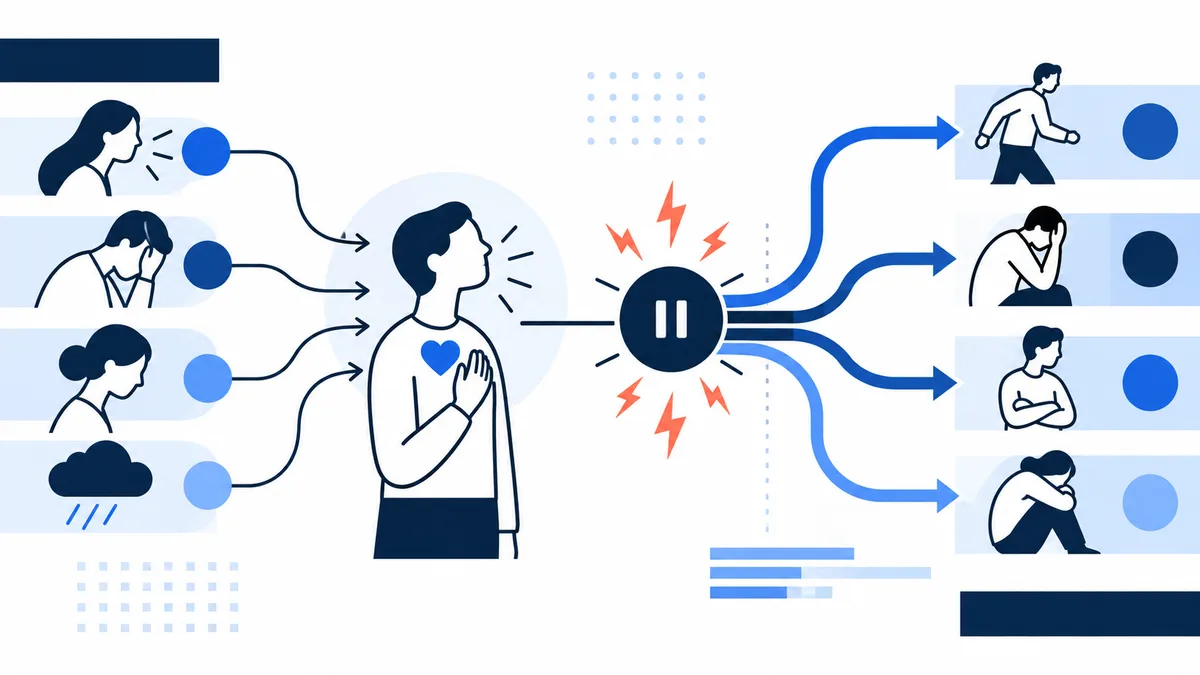
The work setting changes what the episode demands
A repeated reaction in one work condition may reflect its demands as well as an individual habit. Public criticism, unclear ownership, time pressure, or unequal authority can change what a person has to manage. A reaction mostly during public correction raises a different question from one that follows the person across private conversations and ordinary feedback. Neither pattern identifies the cause by itself.
Workplace emotion regulation can mean influencing your own response, or trying to influence someone else’s. “Interpersonal Emotion Regulation in the Workplace” describes research treating these as distinct or overlapping processes. The distinction matters in practice: listening carefully may help you understand a colleague’s frustration, but choosing whether to answer, ask for time, or set a boundary concerns your own response. Trying to calm the colleague is a separate action. Confusing the two can make it seem that you must absorb and resolve someone else’s feelings before addressing the work.
Imagine feedback on a delayed handoff arriving in front of colleagues while responsibility for the next step is unclear. The recipient may hear disappointment accurately and still feel exposed or uncertain about blame. A rushed defense could concern the feedback, its public setting, or the missing decision about ownership. This is an illustration, not a claim about frequency. It shows why the same person might respond differently in a private discussion with a clear task and time to ask a question.
“Toward a Personalized Science of Emotion Regulation” argues that strategy effectiveness depends on the person, situation, and strategy, rather than following a universal recipe. This is a useful frame, not a validated decision algorithm: ask what recurs in the setting, what response you want to change, and what strategy fits. Requesting private feedback might reduce public pressure; clarifying who owns the next handoff might remove ambiguity. Either move addresses a condition while leaving room to practice choosing a reply.
“Where Is the Take in Give and Take?” synthesizes workplace studies reporting both beneficial and detrimental effects for empathy-givers. Only 35 of 188 empirical articles examined a boundary condition; contextual factors appeared in 22.86% of those 35. The review describes empathy as potentially helping people understand others and their work, while other studies link empathic demands with depletion or role conflict. These mixed findings cannot establish that a particular workplace caused a reaction. They caution against assuming either personal weakness or a harmful environment from one episode.
Compare episodes before deciding what to change. Does difficulty cluster around a handoff, public feedback channel, deadline, or unclear role? A process change may belong beside individual practice. If the reaction appears across settings, seek specific feedback about the observable behavior and choose one response to practice. These are hypotheses to check. Seeing when the difficulty repeats helps decide whether the next step is personal practice, a clearer work process, or both.
Sources: Interpersonal Emotion Regulation in the Workplace: A Conceptual and Operational Review and Future Research Agenda; Toward a Personalized Science of Emotion Regulation; Where Is the Take in Give and Take? A Review of Empathy Effects on Workplace Outcomes for Both Givers and Receivers
How can you test a different response next time?
A useful experiment starts before the moment when the familiar reply feels inevitable. After a difficult exchange, write down six brief observations: the cue you noticed, the emotion you felt, the meaning you assigned to the cue, your first impulse, what you did, and what followed. “The project lead said the handoff was incomplete; I felt embarrassed; I assumed the whole team thought I was careless; I wanted to list everything I had finished; I interrupted; we left without agreeing who would update the file” is more useful than “I lack regulation.” The record is illustrative. The sequence helps identify a point you can test. If the cue was missed, direct attention toward the words or request before preparing a defense. If the interpretation jumped from one correction to a judgment about your competence, try checking what the speaker is asking you to change. If urgency took over, practice waiting until the other person finishes, or ask for a short pause and give a clear time when you will return. If the problem is that feedback happens in front of others, request a private conversation. Each experiment should name an action a colleague could notice: ask one clarifying question, leave space before replying, state a boundary, or return to repair an exchange. Choose one action for the next comparable situation so you can see what helped. A strategy is a candidate to test, not a technique guaranteed to work. “Emotion Regulation Choice” by Doré, Silvers, and Ochsner frames regulation in relation to the person, situation, and strategy, and describes selecting an effective strategy for a particular person and circumstance as an open research challenge. Adapt the experiment to the trigger instead of treating one move as universally calming. Workplace regulation also includes interpersonal processes, as Troth and colleagues explain in “Emotion Regulation at Work.” This distinction means you can manage your own response and coordinate a conversation, while responsibility for another person’s feelings does not become yours by default. After trying the action, note what happened and ask for feedback about the behavior, not a verdict on your emotional intelligence. For example: “Did I let you finish before I responded?” or “Was the next step clear after we talked?” One exchange cannot show that a method works generally; task demands may also shape the outcome. If the same trigger recurs, include that pattern in the next experiment: clarify ownership earlier, change how sensitive feedback is delivered, or make room for a pause. A private skills profile may help organize reflection on habits and scenarios; it cannot choose the right response or guarantee a different result. The test is whether the next observable action gives you better information about where the gap occurs.
Sources: Toward a Personalized Science of Emotion Regulation; Interpersonal Emotion Regulation in the Workplace: A Conceptual and Operational Review and Future Research Agenda
Practice is plausible; test the behavior that changes
A 2024 workplace meta-analysis offers a reason to practice emotional skills, with a clear limit on what its averages can promise. In “Training emotional competencies at the workplace,” the researchers analyzed pre- and post-training results from 50 studies and controlled comparisons from 27 trials. They reported standardized mean differences of 0.44 before versus after training and 0.46 against control groups, with average effects still present more than three months later. These are pooled changes in measured emotional competencies across varied programs, not estimates of how much one person’s response to a colleague will improve. The authors also reported high variation between studies and low methodological quality. The authors call for more high-quality studies, including randomized controlled trials. The evidence supports the possibility of development; it cannot identify a guaranteed technique for this particular empathy-regulation gap.
The programs covered emotional intelligence, empathy, and emotion regulation, and included different professions. The review found no significant differences in effectiveness by training focus or profession, but that result does not show the approaches are interchangeable in every situation. Nor can a pooled average isolate whether a specific skill, such as pausing before replying, asking a clarifying question, or reconsidering an interpretation, produced a particular change. It gives little basis for promising that a course or an EQ result will repair a strained relationship. A more useful reading is modest: skills can be practiced, while the fit between a practice and a recurring exchange still needs to be checked. Workload, role ambiguity, or the way feedback is delivered may remain part of the problem.
For a next attempt, choose one observable action tied to the point where the exchange tends to turn. If the first impulse is to defend intent, try naming the impact you heard and asking what needs to change in the work. If emotion rises too quickly to listen, request a brief pause and say when you will return. Afterward, note whether you made that move and what happened next; ask for feedback on that behavior rather than a global judgment of your emotional intelligence. One conversation is only one observation, so look for a pattern across similar situations before concluding that the practice helped. If the same trigger keeps appearing in an unclear handoff or public feedback setting, include a change to that condition in the experiment. A personal skill and a work-process adjustment can be tested together, without treating either as the whole explanation. The pooled findings do not show that one skill caused those gains.
Sources: Training emotional competencies at the workplace: A systematic review and meta-analysis
Use the next exchange to locate the gap
When empathy seems high and regulation feels difficult, look for the point where the exchange turns: Did you miss the cue, get caught in your response, speak too soon, or leave without repairing it? Recognition can be accurate even when the reply lands badly. The next step depends on which part needs attention, and whether the same work condition keeps setting it up. After one difficult conversation, note the cue, your first impulse, what you did, and what followed. Pick one earlier response to try next time: ask a clarifying question before defending your intent, pause and agree when you will return, or name the impact before proposing a fix. Then check the observable behavior and ask for specific feedback. A single changed exchange is a reason to keep observing, not proof that one technique caused the result. If the reaction repeatedly follows the same handoff, public correction, or unclear responsibility, include that condition in the follow-up. The workplace review “Where Is the Take in Give and Take?” describes empathy's costs and benefits as context-dependent and calls for more evidence. An individual practice may help; the process may also need attention. The private Emotional Skills Profile can support reflection on habits and scenarios, but it cannot identify the cause. Explore it at /assessment if a structured prompt would help you choose what to examine next.
Sources: Training emotional competencies at the workplace: A systematic review and meta-analysis; Where Is the Take in Give and Take? A Review of Empathy Effects on Workplace Outcomes for Both Givers and Receivers
Questions readers ask
Can someone be empathetic and still react defensively?
Yes. Noticing or understanding another person’s feelings does not determine how someone handles their own emotional response. Look at the cue, the response, and the conditions around that exchange.
Does a high empathy result mean someone has strong emotional regulation?
Not by itself. The result depends on what the measure asks, and a score cannot explain a specific workplace exchange. A task, self-report, and another person’s observation each support different inferences.
Sources
- “I feel your pain”: A critical review of organizational research on empathy
Supports the distinction among cognitive, affective, and behavioral empathy, and the measurement cautions in workplace research.
- Individual differences in emotion regulation moderate the associations between empathy and affective distress
Reports survey associations between empathy, regulation strategies, and distress among 844 adults.
- Cognitive and Affective Empathy Relate Differentially to Emotion Regulation
Reports two small studies whose empathy and regulation associations varied across self-report and task measures.
- Where Is the Take in Give and Take? A Review of Empathy Effects on Workplace Outcomes for Both Givers and Receivers
Reviews mixed workplace findings and proposed giver-side costs and benefits, with context-dependent limitations.
- Interpersonal Emotion Regulation in the Workplace: A Conceptual and Operational Review and Future Research Agenda
Distinguishes workplace processes that influence one's own emotions from those involving other people's emotions.
- The positive psychology of emotional intelligence
The accessible chapter abstract describes an ability model of emotional intelligence assessed with tasks rather than self-judgment scales.
- Training emotional competencies at the workplace: A systematic review and meta-analysis
Reports workplace training effect estimates while noting high heterogeneity and low methodological quality.
- Toward a Personalized Science of Emotion Regulation
Frames regulation strategy effects in relation to the person, situation, and strategy, and describes the best-fit question as unresolved.
Apply it to the real situation
Turn one difficult exchange into a useful practice target
From this guide: Identify whether the gap appeared in noticing, handling your own response, choosing words, or repairing the exchange.
A specific exchange can show where to look, but it may not reveal whether a recurring habit or work condition is shaping the response. The private 32-item Emotional Skills Profile offers a structured way to reflect on recent emotional habits and judgments about scenarios. Use it to choose a behavior to examine, then check that behavior in a real conversation.