
If you want to reflect on how you usually handle feedback, disagreement, emotion and repair at work, choose a clearly described self-report emotional-skills or trait-EI profile. It asks you to characterize typical tendencies. An ability test instead scores responses to emotion problems under assessment conditions. Workplace scenarios can make those problems relevant to work, but they do not record your usual conduct in meetings. For a fuller picture of how a behavior affects colleagues, compare private reflection with a recent example and, when appropriate, specific voluntary feedback.
Choose the test that matches the evidence you want
Suppose the question is not whether you can identify a plausible response to an emotion problem, but whether you tend to notice irritation before it shapes a reply, hear criticism without shutting down, or return to a tense exchange and repair it. A self-report emotional-skills or trait emotional-intelligence profile is the closer starting point. It asks how you see your usual tendencies. An ability test is a better fit for a different question: how well you solve emotion-related problems under test conditions.
That distinction is the choice. Ability here means a capacity to process emotion information, sampled by tasks with responses evaluated under a scoring method. A self-report describes a person's perception of their typical behavior, such as how often or how effectively they believe they regulate emotion. Neither format is a direct film of everyday work. But the self-report has the right referent when your first goal is to inspect what you usually do; a performance task has the right referent when you want to demonstrate emotion reasoning.
The conceptual article “Emotional Intelligence: New Ability or Eclectic Traits?” defines ability EI as processing emotion-relevant information and distinguishes it from broad mixes of self-esteem, optimism, and other self-perceptions. A second review, “Emotional Intelligence: Toward a Consensus of Models and Measures,” describes the ongoing divide between trait accounts and information-processing or knowledge accounts. Both support a practical point: an EQ label alone does not tell you what kind of evidence a report contains.
Before you compare brands, ask what an item requires you to do. Do you describe your recent or typical conduct? Choose an answer to a scored emotional problem? Rate another person's visible behavior? The response task sets the boundary on what you can infer from the result.
There is a practical reason to make this distinction before spending time or money. A test designed to sample maximum performance may be interesting even if it does not mirror your ordinary workday; a self-report may be helpful even if it cannot independently verify your account. Neither deserves a blanket endorsement simply because it sounds scientific or familiar. Ask what personal uncertainty you want to reduce. If your concern is a repeated habit, a reflective measure and a close look at recent episodes fit better than a puzzle score. If you are curious about emotion reasoning as a capacity, a performance test speaks more directly to that interest.
Sources: Emotional Intelligence: New Ability or Eclectic Traits?; Emotional Intelligence: Toward a Consensus of Models and Measures
What kind of evidence does each EQ test give you?
A self-report questionnaire asks you to judge yourself. It can make recurring habits available for reflection: perhaps you usually pause before answering sharp feedback, or you find it difficult to name what you feel while a deadline is slipping. Its evidence is your account of your typical conduct. It does not independently establish what happened in a particular meeting, nor does it show your best possible performance when you are rested and focused.
A trait-oriented measure uses this self-report route to represent relatively typical emotional dispositions or self-perceptions. The term trait can sound fixed, but it need not imply permanence. It describes a pattern that may be more usual in some conditions than others. A carefully framed result can prompt questions about when a tendency appears, what helps, and what behavior would be useful to practice. The quality of that reflection depends partly on whether you understand the question, recall relevant situations, and answer candidly.
Ability-based measures ask you to work on emotion problems. Some use questions about recognizing expressions, understanding how emotions change, or selecting a strategy. Scoring can compare responses against a key derived from theory, experts, consensus, or a specified combination; those approaches are not interchangeable. A score describes performance on the instrument's tasks. It should not be translated automatically into “I always manage conflict well” or “I never notice a colleague's frustration.”
A workplace label can refer to either kind. The publisher of the Multidimensional Emotional Intelligence Assessment–Workplace–Revised describes it as a 78-item, 11-dimension, personality-based self-report designed for work settings. That is a provider's account of its own instrument, not independent confirmation of its claims about validity or norming. The Geneva Emotional Competence Test, by contrast, is described by the University of Geneva's Swiss Center for Affective Sciences as a 110-item performance test. Its work scenarios include emotion understanding and regulation tasks, while emotion recognition uses video clips. Both are workplace-related; their response formats and claims differ.
The four-branch ability model in the conceptual literature distinguishes perceiving emotion, using emotion to support thought, understanding emotion, and managing emotion. A self-report may ask about perceived tendencies in overlapping areas. Mixed instruments can combine self-perceptions, emotion-related beliefs, and broader competencies. The categories are useful for choosing a method, but not every product fits one box neatly. The two reviews describe a persistent debate over whether EI should name a narrower information-processing ability or a broader collection of traits and knowledge.
So start with the report, not the category label. If it says “you are good at managing emotion,” check whether that conclusion comes from your own rating, a scored scenario response, ratings from other people, or a combination. Then decide whether that is the kind of evidence you were looking for.
Sources: Emotional Intelligence: New Ability or Eclectic Traits?; Emotional Intelligence: Toward a Consensus of Models and Measures; Multidimensional Emotional Intelligence Assessment – Workplace – Revised
Does a work scenario test tell you how you usually behave at work?
No. A work scenario can make a test's content relevant to a job while leaving its task as a demonstration of emotional reasoning. It presents a situation and asks how you would interpret it or which response is best. That is different from documenting what you actually do across ordinary interactions, with real stakes, time pressure, incomplete information, and relationships that continue after the meeting.
The Geneva Emotional Competence Test shows this distinction plainly. Its developers describe it as a performance-based assessment designed specifically for workplace situations. The task includes video-based emotion recognition and situational-judgment items for other competencies. The university page summarizes five studies involving 888 people. It reports that the subtests showed high measurement precision by item-response analysis, correlated in expected ways with other measures, and predicted performance in computerized assessment-center tasks among professionals; it also reports incremental explanation of student academic performance beyond another ability EI test. Those are instrument-specific findings, not evidence that a score records someone’s ordinary work behavior or predicts a particular person’s future conduct.
The difference matters when a report turns a scenario response into a personal narrative. A high score may tell you that you selected answers that fit the scoring approach on those items. A low result may indicate that particular emotion problems were difficult under the assessment's conditions. To decide whether the response resembles your conduct, look for a real recent example. Did you notice the emotion? What did you say or do? What happened next? The test can prompt that examination; the vignette cannot stand in for it.
This distinction also changes how “workplace validity” should be read. It may mean the items were written around situations people encounter at work, or it may refer to evidence that scores relate to a specified work criterion in a studied sample. Those are different claims. The GECo description reports both workplace-specific item content and findings against computer-based assessment-center performance, but neither claim turns the measure into a diary of conduct. When evaluating another instrument, look for the exact meaning attached to workplace relevance instead of inferring it from the product name.
Sources: The Geneva Emotional Competence Test (GECo): An Ability Measure of Workplace Emotional Intelligence
Why can two credible EQ tests disagree?
Because they may ask different questions while using the same broad EQ language. Imagine a person who rates themselves as usually calm in disagreement, but misses the most constructive option in a hypothetical conflict item. There is no contradiction that needs to be solved by choosing which score is “the real one.” One response concerns the person's self-description of typical behavior; the other concerns performance on a particular task. Each result should remain attached to its method.
Disagreement can also arise within a method. People may interpret an item differently, recall different situations, or answer from an unusually stressful period. In a performance test, unfamiliar wording, task demands, or the scoring key can affect a response. These are possible sources of variation, not a diagnosis of why any one pair of scores differs. To investigate a real discrepancy, first compare the item framing and the dimensions reported. Ask whether both results refer to the same behavior, time frame, and setting.
The review of professional instruments identified distinct performance, self-report, and mixed approaches rather than one common format. Roberts and colleagues' review of EI models similarly describes a divide between character-trait accounts and information-processing or knowledge accounts. Its authors favor a narrower ability definition. That is a scholarly position in a continuing measurement debate, not a rule that makes a trait-oriented reflection instrument useless for its different purpose. A result's usefulness depends on the question it can answer, not on whether it wins a contest for the one true definition of EQ.
When methods diverge, do not average them into a single personal score or use the highest number as reassurance. Keep the result in its lane. A self-report can raise a question about a habit to observe; a scenario test can identify a task type worth examining; another person's account can show how an action landed with them. If two reports use the same label but describe different evidence, the discrepancy is a reason to read their technical descriptions more closely.
A report can also use the word behavior loosely. A self-report statement about what someone usually does is a behavior-related self-description, but it is still reported by that person. A scenario score is an observed response to a constructed task, but the behavior occurred inside the assessment. A colleague rating refers to conduct seen in an actual relationship, but only the parts that person had an opportunity to witness. Naming the source of each observation makes a comparison clearer than asking which test is simply more accurate.
Sources: Emotional Intelligence: New Ability or Eclectic Traits?; Emotional Intelligence: Toward a Consensus of Models and Measures
What does workplace evidence allow you to conclude?
Workplace research gives reasons to study emotional intelligence, but it does not turn a single person's EQ score into a dependable prediction of their collaboration or job performance. The literature produces positive associations in some analyses and much smaller adjusted links in others. That pattern is a reason to inspect which EI model and outcome a study actually measured, rather than treating “EQ at work” as one settled result.
In a 2015 meta-analysis of mixed EI measures, the authors estimated a correlation of ρ = .29 between mixed EI and supervisor-rated job performance. The content of those measures overlapped substantially with ability EI, self-efficacy, self-rated performance, personality traits, and general mental ability; together, the listed constructs had a multiple correlation of .79 with mixed EI. After the authors controlled for those covariates, the mixed-EI/job-performance relationship was β = −.02. This analysis concerns mixed measures and supervisor ratings. It does not establish that every self-report has no value for reflection or that emotional skills never matter at work.
A 2022 psychometric meta-analysis reached a broader positive summary. It separated ability, self-report, and mixed EI and reported positive relationships between all three streams and organizational commitment, citizenship behavior, job satisfaction, and job performance, with negative relationships to job stress. The PubMed abstract does not provide pooled effect sizes or detailed heterogeneity, so the size and consistency of those links cannot be judged from the abstract alone. Its design also addresses associations across selected studies, not whether a test improves behavior or predicts an individual's result.
These findings need not cancel each other out. The meta-analyses differed in the questions, samples, measures, outcomes, and statistical adjustments they combined. One tested whether broad mixed-EI scores contributed beyond overlapping constructs to supervisor-rated performance; the other summarized relationships across three EI streams and several employee outcomes. An association across studies does not tell an individual which test to buy, nor does it show that raising a score would change a work outcome.
For a personal development choice, outcome evidence is context, not the selection rule. Prefer a test whose response method matches the evidence you seek and whose technical documentation supports the interpretation being offered. If a provider advertises workplace relevance, look for evidence about that named instrument and version, the sample and criterion used, and whether the result is a self-description, task performance, or observer rating. A broad claim that emotional intelligence is associated with employee outcomes cannot validate every product that uses the term.
There is another limit to carrying group evidence into an individual decision: studies aggregate across people and contexts. Even when an average association is reliable, it does not sort every person correctly or explain why one colleague reacted sharply in a particular conversation. The research can establish that a type of measure has been studied against a workplace outcome; it cannot substitute for examining whether the outcome, sample, and instrument match the question at hand.
Sources: Why Does Self-Reported Emotional Intelligence Predict Job Performance? A Meta-Analytic Investigation of Mixed EI; A Meta-Analysis of the Relationships Between Emotional Intelligence and Employee Outcomes
When does feedback add more than another score?
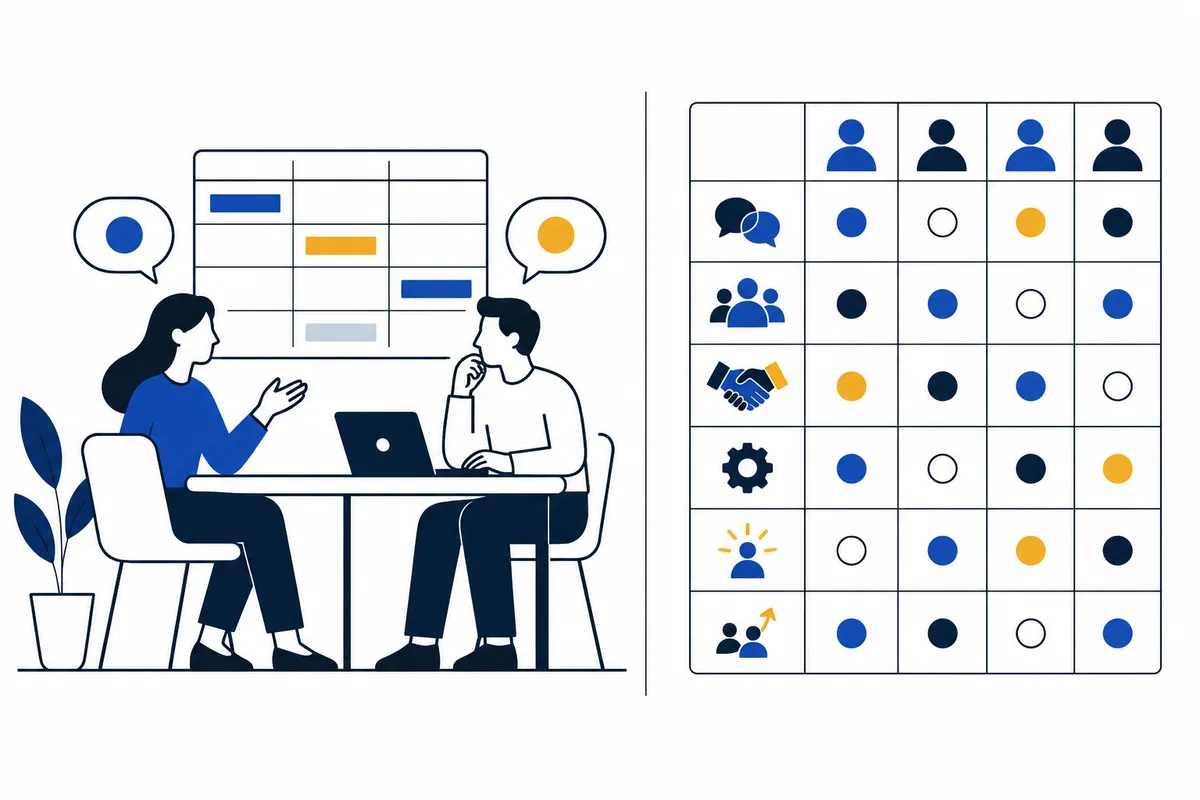
If your question is how your behavior lands with colleagues, carefully requested feedback supplies a different kind of evidence. Multi-rater or 360-degree feedback gathers ratings from a person and people around them, often in a development setting. It can bring an observed impact into view that self-report cannot provide. But ratings remain people's perceptions, shaped by what they had a chance to see and by their relationship with the person being rated.
A 2005 research report on a workplace 360 emotional-intelligence measure describes studies in workplace samples that examined consistency among rater forms and compared self-ratings with ratings by others. The paper presents the tool for development, particularly leadership development. Its abstract does not make raters objective ground truth, nor does one measure establish that formal 360 feedback suits every workplace or relationship. The important distinction is that other people can report what they observe, not that they can see a person's inner state without error.
For an individual reflection, begin with one behavior and one recent context. “How did I handle emotions?” is too broad to elicit useful evidence. “When I disagreed with the project change last week, did I explain the risk without dismissing the proposal?” gives a colleague something observable to answer. Ask for a specific example and what effect it had. Consider whether that person was present, what the role required, and whether the exchange was unusual. If accounts differ, ask what each observer saw rather than deciding that one must be mistaken.
A formal 360 process is not required for every question. A voluntary conversation about a specific exchange may be enough to check one self-reflection. If you cannot seek feedback safely or freely, use your own account and concrete records of the interaction as limited evidence. The goal is better understanding of a behavior, not a consensus score that ranks your emotional worth.
Feedback also works best when it asks about behavior rather than a global trait. “Am I empathetic?” invites a general judgment. “When I interrupted during the handoff, what did that make harder?” is anchored to an event. A specific account can still be incomplete, but it gives you something to verify and a possible next action. If more than one observer has seen the same kind of exchange, their examples can show whether the impact recurs across settings or belongs to one relationship.
Sources: Multi-Rater or 360-degree Emotional Intelligence Assessment
A development profile should lead to a behavior you can notice
A self-report profile is most useful when it turns a broad description into a small, observable question. If a result points toward difficulty receiving feedback, choose a recent exchange and separate what occurred from the report's interpretation. What words did the other person use? What did you notice in yourself? Did you ask a clarifying question, defend the first draft, or return to the conversation later? Those details give the tendency a setting and a consequence.
Then choose one action to notice next time. You might pause long enough to restate the feedback before responding, name the point you disagree with, or schedule a follow-up after the initial tension has passed. These are examples of practice choices, not promised outcomes of any score. A profile can help direct attention; experience and reflection tell you whether an action fits the situation.
EQ Test's Emotional Skills Profile is a private 32-item educational reflection product. Its recent-behavior summaries are kept separate from judgments on authored scenarios. It has no validated norms or established ability-test validity, so it should be read as a structured prompt for self-reflection, not as a standardized ability score. The product page is the destination for people who want to explore the profile. Its feature description does not supply independent evidence about measurement quality or workplace outcomes.
That is a proportionate use of a self-report: use it to name a behavior you want to examine, then compare its prompt with an actual event and decide what you want to try or observe. It does not make sense as a hiring score, a ranking of people, a diagnosis, or a guarantee that a relationship or work result will improve.
What should you choose for a useful next step?
Choose a self-report emotional-skills profile if you want a private starting picture of how you see your recurring work habits. Choose a performance measure if you want to examine emotional problem-solving under test conditions. Seek specific feedback if the missing piece is how another person experienced an observable behavior. These methods answer related but distinct questions.
Start by naming one work behavior, such as responding to criticism, setting a boundary, or repairing a disagreement. Check that the assessment's items ask about that kind of evidence. If you want a structured private reflection, explore the [Emotional Skills Profile](/assessment). Take one prompt from the result into a recent example, and decide what you want to notice in the next relevant conversation. Let that observation, rather than a ranking, guide the next step.
Keep that choice low-stakes and tied to a behavior you can actually revisit.
Questions readers ask
Is a workplace EQ scenario test a measure of everyday behavior?
Not by itself. It measures responses to standardized emotion-related tasks or scenarios. Workplace content can make a task relevant to work, but the result is not a direct record of how someone behaves in actual meetings.
Should I use a self-report EQ test or ask coworkers for feedback?
They provide different evidence. A self-report captures your view of typical tendencies; coworkers can describe behavior they observed in particular situations. For development, start with the question you want to answer and compare one relevant self-reflection with a concrete example or voluntary feedback when appropriate.
Sources
- Emotional Intelligence: New Ability or Eclectic Traits?
The abstract defines ability EI as processing emotion-relevant information and contrasts it with broad mixtures of positive traits.
- Emotional Intelligence: Toward a Consensus of Models and Measures
The review describes disagreement between trait and information-processing models and evaluates both measurement traditions.
- The Geneva Emotional Competence Test (GECo): An Ability Measure of Workplace Emotional Intelligence
The university research page describes GECo's workplace scenarios, performance-based format, four competencies, and results from five studies totaling 888 participants.
- Why Does Self-Reported Emotional Intelligence Predict Job Performance? A Meta-Analytic Investigation of Mixed EI
The meta-analysis reports mixed-EI overlap with other constructs, a supervisor-performance correlation of .29, and an adjusted beta of -.02.
- A Meta-Analysis of the Relationships Between Emotional Intelligence and Employee Outcomes
This meta-analysis reports positive associations across ability, self-report, and mixed EI with several employee outcomes, without causal individual prediction.
- Multi-Rater or 360-degree Emotional Intelligence Assessment
The research report describes a development-oriented workplace 360 instrument and studies comparing self- and other-ratings in workplace samples.
- Multidimensional Emotional Intelligence Assessment – Workplace – Revised
The publisher describes MEIA-W-R as a 78-item personality-based self-report intended to assess emotional intelligence in work settings.
Apply it to the real situation
Turn an emotional habit into one behavior to observe
From this guide: If you want a private starting point for reflecting on how you handle feedback, disagreement, regulation, or repair, choose a profile that prompts you to examine your own recent behavior.
The Emotional Skills Profile offers a private 32-item reflection on emotional skills, with recent-behavior summaries kept separate from authored-scenario judgments. Use it to identify a question you want to examine, then compare that prompt with a real work example and decide what you want to notice next time.