
Meta-analyses report positive average associations between some emotional-intelligence measures and job performance. Their meaning depends on what the measure captures, how performance is rated, which related qualities are controlled, and the work context. These findings describe patterns across studies; they do not predict one person’s performance or show that raising an EQ score causes better work.
A positive average is not a personal forecast
Meta-analyses find a positive average relationship between emotional intelligence (EI) measures and job performance, but the size and meaning of that relationship depend on which measures and performance outcomes are pooled. The 2011 synthesis, “The Relation Between Emotional Intelligence and Job Performance: A Meta-Analysis,” reported corrected correlations from .24 to .30 across three research streams. That is evidence of an association across studies; it does not say that a particular person with a higher EQ result will perform better, or that changing a score will cause better work. The estimate is an average across unlike operational definitions, not a personal forecast.
The useful question is therefore what the studies counted as EI and as performance. This article follows three distinctions that change the interpretation: measure family, whether EI adds information after related characteristics are considered, and whether a job calls for frequent emotional labor. A positive pooled relationship matters: it gives reason to take emotional skills seriously in work research. Its practical reach depends on what was measured and the inference being made from it. The later sections examine those choices rather than treating the headline range as a universal effect. They ask what survives when researchers account for overlap between broad EI measures and neighboring traits, and when the emotional demands of the work differ. Those questions refine the conclusion; they do not erase the positive average reported in the synthesis.
Sources: The Relation Between Emotional Intelligence and Job Performance: A Meta-Analysis
Why can the same EQ measure receive two labels?
A meta-analysis can pool studies that all use the words emotional intelligence while asking people to do different things. One study may test answers to emotion problems; another may ask respondents how they usually feel or act; a third may combine self-reports about emotion with broader social competencies. Those results belong to a shared research conversation, but they are not interchangeable readings from one universal EQ instrument. To understand what a pooled association represents, first ask how a review classified each measure.
The 2019 review “The Measurement of Emotional Intelligence: A Critical Review of the Literature and Recommendations for Researchers and Practitioners” describes two classification schemes that answer different questions. The ability-versus-trait distinction is about method: does the instrument assess maximal performance on emotion-related tasks, or does it ask people to report their typical behavior or perceived capabilities? In an ability test, a respondent selects or produces answers to emotion problems under test conditions. In a self-report measure, the respondent describes how they generally recognize, understand, or manage emotion. A score from the first is task performance; a score from the second is a report about the person’s view of their ordinary tendencies.
The three-stream scheme instead groups measures by the way researchers have defined EI. Stream 1 is ability-based and uses performance tasks. Stream 2 treats EI as a set of self-perceived emotional traits. Stream 3, often called mixed EI, combines emotional capacities with other traits, social skills, or competencies. “Mixed” describes the breadth of the construct; it does not, by itself, tell you whether a particular instrument uses self-report or performance tasks. The schemes overlap, but their labels are not synonyms: one sorts primarily by assessment method, the other by conceptual lineage and content.
That is why a self-report mixed-EI instrument can be called trait EI in the method-based scheme and stream 3 in the three-stream scheme. The labels do not contradict each other. The first says how responses are obtained; the second says what the instrument claims to include. The 2019 review explicitly notes that stream 2 and stream 3 self-reports both fall under trait when measures are sorted by method. A review that calls the same measure trait-based in one passage and mixed in another may have changed classification axes rather than changed its mind.
For a reader comparing findings, the label alone is not enough. Ask whether the score came from answers to emotion problems, a report of typical behavior, or a broader bundle of self-perceived competencies. Then check what outcome the study related it to. A performance-task score and a self-report of everyday emotional confidence may both be discussed as EI, yet the first records performance on the task and the second records a person’s account of themselves. Their correlations with a supervisor rating can illuminate different relationships; combining or comparing them without preserving that distinction makes the pooled result harder to interpret.
The 2019 review is a critical measurement review, not a ruling that every instrument fits one uncontested taxonomy. Authors may draw category boundaries differently, especially where a measure combines capacities and personality-linked content. The practical reading rule is modest: follow the source’s stated scheme, identify the response method and construct, and avoid treating its score as exchangeable with a differently built measure just because both carry an EQ label. That is the necessary context for interpreting the meta-analysis that follows.
What does the headline number actually measure?
The 2011 meta-analysis, “The Relation Between Emotional Intelligence and Job Performance: A Meta-Analysis,” reports corrected correlations from .24 to .30 across three research streams. Read that as a positive association of modest size in the pooled literature. The decimal is a correlation coefficient; it is not a 24–30 percent gain in performance, the chance that a person will succeed, or an estimate of what would happen if someone raised an EQ score. Those are different quantities, and the study did not report them.
A correlation summarizes how two measured variables vary together across the observations included in an analysis. A positive coefficient means that higher values on one measure tended, on average, to appear alongside higher values on the other. A coefficient near zero would indicate little linear co-movement; a larger positive coefficient would indicate a closer pattern. The value does not say that every person follows the average pattern. In a workplace study, employees with similar EI scores can receive different performance ratings, and people with similar ratings can have different EI results. The coefficient compresses a distribution of paired observations into one summary; it does not describe any one pair in full.
The word “corrected” also matters. Meta-analysts may adjust correlations to account for features such as measurement unreliability or restricted variation in a sample, where the study methods and available information support that adjustment. Such corrections aim to estimate an association under specified assumptions rather than simply average every observed coefficient unchanged. They can make results more comparable for synthesis, but they do not turn the estimate into an experimental effect. They cannot remove every difference in how studies defined EI, rated performance, sampled workers, or applied a correction. A corrected coefficient is therefore an estimate built from observed results and analytical assumptions, not a direct reading of an underlying universal EQ quantity. This distinction is useful when a reader encounters a corrected value beside a raw study result: the two figures may reflect different estimands and assumptions, so the corrected one is not simply a cleaned-up observation with uncertainty removed. The adjustment addresses only the statistical issue it was designed to address. It cannot make the underlying measures equivalent, repair an unrepresentative sample, or establish that the direction of influence runs from EI to performance. Those questions require evidence and analyses beyond a correction to a correlation.
The range .24–.30 is attached to the three streams analyzed in the 2011 paper. It signals that the pooled relationship was positive across those groupings, with some variation by stream. It does not mean that one stream improves performance by six percentage points over another, or that the endpoints are a confidence interval for an individual. The available source record supports the range and the three-stream scope; it does not supply enough verified detail here to assign a precise workplace meaning to each decimal or rank the streams. Keeping the estimate at the level the paper supports is more informative than supplying a spurious precision.
Nor does the pooled average identify what produced the association. Employees’ emotional skills could help them navigate parts of work that performance ratings capture; other characteristics or job conditions could contribute to both the measured EI and the rating; and the measures may partly overlap in content. A correlation by itself cannot distinguish those explanations or show that deliberately changing a measured score would change job performance. The practical implication is narrower but real: the synthesis found a recurring positive relationship worth explaining, while a reader should treat its coefficient as a description of pooled association, not a forecast or causal promise. The next question is whether a later synthesis, covering a broader set of employee outcomes, answers exactly the same statistical question.
Sources: The Relation Between Emotional Intelligence and Job Performance: A Meta-Analysis

Does the later employee-outcomes synthesis confirm the same result?
The 2022 “A Meta-Analysis of the Relationships Between Emotional Intelligence and Employee Outcomes” adds evidence of workplace relevance, but it is not a direct rerun of the 2011 analysis. Its scope includes multiple employee outcomes and EI streams. That broader question can show whether the research connects EI with more than one kind of work-related result; it cannot, by its later date alone, establish that the earlier .24–.30 estimate has been replicated under the same rules.
A direct update would need a close match in what counted as an EI measure, which performance outcome qualified, how that outcome was rated, which studies and samples were eligible, and how the coefficients were corrected and pooled. A newer publication can change several of those choices at once. If the later paper includes different outcomes or a different mix of studies, its performance estimate represents a newly assembled evidence base. Comparing two decimals without matching those ingredients treats the numbers as if they answered the same question when they may not. Even the shared label “performance” can conceal differences in how studies operationalize an outcome: an overall appraisal is not necessarily assembled from the same observations as a narrower work criterion. Unless a synthesis reports and separates those definitions in a verified way, the reader should not assume that its performance category isolates one identical behavior across all samples. This is why scope and coding decisions belong beside any headline estimate.
Outcome breadth matters because “employee outcomes” can refer to more than job performance. The 2022 paper examines a wider outcome set; its positive performance result is useful context within that larger synthesis, while the paper’s coverage also addresses associations beyond the narrower performance question. This does not make the performance finding irrelevant. It means readers should preserve its place in the analysis: it is one result from a study organized around several employee outcomes, not a one-to-one replication designed solely to retest the 2011 range. For interpretation, that breadth changes the role of the later study. It can place performance alongside other kinds of employee outcomes in a common research picture, but a pooled conclusion across that picture should not be restated as though it were exclusively about a single job-performance criterion. The question “is EI related to workplace outcomes?” is broader than “what corrected association did this defined set of EI measures have with this defined performance rating?” Both questions matter, and their estimates should retain their own denominator and purpose.
The source of a rating also affects what a finding represents. Self-reports, supervisor judgments, and other recorded outcomes do not provide identical views of work. A supervisor rating may capture visible contribution and expectations within a particular role; another source can register a different aspect of the employee’s behavior or experience. The 2022 source record notes variation in outcome and sample coverage, so a single pooled result cannot be read as though every included study used one common rater and one uniform setting. That variability is part of the evidence base the synthesis summarizes, not a reason to discard it.
The two papers therefore contribute in different ways. The 2011 analysis gives a bounded corrected-correlation range across three research streams. The 2022 synthesis broadens the map of employee outcomes and provides later, positive performance evidence within that wider scope. Taken together, they support continued interest in how EI relates to work, while leaving the size and meaning of any particular estimate dependent on inclusion rules, outcome definitions, samples, and ratings. The broader synthesis can strengthen the case that the topic has workplace relevance without serving as a decimal-for-decimal confirmation of the earlier result.
Sources: A Meta-Analysis of the Relationships Between Emotional Intelligence and Employee Outcomes
Why the 2015 result changes the claim, not the whole literature
The 2015 meta-analysis [“Why Does Self-Reported Emotional Intelligence Predict Job Performance? A Meta-Analytic Investigation of Mixed EI”](https://pubmed.ncbi.nlm.nih.gov/25243996/) puts two different questions side by side. Across its evidence base, the corrected association between mixed EI and supervisor-rated job performance was ρ=.29. When the authors asked how much mixed EI predicted after accounting for their specified neighboring constructs, its coefficient was β=-.02. The first result describes how the measures moved together; the second asks whether the EI measure contributed a distinct signal once those other measured characteristics were already in the model. The latter is a much narrower claim about added prediction.
That distinction matters whenever a workplace reader sees a positive correlation described as proof that an EQ score tells a manager something uniquely useful. Incremental prediction asks: if we already know a person’s standing on selected related qualities, does knowing this EI score improve our prediction of the rating? In this analysis, the answer was effectively no under the authors’ chosen controls. It does not follow that there was no association in the original comparison; the ρ=.29 result remains the reported overall relationship with supervisor ratings. It means the relationship did not remain as a separate positive contribution in that conditional model.
The content overlap helps explain why the second question is difficult. The [2015 meta-analysis](https://pubmed.ncbi.nlm.nih.gov/25243996/) reported a multiple correlation of R=.79 between mixed-EI measure content and the established constructs considered in its analysis. In ordinary terms, the broad EI measures shared substantial predictive content with qualities already represented by those neighboring measures. A model that combines emotion-related competencies with personality-linked tendencies or self-efficacy can correlate with performance partly because its ingredients resemble variables that predict performance too. The .79 figure describes overlap in that analysis; it is not a reliability coefficient, a score for an individual, or evidence that every EI instrument has the same content.
Adjustment is not a neutral act of clearing away statistical noise. If a broad mixed-EI theory intentionally includes self-efficacy or personality-linked tendencies as part of emotional intelligence, controlling for those same qualities removes part of the construct as its advocates define it. The resulting β=-.02 then answers a conditional question: what remains distinctive after those selected neighbors are held constant? It cannot settle whether the broader bundle is useful as a way to describe behavior, nor can the overall .29 settle whether EI contributes something unique. The two estimates disagree only if we treat association and unique contribution as the same target.
For a claim of distinct prediction, the adjusted result is the harder test, and it gives little support in this analysis. For a claim that broad self-reported mixed EI is associated with supervisor ratings, the .29 result is still relevant. Which claim matters depends on the decision. Someone evaluating a new measure for added forecasting value would want to know whether it improves on information already available. Someone studying a broad set of emotional and interpersonal tendencies may be asking about the combined pattern instead. The distinction also affects how a result is described: “associated with ratings” reports a relationship, while “adds prediction beyond these variables” makes a claim about a particular comparison model. A model that omits plausible neighbors could make a broad measure look more distinctive; one that controls overlapping ingredients could make its unique remainder look smaller. The right control set depends on the theoretical question and should be stated, not silently treated as the only valid account. Neither estimate licenses using a personal EQ result as a hiring or performance verdict; a meta-analytic relationship does not turn an individual profile into a job rating.
This is why the 2015 finding revises the article’s claim rather than cancelling the literature’s positive associations. It challenges the inference that a mixed-EI score must supply independent predictive information simply because it correlates with performance. It does not show that every ability, trait, or mixed-EI model has no relationship to work, since the estimate concerns a particular measure family, outcome source, and control set. The result places the burden on any stronger claim: specify what the measure contains, what is already known, and whether the question concerns a broad association or genuinely new predictive information. The paper’s conditional estimate is evidence against distinct contribution under its particular model, not a universal verdict on every possible control set or measure.
Why job demands may change the association
The ability-EI result is not the same in every work context in [“Emotional Intelligence: An Integrative Meta-Analysis and Cascading Model”](https://pubmed.ncbi.nlm.nih.gov/20085406/), the 2010 meta-analysis by Joseph and Newman. Its abstract reports positive relationships between ability EI and job performance in high emotional-labor jobs, and negative relationships in low emotional-labor jobs. That is a context-dependent pattern in the studies they synthesized, not a single direction that applies to every employee or a forecast for a particular occupation.
The title and source matter here because a separately titled 2010 piece, “Emotional Intelligence and Job Performance: The Importance of Emotion Regulation and Emotional Labor,” is a commentary with a different DOI. It is not the source for the abstract’s meta-analytic finding. PMID 20085406 identifies the integrative meta-analysis and cascading model. Correct attribution keeps the specific reported moderation attached to the study that produced it, rather than making a commentary appear to be the analysis itself.
Emotional labor refers here to work in which handling emotion is a consequential part of the task. A person may need to notice another person’s emotional state, interpret what it signals, and regulate their own response while completing the work. The [Joseph and Newman meta-analysis](https://pubmed.ncbi.nlm.nih.gov/20085406/) proposes a cascade in which emotion perception supports understanding, and understanding supports regulation; regulation may then matter for performance when the work repeatedly calls for managing emotional exchanges. This is the authors’ model for why ability EI could relate differently across contexts. The meta-analysis reports a pattern consistent with that account; it does not establish the proposed sequence as a causal chain through an experiment.
The same reasoning helps explain why a pooled average can conceal useful variation. If recognizing and regulating emotion is central to a task, an ability measured through emotion problems may align more closely with what the job requires. Where emotional labor is low, that alignment may be weaker, and other demands can dominate a performance rating. These are interpretations of how task demands could shape the association, not findings that a specific skill guarantees better performance or that a whole job family has one emotional-demand level. Actual duties and settings vary within occupational labels.
There is also a limit in how the context comparison was made. Joseph and Newman synthesized existing studies and compared contexts coded for emotional labor; people were not randomly assigned to high- and low-emotional-labor jobs. Differences between those study groups could therefore reflect other features of their measures, samples, or work settings as well. The reported direction is a reason to resist treating one universal EI-performance coefficient as the whole story, but it should not become a universal rule of its own. It qualifies the average by showing that the relationship may depend on what the work asks people to do with emotion. Because the comparison concerns groups of studies, it cannot tell an employee how a single difficult conversation will affect their rating, or sort every role into a reliable high/low category.
For interpreting a workplace finding, the practical question is consequently specific: what emotional demands were present in the jobs represented, and did the study measure the kind of EI that those demands could engage? The [2010 integrative meta-analysis](https://pubmed.ncbi.nlm.nih.gov/20085406/) makes emotional labor part of the explanation, while leaving the mechanism open to further testing. A broad statement that “EQ predicts performance” skips this condition; a statement that emotional labor determines performance would overread the subgroup result. The evidence supports a narrower conclusion: ability-EI associations differed across the analyzed emotional-labor contexts, so the task belongs in the interpretation of any average. It also points to what a useful follow-up analysis should make visible: the emotional demands represented in its samples, the EI method used, and the performance outcome being rated.
Sources: Emotional Intelligence: An Integrative Meta-Analysis and Cascading Model
What would count as evidence of improvement rather than association
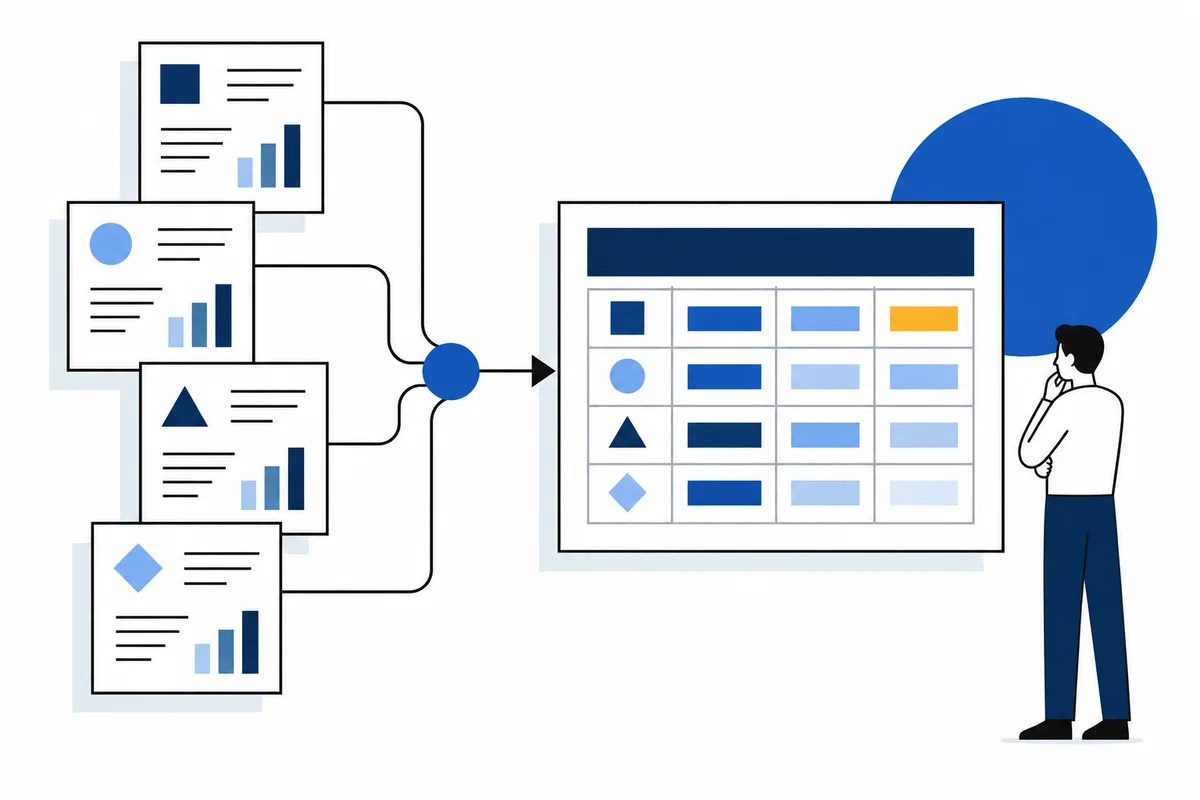
The performance meta-analyses cannot show that training someone, or raising an EQ score, causes better work. They combine observed relationships between measures and job ratings; they do not assign employees to an intervention and compare what happens afterward. To answer a change question, researchers need intervention evidence: people receiving training compared with an appropriate control group, outcomes measured before and after, and enough follow-up to see whether any change lasts. Even then, the outcome matters. A change in an emotional-competency measure and a change in job performance are separate findings.
“Training Emotional Competencies at the Workplace: A Systematic Review and Meta-Analysis” (2024) addresses a closer question. Its abstract reports 27 controlled trials, alongside pre-post comparisons, and finds moderate average effects on emotional-competency outcomes. It also reports that effects remained detectable beyond three months. This controlled-trial basis is more informative about whether workplace training can change the measured competencies than an association between a score and a supervisor rating: a comparison group helps distinguish training-related change from shifts that might have occurred over time anyway. It is evidence about training and competency outcomes as defined across the included studies.
The review’s two kinds of comparison also answer slightly different questions. A pre-post result asks whether participants’ measured competencies differ after training from their own earlier scores; by itself, that change could include influences besides the program. A controlled comparison asks whether the trained group changes differently from a group that did not receive the same intervention. The abstract reports both forms of evidence, including the 27 controlled trials. That distinction makes the controlled evidence more relevant to attributing change to training, while the pre-post findings add information about change over time. Neither comparison alone makes a competency measure equivalent to a job rating, so the outcome boundary still applies. A sustained competency result is useful evidence of learning, but it remains a different endpoint from reliable improvement in everyday work.
The review’s own qualifications matter to the interpretation. It reports high heterogeneity and low methodological quality and calls for stronger trials. Variation across programs and studies means the pooled result does not describe one uniform course with one guaranteed effect. More directly, the competency outcomes do not establish that job-performance ratings improved. The intervention evidence therefore comes closer to testing change, but it does not complete the chain from a particular training program, through an increased EQ score, to better work. That chain would require studies to measure those links together and rule out plausible alternatives.
For an individual considering development, the defensible conclusion is narrow: emotional competencies have been studied as trainable workplace outcomes, while this review does not validate a particular course or test as a route to stronger performance. A score-performance association cannot supply the missing intervention evidence, and a competency effect cannot be silently renamed a job-performance effect. The practical question for a specific program is what it measures, what comparison it uses, how long it follows participants, and whether it reports the work outcome the reader cares about. The 2024 synthesis offers a reason to take skill development seriously, with evidence quality and outcome alignment still shaping how far the claim can travel.
Sources: Training Emotional Competencies at the Workplace: A Systematic Review and Meta-Analysis
What the evidence means for one person using an EQ profile
For private development, use a profile to give reflection a subject: a recurring response, a situation that tends to unsettle you, or a moment when your reaction affected a conversation. The workplace findings make emotional skills relevant to consider, but they do not transfer their estimates or validation to an individual assessment that was not part of those studies. A useful result is a starting point for examining behavior in context, not a forecast of performance or a verdict about ability.
The private 32-item Emotional Skills Profile covers recognition, understanding, regulation, and responding to others. Its two strands remain distinct: one summarizes recent behavior, while the other records judgments about authored emotional situations. Together they can offer a structured view of emotional habits and scenario decisions. They do not produce a standardized ability score, a population norm, or a prediction of job performance. Keeping the strands separate lets a reader consider what they report about recent conduct alongside how they judge a scenario, without treating either as a universal EQ yardstick.
As an illustrative practical prompt—not research evidence—a person might notice that in tense project discussions they respond quickly to criticism, then ask what they observed, what they inferred, and whether they left room to understand the other person’s concern. The point is not to decide from one exchange that someone lacks a skill. It is to name an observable moment, check whether the response recurs, and choose one small behavior to try in a similar conversation, such as asking a clarifying question before defending a proposal. That gives private reflection something specific to revisit.
A brief observation note can keep the reflection anchored: record the situation, the first response, what happened next, and one alternative response worth testing. Comparing a few ordinary instances may show whether the behavior appears under a particular pressure or with a particular kind of conversation. This is a personal learning practice, not a measurement protocol and not evidence that a profile caused a change. It helps turn a broad label into something visible enough to discuss, reconsider, and practice without making a single score carry the whole explanation.
If that kind of structured self-reflection would help, explore the Emotional Skills Profile at /assessment. The assessment can organize attention around the profile’s stated areas; the next step remains the reader’s own choice about what to observe or practice. /report provides information about the report for readers who want to understand that format. Neither route changes what the workplace meta-analyses tested, and neither turns a private development profile into a hiring or performance score.
Choose one behavior to observe next
Turn the research question into one observation in your own working life. Choose a recent exchange that matters to you, such as receiving unexpected feedback, and name a behavior you can actually see or hear: for example, whether you ask one clarifying question before explaining your decision. In the next similar conversation, notice what you do and what follows. The record can be simple—a few words afterward about the situation, your response, and whether the question changed the exchange. This is a personal prompt for attention, not a way to score a colleague or judge a single conversation. If the behavior differs from what you expected, that gives you something concrete to reflect on; if it repeats, you can decide whether to keep practicing it or choose another response.
If you want a structured private starting point, explore the Emotional Skills Profile at /assessment. Its 32 items organize reflection around emotional situations and recent behavior; your next step can remain modest and self-chosen. Bring one pattern you want to understand into the next relevant exchange, then observe what you do. The useful outcome here is a clearer question about your own conduct, not a promised change in work performance.
Questions readers ask
What does a meta-analysis show about emotional intelligence and job performance?
It combines results across studies to estimate an average relationship. The 2011 synthesis reported corrected correlations from .24 to .30 across three EI research streams; those estimates concern study-level associations, not an individual’s likely performance.
Why can the same EQ measure be called trait or mixed EI?
The labels can classify different things. Ability-versus-trait labels distinguish performance-based tasks from self-report methods; the three-stream scheme also considers how a measure defines EI. A self-report measure can therefore be trait by method and mixed by content or tradition.
Does emotional intelligence add unique prediction of job performance?
That depends on the comparison model. In a 2015 meta-analysis, mixed EI had a corrected association of ρ=.29 with supervisor-rated performance, while its coefficient was β=-.02 after the authors’ specified controls. That adjusted estimate addresses distinct contribution under those controls; it does not erase the overall association.
Does emotional intelligence cause better job performance?
The performance meta-analyses report associations, not the effects of assigning people to training. A 2024 review found effects on emotional-competency outcomes, while noting high heterogeneity and low methodological quality; those outcomes do not establish improved job-performance ratings.
Sources
- The Relation Between Emotional Intelligence and Job Performance: A Meta-Analysis
The 2011 synthesis grouped EI research into three streams and found corrected correlations with job performance from .24 to .30.
- The Measurement of Emotional Intelligence: A Critical Review of the Literature and Recommendations for Researchers and Practitioners
The review distinguishes a method-based ability-versus-trait classification from the three-stream classification; self-report mixed measures can count as trait under the former and mixed/stream 3 under the latter.
- A Meta-Analysis of the Relationships Between Emotional Intelligence and Employee Outcomes
A later psychometric meta-analysis reports a positive average EI-job-performance association across its included employee samples, with estimates varying by EI stream and limitations in outcome and sample coverage.
- Emotional Intelligence: An Integrative Meta-Analysis and Cascading Model
Joseph and Newman’s meta-analytic model found ability-EI/job-performance relations differed by emotional-labor context, positive in high emotional-labor jobs and negative in low emotional-labor jobs.
- Why Does Self-Reported Emotional Intelligence Predict Job Performance? A Meta-Analytic Investigation of Mixed EI
The updated association between mixed EI and supervisor-rated performance was ρ=.29; mixed-EI measure content overlapped with established traits and abilities (multiple R=.79), and its unique coefficient became β=-.02 after the authors’ specified covariate controls.
- Training Emotional Competencies at the Workplace: A Systematic Review and Meta-Analysis
A 2024 review found moderate pre-post and controlled-trial effects on emotional-competency outcomes, including controlled trials k=27; authors also report high heterogeneity and low methodological quality, so this intervention evidence is distinct from proof that a change in EI score causes job-performance gains.
Apply it to the real situation
Turn a broad EQ finding into one behavior to observe
From this guide: Meta-analyses cannot identify which emotional behavior matters in your own work or validate a personal result as a performance forecast.
The research points to average associations, while their meaning depends on the measure, performance outcome, and work context. The private 32-item Emotional Skills Profile offers a structured way to reflect on recent behavior and emotional situations. Use it to choose one behavior to notice in a relevant work exchange, then consider what happens. It is an educational tool, not a standardized ability score or job-performance prediction.