
The 2019 meta-analysis reports a positive average association between emotional intelligence and creativity (r = .32, 95% CI .26–.38), with substantial variation across studies. Read that as an association, not proof that emotional skill causes creative work. Check what each EI measure and creativity outcome captures, who rated them, and when. When one person reports both, the finding describes linked perceptions; a second source can add evidence about visible behavior while leaving private idea work outside its view.
Two readings of the same positive link
When a workplace study links employees’ reported emotional intelligence with their reported creativity, the result invites two readings. Emotional habits could matter during idea development: noticing frustration, recovering after criticism, or staying curious through disagreement may affect whether an idea gets revised and shared. At the same time, a person who sees their own emotional and creative behavior favorably may answer both questionnaires in ways that move together. The association can contain both processes, and the design alone does not tell us their shares.
For an individual trying to understand this research, a positive link is plausible evidence of a relationship worth examining, not a measure of which colleague is more creative. Self-report has a real advantage here: workers can know about tentative ideas, reactions, and private effort that coworkers never witness. That access does not make every self-judgment accurate, but it means the shared respondent is not automatically a source of meaningless data.
The substantive possibility deserves attention because creative work unfolds through stages that are not all visible to an observer. An idea may be reconsidered after a blunt response, held back until it is clearer, or improved through an exchange in which people disagree. Emotional responses could shape how someone participates in those moments. Yet a favorable view of oneself could also color reports of both emotional skill and creative contribution. The same positive association is therefore compatible with a meaningful workplace process and with some shared self-perception; the existence of one does not rule out the other.
The first interpretive question, then, is what respondents were asked to report. An emotional-intelligence score may describe perceived habits, performance on emotion problems, or a broader bundle of competencies. Those scores do not support the same reading of an association with creativity. Before deciding whether a positive result reflects a useful emotional capacity, shared self-perception, or both, we need to identify what the EI measure actually represents.
What does an EI score actually measure?
The label “emotional intelligence” does not identify one uniform test. Emotional Intelligence Measures: A Systematic Review describes 40 instruments and groups their underlying approaches mainly as ability, trait, or mixed models. The distinction matters because a score can represent performance on emotion-related problems, a person’s view of their usual emotional tendencies, or a composite that joins emotional competencies with other self-perceived qualities. Calling all three “EQ” can make findings appear more interchangeable than their instruments allow.
An ability-based measure asks a person to work through emotion-related tasks, with answers evaluated as performance. It is designed to sample what someone can do on those problems. A trait or self-report measure instead asks how people generally see their emotional attention, understanding, or regulation in everyday life. Its score describes reported typical behavior or confidence; it does not demonstrate maximum performance on an emotion task. In a creativity study, that difference changes the claim: a link with self-reported emotional tendencies concerns perceived habits, while a link with task performance concerns tested responses under the instrument’s conditions.
Mixed measures make the label harder to read. Why does self-reported emotional intelligence predict job performance? A meta-analytic investigation of mixed EI examined a broad mixed-EI measure set and reported substantial overlap with ability EI, self-efficacy, self-rated performance, personality traits, and general mental ability. Its outcome was job performance, not creativity, so its estimates cannot be transferred to the creativity literature. Its relevance here is narrower: a composite bearing an EI label may include confidence and general self-evaluation alongside emotional content. If such a score is paired with a self-rated creativity measure, interpretation depends on the actual item content, not just the label.
This is a construct question as much as a response-format question. Two questionnaires can both be self-reports yet ask about distinct experiences; conversely, a broad competency inventory may combine emotional claims with confidence or general self-appraisal. The measure title alone will not reveal which interpretation is appropriate. Readers need the study’s description of the instrument and the kind of score analyzed. Without that information, “EI predicts creativity” compresses together a possible relationship between tested emotional problem-solving and creative output, a relationship between perceived habits and perceived behavior, and a relationship involving a broader self-evaluation composite.
The Systematic Review’s instrument count is useful precisely because it discourages treating the field as one test with interchangeable versions. It maps a varied measurement landscape; it does not settle which model best answers a particular creativity question. A task score and a self-description may both be relevant to emotional life, but each warrants a claim tied to what it sampled. Likewise, the mixed-EI meta-analysis is a warning about composite content, not evidence that every mixed measure is merely personality or that every self-report is contaminated. The practical reading depends on the particular measure and outcome paired in the study.
These approaches can still concern related and practically meaningful capacities. Recognizing emotion, understanding what may have prompted it, regulating a response, and responding to other people can matter during collaborative work regardless of whether an instrument samples task performance or asks about habitual behavior. But conceptual overlap does not make the resulting scores equivalent. A study connecting two self-report composites may tell us that people who describe their emotional habits favorably also describe their creative work favorably; it cannot by itself show that they would perform better on emotion problems or produce more novel and useful work under independent assessment.
That is why the instrument belongs in the interpretation, not in the fine print. To read an EI–creativity finding, identify whether the predictor is tested ability, self-perceived typical behavior, or a mixed competency report. Then keep the conclusion at that level. A self-report association can be useful for understanding how workers experience their habits and work, while a performance test addresses a different question. The next issue is what the creativity measure counts, since reported creative behavior, a bounded thinking task, and an evaluated product also provide different kinds of evidence.
Sources: Why does self-reported emotional intelligence predict job performance? A meta-analytic investigation of mixed EI; A comparison of self-ratings and non-self-report measures of employee creativity
The pooled estimate is positive, but its spread matters
The headline result in Are Emotionally Intelligent People More Creative? A Meta-Analysis of the Emotional Intelligence–Creativity Link is a positive correlation of r = .32, with a 95% confidence interval from .26 to .38. The review combined 96 correlations from 75 studies, covering 18,130 participants. In plain terms, across the included studies, higher measured emotional intelligence tended to accompany higher measured creativity. The correlation is not a percentage of creativity caused by emotional intelligence, and it does not mean that an individual with a higher EQ score will necessarily produce more creative work.
The article’s abstract and Results section report the same estimate and interval. The revision feedback suggested r = .36 with an interval of .30 to .42, but that alternative does not appear in the primary report checked for this article. The article’s discussion also refers to .32; it is the interval paired with the headline result in the abstract and Results that should be carried forward. These are not two equally sourced versions of the same finding: the directly checked report supports .32 (.26–.38). A different estimate would require a separate, identifiable analysis or version, not a substituted interval.
The review searched multiple databases for work published through May 2019 and retained studies reporting a quantitative relationship between an emotional-intelligence measure and a creativity measure. It combined correlations while accounting for samples that contributed more than one effect. That breadth makes the result a useful summary of a recurring pattern across the literature, but it also pools unlike comparisons: instruments differ in what they call emotional intelligence, and studies do not all define or assess creativity in the same way. The pooled figure answers whether the collected associations lean positive on average; it does not describe one standardized test or one uniform workplace outcome.
The study-to-study spread is substantial. The meta-analysis reports I² = 93.45%, indicating that observed differences across estimates are much larger than would be expected from sampling error alone under the model. The average therefore sits over a notably varied set of results. Differences in EI model, creativity criterion, respondent, or study setting could contribute to that spread; the pooled statistic itself does not identify which feature accounts for how much. A reader should resist turning the average into a stable coefficient that applies to every measure or job. The search cutoff also matters: this synthesis describes research located through its stated May 2019 endpoint, not every study published since. Its value is a documented snapshot of a broad body of work, and its limits follow from the included record and the categories researchers had used by then. The number should not be treated as a current universal benchmark for an organization or occupation. This is a boundary on scope, not a reason to disregard the result: the synthesis still consolidates a sizeable set of published comparisons and gives a better starting point than selecting one striking study. Its contribution is the average pattern plus evidence that the pattern varies.
The authors also tested whether the central result depended heavily on very large reported effects. After excluding correlations above .70, their sensitivity estimate was r = .29, with a 95% confidence interval of .24 to .34. That remains positive and is somewhat smaller than the primary pooled estimate. This check makes it less plausible that the overall direction is carried only by a handful of extreme correlations, while leaving the underlying variation among the remaining studies intact.
The confidence interval expresses uncertainty around the pooled average under the meta-analysis model; it is not a range containing most individual study results or most employees’ experiences. Because the interval remains above zero, the synthesis estimates a positive mean association in the included literature. Yet its narrow-looking bounds do not erase the large study-to-study differences. A reader can be reasonably confident about the direction of this pooled summary while remaining uncertain about the size expected in a particular setting. Those are separate judgments: precision of the estimated mean and consistency of the underlying results are not the same thing. A positive average across many studies is evidence of a recurring association even when individual studies and measures vary. It is still observational evidence. The synthesis does not establish whether emotional skills help sustain creative work, whether creative experiences shape people’s reports of their emotional capacities, or whether other factors contribute to both. Nor does a group-level correlation predict the work of a particular employee: people, tasks, opportunities, and measurement conditions differ. The result warrants taking the relationship seriously as a research pattern, while keeping causal and individual claims outside what this analysis tested.
For the employee or manager reading a study, the useful question is therefore not whether .32 is large enough to label someone creative. It is what pair of measures produced the estimate and what varied across them. That next distinction matters because a questionnaire about frequent creative behavior, a timed idea-generation task, and ratings of a finished product do not observe the same part of creative work. Their different associations help explain why a single average needs careful interpretation.
Which creativity outcome is being measured?
The association is stronger when creativity is represented by reported creative behavior or creative-personality indicators than when it is represented by divergent or convergent thinking tasks or creative products, according to the creativity-measure moderator in Are Emotionally Intelligent People More Creative? A Meta-Analysis of the Emotional Intelligence–Creativity Link. The contrast is about the outcomes the studies measured; it does not establish that one kind of creativity is more real or that emotional intelligence matters only for self-described behavior.
A report of creative behavior generally asks how often someone does things such as generate, share, or develop ideas. The respondent is summarizing a pattern over time, potentially across many ordinary work moments. A short thinking task samples performance under a particular prompt, time limit, and scoring procedure. A creative-product criterion asks someone to judge an output, where novelty and usefulness may depend on the assignment and the evaluator’s standards. These measures differ in duration, visibility, and unit of analysis. They should not be treated as interchangeable indicators simply because each is called creativity.
That difference offers one plausible interpretation of the moderator pattern. Emotion-related habits may be especially visible in self-reports of how a person approaches ideas over repeated interactions: whether they stay engaged after criticism, raise an unfinished suggestion, or continue refining it with others. These are examples of behaviors that could be included in a broad workplace account; they are not findings about any specific participant in the meta-analysis. A bounded task may capture a person’s response to one prompt, while an evaluated product reflects both the maker’s contribution and constraints such as resources, collaboration, and the opportunity to finish the work.
The subgroup estimates and their uncertainty belong to these outcome categories, rather than serving as a second overall estimate. The meta-analysis reports a stronger pooled relationship for creative behavior and creative-personality measures than for divergent/convergent thinking and product measures. Those moderator comparisons summarize the studies available in each category, with fewer observations in subgroups than in the full pool. They do not show that changing the measurement format would change a person’s creative work, and they cannot rank the measures as if all sampled one identical underlying result.
For interpreting workplace claims, self-reported frequency may be informative about participation in the process: how often a worker says they suggest ideas, elaborate on them, or persist through routine friction. It is less direct evidence about whether a specific idea was both novel and useful. A product judgment addresses an output, but can miss the uncredited or collaborative steps that led to it. A task score offers a controlled sample of thinking, though the task may be distant from the sustained, negotiated work that organizations describe as creativity. Each criterion makes some contribution easier to see and leaves another outside the frame.
The weaker pooled links for task and product indicators therefore narrow what can be claimed, rather than dismissing creativity at work. They suggest that the association appears more consistently in studies of reported tendencies and behavior than in these more bounded or output-focused measures. That gap could reflect differences in the construct each outcome captures, differences in study design, or both; the moderator cannot decide among those explanations. It would be an overreach to say that a self-report association proves greater creative output, but equally an overreach to infer that a smaller task or product association makes emotional behavior irrelevant to collaborative idea work.
This distinction is particularly important when a workplace asks whether emotional skills help people work together creatively. The organization may care about behaviors that unfold across meetings and handoffs, while a study may operationalize creativity as a one-time task score. A weaker result on that task cannot answer the broader question unless the task adequately represents the behavior of interest. Conversely, a report of frequent idea-sharing does not independently establish the novelty or usefulness of what was shared. The outcome should match the claim being made. A careful reading names the outcome before interpreting the result. If a paper measures reported creative behavior, its finding concerns a respondent’s account of recurring participation. If it scores a task, the claim concerns performance on that task. If it evaluates products, the claim concerns the outputs and judging conditions represented in that study. The meta-analysis’s moderator pattern is useful because it shows that the headline relationship changes with this choice; it does not turn the categories into a hierarchy of better and worse creativity measures.
Why self-rated creativity can carry real information
An employee can report parts of creative work that leave no visible trace in the finished output. A proposal may begin as several rough drafts, a conversation with a colleague, or a line of thought that gets dropped after it fails a practical test. Someone watching only the final presentation may see the selected idea, but not the alternatives considered or the reasoning that ruled them out. Self-report can reach this private sequence because the employee was present for it. That gives the respondent access to information an outside rater may not have, even when the respondent’s account remains a perspective rather than a complete record.
This visibility difference matters when a study asks about creative behavior over time. The person doing the work can recall whether they kept developing an idea after initial enthusiasm faded, adapted it in response to criticism, or chose not to advance it when a constraint became clear. Such recollections are possible information sources, not observations reported by the creativity meta-analysis. They illustrate why a self-rating could capture process as well as a general self-image. An observer may see that an idea was shared; the employee may also know how many versions preceded it, what feedback changed it, and which discarded route saved time or avoided a poor fit.
A self-rating can also cover low-visibility contributions. In a meeting, one employee may ask a question that redirects a colleague’s idea without becoming associated with the final result. Another may notice a flaw in a draft and quietly test a revision before the group sees it. These are examples of how creative work might unfold, not cases from the research record. They show that access and evaluation are separate issues: the employee may know that this work occurred, while still disagreeing with a colleague about whether it was original, effective, or important enough to count as creativity.
A comparison of self-ratings and non-self-report measures of employee creativity examined how correlates differed when creativity was self-rated versus assessed by supervisors, peers, or objective measures. Its abstract reports larger effects in a majority of comparisons when self-ratings were used. That result makes the choice of respondent consequential: associations involving a self-rated outcome often looked stronger across those comparisons. The finding does not tell us that self-ratings are more accurate, that outside raters are more accurate, or that any particular EI–creativity association is inflated by a known amount. Nor does it estimate the difference for one specific workplace study.
The comparison concerns correlates of employee creativity across measures. It is not itself a direct test of emotional intelligence, and it does not supply a correction factor that can be applied to the EI–creativity literature. Larger effects with self-rated creativity could reflect shared perceptions, but they could also arise because the measures capture different parts of work. A self-report may include persistence, private experimentation, or a pattern of idea development that an observer cannot see. A supervisor or peer may instead judge visible contribution, while an objective indicator may register a completed output. Treating those outcomes as interchangeable would turn a comparison of different windows into a contest over who knows the truth.
That difference becomes practical when a reader encounters a strong association based on questionnaires. The self-report may be informative about how often someone believes they persist, raise ideas, or adapt them; it cannot by itself establish that a particular product was novel or useful. The employee’s account can identify activity that deserves follow-up, while a work sample or informed observer can address features of the result that private effort alone cannot establish. The two sources answer related but distinct questions. If the claim concerns an unseen process, excluding the employee’s account may discard relevant evidence. If the claim concerns product quality or impact, the account needs to be paired with a criterion that evaluates those outcomes.
For an individual reading a workplace study, the useful question is therefore what the self-rating has access to and what it is being asked to stand for. A report about idea generation or persistence may describe behavior that coworkers only partly observe. A claim that an idea was novel, useful, or influential calls for evidence about the idea and its consequences. The self-rating is legitimate information about experience and process; its strength depends on keeping that information in its proper role. This distinction preserves what an employee can know without treating private knowledge of effort as proof of creative quality.
Shared questionnaires create a design risk, not a verdict
When one respondent completes both an emotional-intelligence questionnaire and a creativity questionnaire, the association may reflect the constructs being studied, but it may also reflect the conditions under which that person answered. Common method biases in behavioral research: A critical review of the literature and recommended remedies uses common-method bias for influences tied to measurement method or response process that can affect observed relationships. The term identifies a vulnerability in a design. It does not, by itself, show that a particular correlation is spurious or tell us how much of it should be removed.
The same person may bring a broad positive or negative view of their work to both sets of answers. Current mood, concern about how the answers will be used, or a preference for consistent responses could also shape reporting. If both questionnaires ask about overlapping ideas—confidence, persistence, effectiveness, or positive self-evaluation—their scores may move together partly because respondents encounter similar content twice. These are plausible mechanisms, not findings that the methods review attributes to every study. Other response influences could weaken an association or change which respondents report more favorably; the direction and size cannot be assumed from the fact of a shared source alone.
A shared questionnaire occasion also creates a substantive possibility alongside the method concern. A person’s current experience may connect the two reports in a real way: emotional habits could affect how they approach ideas, while experiences with idea work could shape how they describe their habits. Both could be present in the same responses. The review discusses sources and response processes and evaluates possible remedies, but it does not identify which process generated a particular EI–creativity result. A correlation from one occasion therefore leaves open whether a shared response tendency, a genuine relationship, or several influences together account for the observed pattern.
Researchers can make that ambiguity easier to examine by changing how evidence is collected. One option is to get the predictor and outcome from distinct sources, such as an employee report of emotional habits paired with a supervisor’s rating of visible creative behavior. That tests whether the association persists when one respondent no longer supplies both measures. It also changes what creativity means: a supervisor can assess what they observe, while private drafts and unshared idea work may remain outside their view. The design reduces one shared-source pathway but introduces a question about visibility and the observer’s criteria.
Separating measurement in time provides another check. A study might collect emotional-habit reports at one point and assess a later work outcome, making it harder for one immediate response state or single questionnaire occasion to shape both scores. Time separation does not automatically settle direction: experiences can change in the interval, and other events may affect the later outcome. It can, however, distinguish a same-occasion association from a relationship that remains when the measures are gathered at different times. Researchers need to specify what changes or intervenes during that period rather than treating elapsed time as a universal fix.
Different formats can expose another part of the question. A questionnaire about usual emotional behavior might be paired with an independently scored work sample, a task, or a documented idea outcome. This asks whether the relationship extends beyond two self-descriptions to evidence collected in another way. The sample must still fit the claim. A timed prompt can test performance under that prompt; a work product can be evaluated for qualities defined by the study; neither automatically represents the full collaborative process of workplace creativity. A new format is informative when its criterion is explicit and relevant, not simply because it differs from a survey.
Controls can help when they represent a specific alternative explanation established by theory or prior evidence. For example, if a study has a reason to expect that a measured factor contributes to both questionnaire scores, modeling that factor can test whether the association changes under that account. Adding a long list of variables after seeing the result may instead obscure the question or remove part of the relationship researchers meant to study. Statistical adjustment depends on what was measured, how it entered the model, and which causal assumptions are defensible. No adjustment is a generic subtraction for method bias, and a changed coefficient does not name the mechanism on its own.
These design choices work as comparisons among explanations. Distinct respondents test whether the relationship survives a source change; staggered measurement tests whether it appears beyond one occasion; another format tests whether it extends beyond self-description; justified controls examine specified shared influences. A stronger design may combine them, but no single remedy certifies that the remaining association is free of every alternative. The methods review recommends remedies suited to the research setting rather than a universal correction. Readers can therefore ask what the design actually varied and what new criterion it introduced, instead of treating either a questionnaire pair or a multi-method design as self-explanatory.
A same-source association remains compatible with a real relationship between emotional habits and the way employees experience creative work. It also remains exposed to response influences that may make two reports move together. The design review supplies reasons to test those alternatives, not evidence that one must dominate in any specific study. Interpretation should follow the evidence collected: note the respondent, timing, formats, and any controls, then describe the association at that level. Without an independent comparison or a design that separates the proposed processes, its direction and magnitude cannot be assigned to method bias alone.
Sources: Leader Self-Reported Emotional Intelligence and Perceived Employee Creativity: An Exploratory Study
The manager study shows why the question feels plausible
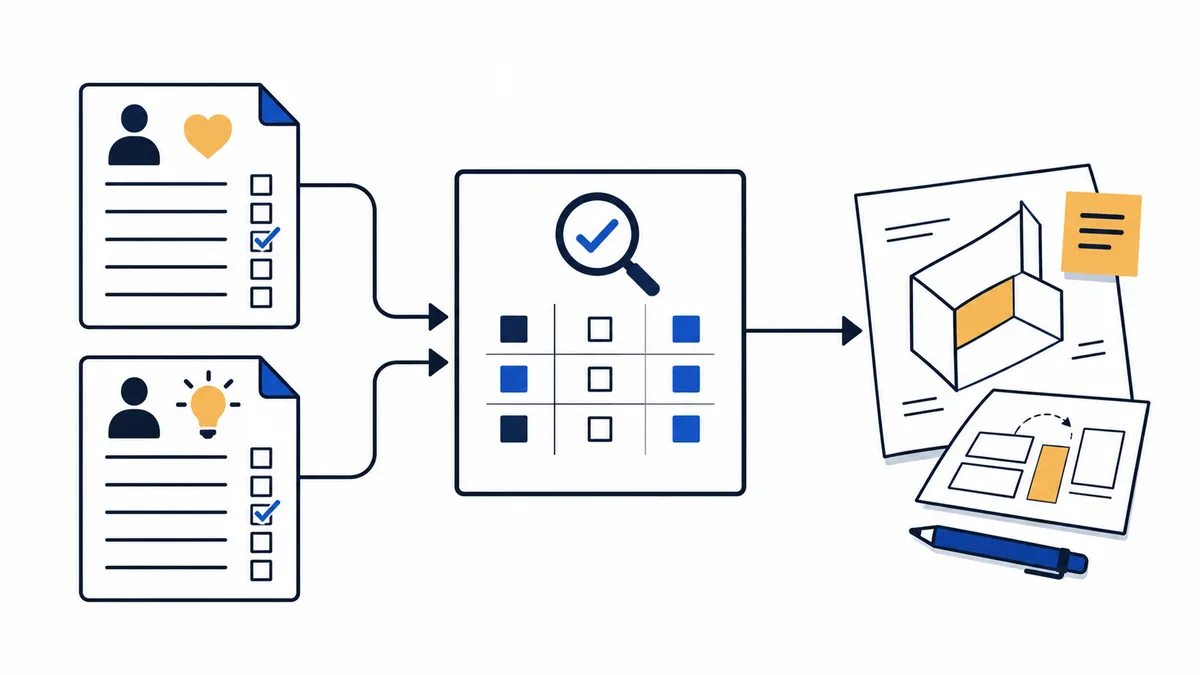
Leader Self-Reported Emotional Intelligence and Perceived Employee Creativity: An Exploratory Study brings the question into a recognizable workplace setting. The study surveyed 138 managers across 66 organizations and asked them to report their own emotional intelligence and the creativity of their teams. Its appeal is directness: rather than infer workplace relevance from a laboratory emotion task or a general self-description of creative personality, it connects managers’ accounts of emotional capacities with their judgments about team creativity. A manager who handles emotional information and criticism effectively might also notice, encourage, or sustain contributions from employees. The study makes that possibility researchable in terms that resemble everyday management.
The abstract reports that emotional intelligence explained variance in two creativity dimensions and highlights empathy and self-control against criticism among the dimensions with higher predictive power. Those findings give the paper a more specific contribution than a claim that a single overall EQ score accompanies creativity. Empathy could matter to how a manager understands a colleague’s response to an idea; self-control in the face of criticism could matter to whether disagreement becomes a reason to shut down discussion or a chance to examine a proposal. These are plausible readings of why the reported dimensions might be relevant. The abstract does not establish those mechanisms, however, so they should be treated as interpretation of the pattern rather than processes the study directly observed.
The design puts a boundary around what the association can show. The same manager supplied the report of their own emotional intelligence and the rating of team creativity. There was no separate employee or independent evaluator supplying the outcome in the described design. The result therefore joins a manager’s self-view to that manager’s perception of the team. This arrangement does not make the rating empty: managers may see repeated contributions across projects, meetings, and revisions that a single observer would miss. Their reports can capture an informed workplace judgment. But the design cannot tell whether the link reflects the manager’s emotional skills, a generally favorable view of their own leadership and team, or both together.
The outcome also sits at team level. A manager’s impression of how creative a team is is not identical to a count of novel ideas, an independent evaluation of work products, or an account from employees who developed those ideas. Team creativity may be distributed across people and stages: one person raises an initial possibility, another tests whether it can work, and others revise it after practical criticism. A manager can observe some of this activity without seeing every private draft, discarded idea, or informal exchange. The rating is consequently useful for the question of perceived team creativity under a manager’s view, while leaving other definitions of creative performance unmeasured.
The word “predict” in a study report can sound stronger than the design warrants. Here it describes a statistical relationship in the study’s model, not evidence that emotional intelligence was measured first and later caused an increase in creativity. The abstract-level description supplies no temporal separation that would establish that order. A creative team might also shape how a manager experiences and describes their own emotional effectiveness; organizational resources or team climate could contribute to both judgments. These possibilities are not demonstrated explanations of the result. They show why a same-respondent association cannot by itself determine direction or mechanism.
The study remains valuable as a direct workplace observation of how managers connect their emotional capacities with their impressions of team creativity. It gives empathy and composure around criticism a concrete place in that account, rather than treating EQ as an abstract score detached from collaboration. Its strongest contribution is therefore a focused association worth investigating with more than one perspective. Independent employee accounts, observations of specific interactions, or evaluations of work products would address different parts of the picture. Manager reports can preserve the broad view of team contribution; a second source could show whether that view corresponds with what employees experienced or produced. The finding supports interest in the relationship, while its measurement design keeps the interpretation at the level of manager-reported association.
There is also a useful distinction between a manager’s capacity and the conditions in which a team works. Empathy and self-control against criticism may describe how a leader responds in an exchange, but an organization can also shape whether people have time, authority, or permission to develop ideas. The abstract does not establish that these contextual factors were ruled out. That matters because a manager may both report emotional strengths and oversee a team with stronger creative opportunities. The study’s reported pattern points toward dimensions worth examining in workplace interaction; it does not isolate an individual emotional skill as the source of team creativity.
Sources: Supervisor emotionally intelligent behavior and employee creativity
A large sample can still share one reporting source
Supervisor emotionally intelligent behavior and employee creativity shifts the reporting perspective from manager to employee and greatly expands the study’s reach. The University of Cambridge repository describes a national study of 14,645 employees. Employees rated their supervisors’ emotionally intelligent behavior and reported their own work experiences and creativity or innovation. The scale of the sample makes the study relevant across a broad workplace population, while its respondent arrangement asks a different question from a manager’s self-report: how workers perceive the emotional behavior of the person supervising them, and how that perception sits alongside their own account of work.
That change in respondent matters. An employee is positioned to describe whether a supervisor listens, responds to emotions, or handles difficult exchanges in ways the employee actually encounters. The employee is also the immediate source for their own experience and reported creativity. The Cambridge study therefore does not simply reuse one construct under two labels: supervisor behavior and employee creativity refer to different people and different aspects of work. Yet the employee provides the report for both. The predictor concerns the employee’s perception of the supervisor, while the outcome concerns the employee’s own work experience and creativity. The constructs differ; the reporting perspective remains shared.
The study’s proposed pathway makes that distinction important to interpretation. Its abstract describes links running through opportunity to grow and positive affect in a serial mediation model. In the authors’ account, employees who perceive emotionally intelligent supervisor behavior may experience greater room to develop, alongside more positive affect, and those experiences may relate to reported creative work. This is a coherent workplace explanation: growth opportunity can give people scope to try or refine ideas, while affect may shape how they engage with that work. The model connects perceptions of supervision to reported experience instead of treating creativity as a detached outcome.
A mediation model describes how measured variables fit a proposed sequence of relationships. It does not, by itself, show that the sequence unfolded in time or that the first variable caused each later one. The repository abstract identifies employee ratings and the modeled pathway; it does not establish that supervisor behavior was measured before opportunity, affect, and subsequent creativity. An employee’s general experience of a supportive workplace could shape several ratings at once. A person who feels able to grow may also view their supervisor more positively and judge their own idea work more favorably. That alternative could coexist with genuine support from the supervisor, and the abstract does not separate their contributions.
A large N strengthens the descriptive reach of the reported pattern, but it does not change who completed the measures. More respondents can make an estimate more informative about the sampled employee population, while the same arrangement of reports still leaves relationships among those reports open to shared perspective. The central issue here is not that employee judgments lack value. Employees may be the best available witnesses to everyday supervisory behavior and to experiences that managers cannot directly observe. Their report can reveal whether a supervisor’s conduct is experienced as emotionally intelligent, rather than only whether the supervisor believes it is. Their own account of idea work may also include attempts and contributions not visible to a manager.
The Cambridge study thus adds an important perspective rather than resolving the reporting question. Compared with a manager describing both their own EI and their team’s creativity, this design asks employees to evaluate supervisory behavior and their personal work experience. That can reduce reliance on a leader’s self-assessment and make the employee’s felt opportunity and affect central to the explanation. It still cannot distinguish a perceived supervisor effect from a common employee outlook or establish the proposed order through a cross-sectional report alone. The practical interpretation is specific: the study links employees’ perceptions of emotionally intelligent supervision with their reports of growth opportunity, positive affect, and creativity. It offers a workplace-level pathway to examine, while leaving the direction and independence of those links for designs with temporal or separate-source evidence.
The national scope and the employee-centered measures serve different strengths. A broad employee sample can include workers across settings who experience supervisors differently, while the self-report design gives direct access to how those workers understand the environment around their ideas. Those strengths make the proposed pathway useful for organizational questions about felt support and opportunity. They do not convert the pathway into an intervention result: the abstract does not report that changing supervisor behavior subsequently changed employee creativity. Readers should preserve both parts of the contribution—the breadth of employee evidence and the fact that the modeled links arise from employee reports.
Sources: Impact of the Supervisor Feedback Environment on Creative Performance: A Moderated Mediation Model
Separate raters add observation while narrowing the window
The Frontiers study, “Impact of the Supervisor Feedback Environment on Creative Performance: A Moderated Mediation Model,” separates the employee reports from the creativity rating. In a convenience sample from nine industrial firms in Beijing, employees reported the study’s predictor and proposed mediator measures; supervisors completed separate questionnaires rating each employee’s creative performance. The researchers collected the two forms on different occasions and matched 162 usable supervisor–employee pairs. They selected supervisors who had ample opportunity to observe their employees’ creative performance. This is a direct change in who supplies the outcome: the same employee did not provide both sides of that study’s reported relationship.
The outcome was also tightly specified. Supervisors used 13 items to rate how often an employee displayed creative behavior at work, on a scale from never to always. An example item asked whether the employee sought new technologies, processes, techniques, or product ideas. The measure therefore captured a supervisor’s judgment of recurring, visible conduct in a workplace role. It was not a test of emotional intelligence, a direct inspection of the novelty and usefulness of each idea, or a record of every private attempt that never reached a colleague. The paper examined a feedback environment and its modeled relationship with creative performance; it cannot independently establish an EI–creativity association. Its value here is to show how a different outcome rater changes the evidence design.
That change helps with a particular question: does an employee’s account of their emotional tendencies covary with another person’s account of work behavior? When predictor and outcome come from different respondents, a favorable self-view or a response habit shared across two questionnaires is less able to create both measurements in tandem. The Frontiers authors deliberately collected data from employees and supervisors for this reason. This design can therefore test whether the relation appears across perspectives, rather than only within one person’s reports. It does not make the supervisor’s judgment an unfiltered record of performance. The supervisor interprets the behavior through the work they see, their expectations, and the standards they apply to different employees.
Opportunity to observe is a condition of the measure, not a guarantee of complete access. A supervisor may see an employee raise an alternative in a meeting, test a revised process, or share a suggestion with a team. They may not see the early drafts, discarded approaches, or quiet experimentation that happens outside shared work. Which actions count as relevant also depends on the role: an employee whose tasks allow room to propose changes offers different observable opportunities from one whose work is tightly prescribed. The paper’s choice to use supervisors with ample opportunity addresses one practical problem—ratings from a person who rarely sees the work would be weakly grounded—but it cannot equalize visibility across jobs or recover activity beyond the supervisor’s view.
The 13-item scale narrows the window in another way. Frequency ratings summarize how often a set of recognizable behaviors appeared; they do not settle the quality or consequence of a particular contribution. A supervisor may notice repeated suggestions while overlooking an employee who prevented a flawed idea from moving forward, or may value visible novelty more than careful development. These are reasons to interpret the score as an observer’s account of specified behavior, not evidence that the observer is biased in every case. A colleague can offer useful evidence about conduct they witnessed, while the employee can report thoughts, feelings, and attempts unavailable to that colleague. Their disagreement can mark a difference in access or in what each regards as relevant, so it deserves examination rather than automatic averaging.
The sources answer complementary questions. Self-report can describe an employee’s experienced emotion during criticism or uncertainty, and may include idea work no one else saw. A supervisor report can describe conduct across observed work episodes, but reflects only the behaviors and opportunities that reached that observer. An independently assessed work sample would address still another question about a particular product or task. No source is simply the upgraded version of another: each has a criterion and a field of view. This is why a larger or more independent-looking design does not, by itself, make its result a better answer to every question about workplace creativity.
The study’s reported result illustrates the point without making it an EI test. The authors report a positive relation between the supervisor feedback environment and supervisor-rated creative performance, with goal self-concordance in the modeled pathway and creative personality moderating parts of that relationship. Their design links employee reports about the feedback context and goal experience to supervisors’ behavior ratings. The different respondent for the outcome changes what can be said about shared reporting, while the study’s constructs remain feedback environment, motivation, and creative behavior. It offers no direct estimate of whether emotional intelligence relates to creativity, and it cannot tell an individual how an EQ result will translate into idea quality. Keeping the actual constructs visible prevents a general topic overlap—emotion, work, creativity—from being mistaken for a direct test of the article’s focal association.
The setting also defines the reach of the observer measure. These were employees in industrial enterprises in Beijing, and supervisors rated subordinates at work. The scale’s behaviors may be more observable in some roles, teams, or organizational routines than in others. A supervisor who regularly discusses work with an employee may have useful evidence about suggestions and process changes; in a role with little discretion or contact, the same rating task could capture fewer opportunities to display those behaviors. That is a design implication, not a result the paper tested across occupations. It matters when comparing studies: an observed difference could reflect which work behaviors the measure can register, alongside differences in the EI instrument or the source of the outcome. Readers should resist treating a supervisor behavior rating as a context-free measure of creativity that travels unchanged from one work setting to another.
For the reader comparing findings, the useful record is compact: name the construct being measured, the outcome, who rated each one, and when each report or observation occurred. Then phrase the conclusion at that level. An employee self-report paired with their own creativity rating can establish a within-person association between reported tendencies and reported behavior; the design leaves shared perspective among the possible explanations. A supervisor-rated behavior outcome can show whether an association crosses respondent sources for visible conduct; it still says less about private experience or unobserved contribution. A separate rater improves independence for that outcome while making visibility and standards part of its meaning. Read each finding for the relation its measures and timing support, and stop before turning it into a claim about general creative ability or what an EQ score predicts.
Sources: Impact of the Supervisor Feedback Environment on Creative Performance: A Moderated Mediation Model
Turn the result into one observable next step
After one conversation about criticism or a developing idea, jot down what you noticed: the emotion that arose, what you did next, and what happened to the idea. If useful, ask someone who was present for feedback on one specific behavior, such as whether you made room for a challenge or explained your concern clearly. Keep the note close to what you could observe: the words you used, whether you paused, or whether the discussion continued. Treat one exchange as a practice choice, not a verdict about your creativity. Return to the same behavior in another conversation and see whether a different response changes how the exchange unfolds. A short record can help separate what you intended from what another person could actually see, giving you a concrete behavior to adjust. Choose a small response that fits the next real conversation, rather than trying to change several habits at once. The private 32-item Emotional Skills Profile offers reflection on recent emotional behavior and judgments about authored scenarios; it does not measure creativity or predict work outcomes. [Explore the Emotional Skills Profile](/assessment), or [view the report information](/report), then choose one response to practice in a later conversation.
Sources
- Are Emotionally Intelligent People More Creative? A Meta-Analysis of the Emotional Intelligence–Creativity Link
Overall and moderator estimates for the EI–creativity association across 75 studies; primary source for adjudicating the disputed central estimate.
- Emotional Intelligence Measures: A Systematic Review
Systematic review describing 40 instruments and distinctions among ability, trait, and mixed EI measurement approaches.
- Why does self-reported emotional intelligence predict job performance? A meta-analytic investigation of mixed EI
Mixed-EI meta-analysis reports construct overlap and the adjusted relation with supervisor-rated job performance, useful as a bounded example of what self-report composites may contain.
- A comparison of self-ratings and non-self-report measures of employee creativity
Meta-analysis comparing correlates of self-rated employee creativity with supervisor, peer, and objective creativity measures; most comparisons showed larger effects with self-ratings.
- Common method biases in behavioral research: A critical review of the literature and recommended remedies
Critical review covers potential sources and response processes for method bias and evaluates procedural and statistical remedies.
- Leader Self-Reported Emotional Intelligence and Perceived Employee Creativity: An Exploratory Study
Exploratory manager study reports self-ratings of EI and team creativity and identifies empathy and self-control against criticism among dimensions with higher predictive power.
- Supervisor emotionally intelligent behavior and employee creativity
National employee study reports employee ratings of supervisor emotionally intelligent behavior alongside employee self-reports of work experiences and creativity/innovation, proposing opportunity-to-grow and positive-affect pathways.
- Impact of the Supervisor Feedback Environment on Creative Performance: A Moderated Mediation Model
Workplace study uses supervisor ratings of observable employee creative behavior, providing a contrasting design in which the creativity outcome is not supplied by the employee predictor respondent.
Apply it to the real situation
Turn an EQ result into one observable work habit
From this guide: A study-level association cannot tell you which emotional habit shapes your own response to criticism, uncertainty, or feedback.
The evidence is most useful when you connect it to a moment you can observe: what you notice, how you respond, and what happens to the idea or conversation next. The private 32-item Emotional Skills Profile offers reflection prompts about recent emotional behaviors and workplace scenarios, then points to a behavior to consider practicing. Use it as a development aid alongside your own examples and feedback, not as a creativity score or employment judgment.