
A paid EQ-i 2.0 debrief may be worthwhile if your report leaves a specific question unanswered and the provider explains how the session will address it for a fee you accept. Check what your report already explains, then ask what the conversation includes. Broader emotional-skills training studies do not establish that one debrief changes workplace behavior.
Is a paid EQ-i 2.0 debrief worth it?
The EQ-i 2.0 report is open in front of you, but one result still does not make sense. A paid debrief can be worthwhile when you can name that unanswered question and the provider can explain what the session will do with it. It is harder to justify paying simply because the report is long, the score is high or low, or an add-on is offered. Those facts do not say whether the conversation will help you understand the report, apply it to a work situation, or practice a different response.
MHS describes the EQ-i 2.0 as an emotional-intelligence assessment organized into five composite areas and 15 subscales, with different report and norm-group options. That identifies the instrument and the kinds of results a buyer may encounter; it does not show that every report needs a live interpreter or that a debrief changes behavior. The report version matters because a buyer may already have written explanations, prompts, or recommendations. Start with the question that remains after reading the particular document you received.
For example, perhaps a result label is unfamiliar. You may need someone to explain what the report means by that scale and how its description should be read. Or the wording may be clear while its relevance to a recent disagreement at work is not: then the useful service would need to help you examine that situation, not merely repeat the report. A third need is practice—trying a specific way to ask for feedback, set a boundary, or repair a tense exchange. Explanation, application, and practice are different kinds of help; a buyer should know which one the fee covers.
A debrief may make sense if unfamiliar language is blocking your understanding, or if a provider offers a focused discussion that you value for a real work question. Before paying, be able to state what you hope to understand or do and what the session will add. A conversation that explains the report can be useful on those terms alone. A promise that one conversation will transform a recurring habit asks you to buy a different outcome, which needs more than an interpretation appointment to substantiate.
What is already in the report you have?
Before booking time with an interpreter, identify the document that is actually in your hands. Note the report name or version, then mark the exact score label, paragraph, workplace prompt, or recommendation that prompted the question. A broad reaction such as “I still do not understand my result” is difficult to match to a service. A marked passage gives you something concrete to ask about: what does this description mean, what does it leave open, and what would a conversation need to clarify?
The EQ-i 2.0 User's Handbook: Part I, Introduction describes multiple report options and interpretation resources; MHS's sample report shows one way score descriptions and workplace prompts can appear in a report. These are publisher materials, so they establish that built-in interpretation can exist in some forms, not that your particular report contains every feature shown in the sample. Report type and options may vary. Check your own document rather than assuming either that it is self-explanatory or that it omits useful explanation.
Also separate a missing explanation from an explanation that is present but difficult to use. If the report defines a scale yet leaves you unsure how its wording connects to your own question, note exactly where that connection breaks down. You might ask whether the session will clarify the report's terms, invite you to compare them with a concrete example, or provide some other specified help. This distinction keeps a conversation from becoming a second reading of pages you can already understand, while leaving room for discussion when written language cannot answer the question you actually have.
Read the passage around the result, not just the number or heading. Does the report explain the scale in ordinary language? Does it offer a work example or question for reflection? Is there a recommendation, and does it say what action it points toward? Those features may answer a request to understand the document. But a general description can still leave a personal application unresolved: a prompt about communication, for instance, cannot tell you by itself what happened in one particular handoff or what another colleague thought.
Illustration only: imagine a reader sees an interpersonal result they describe as “low.” That label alone is too broad to guide a conversation. They might locate the report's definition and prompt, then make the question more specific: “In the last project handoff, I gave the update late. What part of this report helps me examine how I handled the conversation, and what information would I need from my colleague?” This is an invented example, not a real test result or claim about how a person with any score behaves. It shows how reading the report can turn unease about a label into a question tied to an observable event.
The remaining issue may be comprehension, application, or missing information. If a term or score description remains unclear, the requested addition is explanation of that passage. If the text makes sense but you want to connect it to a work example, ask whether the session will discuss a situation you bring and what kind of conclusion it can reasonably support. If the report already contains the answer you needed, a debrief may add little on that question. The reader's account of the event, and other participants' perspectives where relevant, are not hidden inside the report.
A detailed document is not automatically enough for every reader: written prompts may not address the circumstance they care about, and a person can reasonably prefer a conversation for questions the page leaves open. The useful comparison is specific. Put your question next to the report's actual wording. Then ask what the paid discussion would add beyond that wording—an explanation of a term, help relating a prompt to your example, or something else stated in concrete terms. If the answer is only “more insight,” you still do not know whether the offer matches the gap you found.
Keep the report version and marked passage in view when asking about the appointment. That makes it easier to distinguish a request to decode the document from a request to think through a work situation. It also gives the provider a chance to say whether that question fits the service on offer. The report may already satisfy the first need while leaving the second open; that is a difference in what you are asking, not proof that either the report or the debrief has failed.
What does the validation evidence let you infer?
The relevant question is not whether a test has been validated in the abstract. It is what a particular study tested, in which group, and at what level of the score structure. In “The psychometric properties of the Emotional Quotient Inventory 2.0 in South Africa,” the researchers examined responses from 1,144 people in the instrument’s South African standardization sample. That gives a buyer evidence about how the EQ-i 2.0 performed in that setting. It does not, by itself, settle how precisely every score in every report can be interpreted for every individual.
The researchers used Rasch item analysis to examine whether individual questions behaved as expected within their assigned subscales. In plain terms, this asks whether an item’s response pattern fits the measurement model well enough to contribute to the scale it is meant to represent. The paper reports that most items fit their respective subscales. That is useful evidence about the subscale structure in this sample; it is not evidence that each answer captures a specific workplace event or that an interpreter can infer its cause from the score.
They also estimated reliability, meaning the consistency of scores under the study’s measurement approach. A scale that produces consistent scores is more useful than one whose results fluctuate unpredictably, but consistency alone cannot establish what a score means. The study found generally satisfactory reliability evidence for the reported scales. A careful explanation should therefore name the particular scale and the reliability evidence relevant to it, rather than treating the word “reliable” as a blanket guarantee about every conclusion drawn from the report.
For the proposed score structure, the paper used confirmatory factor analysis: a statistical check of whether the observed relationships among scores fit a specified arrangement of underlying factors. This is the question of factorial validity. The authors reported generally satisfactory factorial evidence for the subscales, while the model for the overall EQ score was an exception. Put simply, evidence supporting several narrower score groupings can coexist with weaker support for combining them into one total. The exception matters when an explanation leans heavily on that total as though it had one clear, unified meaning. The distinction is practical: a result about a narrower area and a result about an overall total are different claims, even when they appear in the same report.
These methods answer related but separate questions. Item fit concerns the connection between each question and its intended subscale. Reliability concerns whether the resulting scale scores show adequate consistency. Factor analysis concerns whether relationships among those scales match the proposed organization. One result cannot stand in for all three. For instance, evidence that most items fit their subscales does not alone establish the total-score structure; likewise, satisfactory score consistency does not prove that a reader’s narrative about a particular disagreement follows from the score. The paper’s findings are most useful when kept at the level each method actually examined.
That result should narrow an inference, not erase the study. A buyer need not conclude that the subscales are useless because the total model received less support. But if a conversation turns a total score into a precise account of why someone behaves as they do, it is reasonable to ask what evidence supports that interpretation and how the subscale results bear on it. An interpreter should be able to say which score they are discussing, what the South African study found about that level, and where the study leaves uncertainty. A polished narrative is not a substitute for that distinction.
A total score can be attractive because it seems to compress a complicated report into one answer. Yet compression can conceal which parts of the profile contributed to it and whether those parts support a common interpretation. When the overall model is the exception in the study, an interpreter should not treat the total as interchangeable with the better-supported subscale evidence. The buyer can ask how the explanation moves from the specific scores to any broader claim, and whether the conclusion would change if attention stayed with the narrower results.
The setting also matters. This was one South African standardization context, so its findings should not silently be generalized to every country, language, occupational group, or report use. The authors identified measurement invariance as a research need: researchers would need to examine whether the measurement behaves comparably across relevant groups before assuming that the same score differences have the same meaning between them. The study cannot establish that comparison merely because its sample was large; sample size and cross-group equivalence answer different questions.
The paper also discloses that an author was employed by the South African distributor. That disclosure is relevant context for weighing the work, but it does not decide the result by itself. The methods and reported exception still deserve examination, alongside the limits the authors identify. For a prospective buyer, the practical test is whether an interpreter can keep those pieces together: explain the result at the scale level, describe what this study supports in its sample, and avoid extending its conclusion beyond that evidence. This is a more informative answer than either a broad claim that the instrument is validated or a dismissal based on one model exception.
Sources: The psychometric properties of the Emotional Quotient Inventory 2.0 in South Africa
Why can a plausible score still miss the work behavior you care about?
A self-report can summarize how someone describes their emotional habits across the questions and situations covered by a report. A workplace incident is narrower: it happened at a particular time, under particular demands, with another person present. The score does not replay that exchange. It can give the reader a lens for reflection, but the details of the event still have to be examined before the reader can say what the score has to do with it.
Illustration only: after a tense project handoff, one colleague gives feedback that an update arrived too late to plan around. The person receiving it has an EQ-i 2.0 report open and wonders whether a result about interpersonal functioning explains the problem. The result might prompt useful questions: Was the timing recognized as a source of pressure? Did the person check what the other colleague needed? Was the response to the feedback curious, defensive, or focused on the next step? Those questions turn a broad report theme toward actions that can be inspected.
But the score cannot tell the reader what the colleague intended, how the delay affected the work, or whether the feedback describes a repeated pattern. Perhaps the handoff instructions changed late; perhaps the update was sent on time but missed; perhaps the colleague expected a different format. These are not alternate findings hidden inside the assessment. They are questions about the event, and the people involved or the available work record are better placed to answer them. The report can suggest where to look; it cannot fill in facts that were never asked about.
The practical distinction is between a prompt and proof. A prompt helps the reader notice a behavior worth checking: for example, whether they asked what information the colleague needed before explaining why the handoff was delayed. Proof of what happened requires evidence tied to that exchange. Even if a report makes one interpretation feel plausible, it cannot establish that the colleague felt dismissed, that the reader lacks a skill, or that the exchange reveals a general level of competence. Those conclusions outrun what a broad self-description can show about a single moment.
That distinction matters because work behavior is shaped by more than a general tendency. A handoff has a task, a deadline, an agreed channel, and a history between the people involved. Emotional recognition may affect whether someone notices urgency; regulation may affect how they respond to criticism; perspective-taking may affect which questions they ask. Those are plausible ways to use a report as a map for reflection, not conclusions established by the score about this particular exchange. The reader still needs to compare the interpretation with what they actually did and what the situation required.
Another perspective can add information without becoming a final ruling. The colleague may describe what they expected and what consequence they experienced; the reader can compare that account with their own recollection and the sequence of work. Accounts can differ, and the disagreement itself may point to an unclear handoff, a mismatch in expectations, or a need to ask a more specific question. The aim is not to use another person as a score validator. It is to understand the interaction with evidence that actually concerns it.
An EQ 360 method is distinct in that it gathers ratings from other people as well as, or alongside, self-report. That difference does not make other-rater feedback an objective record of a particular event: raters also answer from their own observations and perspectives. For the buyer considering an EQ-i 2.0 interpretation, this is simply a boundary between methods. A self-report profile summarizes the respondent’s answers; an account from someone in the exchange concerns that person’s view. Neither should be quietly substituted for the other.
The colleague’s account also should not be reduced to a rating of the reader. “I needed the update before the planning meeting” describes a concrete expectation; “you are bad at communication” turns that event into a broad judgment. The first statement can be checked against the handoff timeline and discussed. The second may express frustration, but it does not by itself identify which behavior should change. Likewise, a report label may frame a question, but the label cannot settle which description is fair or what repair would address the missed expectation.
A useful debrief can help translate a report label into questions the reader can test against recent behavior. It might clarify what a scale describes, help distinguish the report’s wording from the reader’s explanation of a conflict, or identify what example would make a proposed interpretation more or less convincing. That can improve the reader’s understanding of the report. It cannot establish the missing details of the handoff or speak for the colleague. If the reader needs to know how the event landed, a conversation with the colleague or other event-specific information remains necessary.
So use the report to inspect behavior, not to settle another person’s experience or issue a verdict on competence. In the handoff illustration, the next step is to check what was expected, what was communicated, and what the colleague says they needed, then decide whether there is a response worth changing. The report may help the reader formulate that inquiry. A debrief can make the interpretation clearer, but it cannot supply evidence about an interaction that the report never recorded.
What should a careful interpretation sound like?
A careful interpretation connects the report to the question that brought you to it, then keeps the report's description distinct from an explanation of why you acted as you did. The International Test Commission's ITC Guidelines on Test Use, final version 1.2, treat competence, interpretation, reporting, and feedback as parts of responsible test use. They offer a general professional-practice frame; they are not an EQ-i 2.0 study and do not show that a paid debrief improves results.
That distinction should be audible in the conversation. The interpreter can identify the scale under discussion and explain what the report says it represents, using the report's own terms. Then the two of you can consider which recent situations seem consistent with that description and which do not. The score is a summary from a defined instrument and report; the story you tell about its causes is a further claim. Keeping those separate lets you learn from the result without treating a plausible account as something the score has proved.
For instance, a discussion of an interpersonal scale might turn to a recent handoff where expectations were missed. A grounded interpretation would explain what the scale covers, ask what the reader recalls doing, and leave room for details the report did not collect. Perhaps the reader recognized the other person's concern but did not ask what information was needed; perhaps the report's description does not fit this incident. Either way, the incident is material to examine, not a fact the assessment can reconstruct. The reader's account adds context; it does not change the score into a recording of that exchange.
A responsible interpreter also makes the edge of the evidence clear. The report may describe a pattern in answers or offer a development prompt. It cannot establish what a coworker privately intended, whether one conflict had a single cause, or how the reader will behave in every setting. That boundary does not prevent discussion of a work example. It helps make the discussion more precise: the report supplies one perspective to examine, while the people involved and the circumstances supply other information about the event.
Compare two possible explanations of the same tense meeting. One says that a report theme raises a question about how the reader handled disagreement and asks what happened before drawing a conclusion. The other says the score proves a colleague felt dismissed or was trying to undermine the reader. The first relates the instrument's description to evidence the reader can discuss; the second assigns another person's motives without evidence from that person. An interpreter can help frame a question about the interaction, but cannot answer on a coworker's behalf.
ITC guidance makes the interpreter's competence relevant to how the result is used. For a buyer, that means asking whether the person understands this instrument, its reports, and the limits of the interpretation they are offering. Training or a credential may be useful information about preparation, but a badge alone cannot guarantee the quality of a particular conversation. What matters in the exchange is whether the person can explain the relevant material, respond to the reader's actual question, and distinguish what the report says from an inference about its cause.
The guidance also gives feedback a practical purpose: communicate the result in a way the test taker can understand and use. Applied to a workplace question, that could mean clarifying an unfamiliar scale description, considering an example the reader brings, and identifying what additional information would be needed before making a stronger claim. This is a practical reading of general test-use guidance, not a prescribed script or proof that every interpreter follows one method. The reader should be able to follow how the conversation moves from report wording to a tentative application.
A useful interpretation may leave a question open. The reader might finish understanding what the scale describes while still needing to ask a colleague what they expected in a specific exchange. That is a meaningful result of the discussion: it has clarified which part came from the report and which part requires a conversation or other event-specific information. The interpreter's role is to make that boundary intelligible, not to make uncertainty disappear by supplying a confident narrative.
A private conversation cannot make uncertain evidence certain. It can make the report's practical meaning easier to examine when the interpreter explains the relevant scale, listens to examples that fit or conflict, and avoids turning a description into a causal verdict. If the discussion instead claims to know another person's motive from the reader's score, that claim has outrun the report. The difference is what a buyer can listen for when judging whether interpretation is careful.
What exactly are you paying for?
A fee can cover several different activities, and the word “debrief” does not tell you which ones are included. One practical way to assess an offer is to separate explaining the report, applying it to a workplace example, choosing an action, rehearsing that action, receiving feedback on practice, and reviewing what happened later. This is a buyer's map of possible deliverables, not a validated coaching sequence. An interpretation-only meeting can be the right purchase when explanation is what you want.
Start with explanation. The EQ-i 2.0 Workplace Coach Sample Report from MHS illustrates that one report format can already include scores, narrative, workplace examples, and development prompts. It is a sample rather than a promise about the report in every buyer's hands. If you want help understanding wording that appears in your own document, ask whether the appointment will explain those specific scales and how much time is devoted to interpretation. A session that restates material you can already follow may not address a different need, such as applying it to a particular exchange.
Application is a separate activity. You bring a recent situation, describe what you remember, and consider whether the report gives you a useful question about your own behavior. For example, a result might prompt reflection on how you respond to disagreement; applying it could mean looking at one meeting where you and a colleague reached different conclusions. That conversation can examine what you did and what you might want to try. It cannot establish the colleague's unspoken reaction from your score. If this kind of discussion matters to you, ask whether the provider works with a client-chosen example or only explains the report.
Choosing an action goes one step further. The discussion might help turn a broad intention, such as listening better, into an observable next move: ask the other person what concern they want addressed before offering a solution. The action is more specific than a report label, but deciding on it is not the same as practicing it. A buyer who wants one clear next step may find that planning is sufficient. Another buyer may want to hear how the words sound, or to get a response before trying them at work. Those requests describe different amounts of service.
Rehearsal and feedback can be separate inclusions too. A provider might invite the buyer to practice a planned response in the session and discuss what came across clearly or awkwardly. That is different from the interpreter explaining a scale or agreeing on a goal. Even rehearsal is not the same as feedback after the buyer tries the behavior in a real conversation. Ask what the provider means by “practice” and whether it happens during the appointment, afterward, or not at all. Do not assume that an action plan includes observed practice or a later review.
Follow-up also needs a plain description. It might mean a scheduled later conversation, a written summary, a brief check-in, or no contact after the initial meeting. These forms are not interchangeable, and an offer may include some, all, or none. Ask whether there are written materials, who leads each activity, what format the session uses, and whether follow-up has a separate fee. If the service involves personal report information, it is reasonable to clarify privacy and cancellation terms before sharing it or booking time. The point is to know what is included in the quoted total.
One provider example shows why the label alone is inadequate. The page titled “EQ-i 2.0 Individual Assessment, Report and Private Debrief” from the provider store describes a bundle that names a report, private debrief, and action plan. Those words identify components in one commercial offer; they do not tell a buyer how much time is spent on each, what “action plan” means, or whether practice and later feedback are included. The page is not evidence of typical services, market pricing, or quality. Ask that provider to define each named component before deciding whether the bundle fits your purpose.
The questions to take to any provider can stay specific: what is the total fee, what will happen during the appointment, who will lead it, and what written or follow-up material is included? If the description names a plan, ask what the plan contains. If it mentions feedback, ask what behavior the feedback concerns and when it is given. Also clarify cancellation and privacy terms where relevant. This is not a universal checklist for a good debrief; it is a way to translate a service description into concrete work you can value or decline.
The right scope depends on the gap you have identified. If the report's language is the problem, an explanation may meet it. If you want to relate a scale to a work situation, you need to know whether application is part of the session. If you expect a changed behavior, check whether the offer includes anything beyond discussing an action. More components do not automatically make an offer better, and an interpretation-only meeting is not deficient when clear explanation is the buyer's goal. Pay for the activity you actually want and can assess on its own terms.
Sources: EQ-i 2.0 Workplace Coach Sample Report; EQ-i 2.0 Individual Assessment, Report and Private Debrief
When does a conversation become practice?
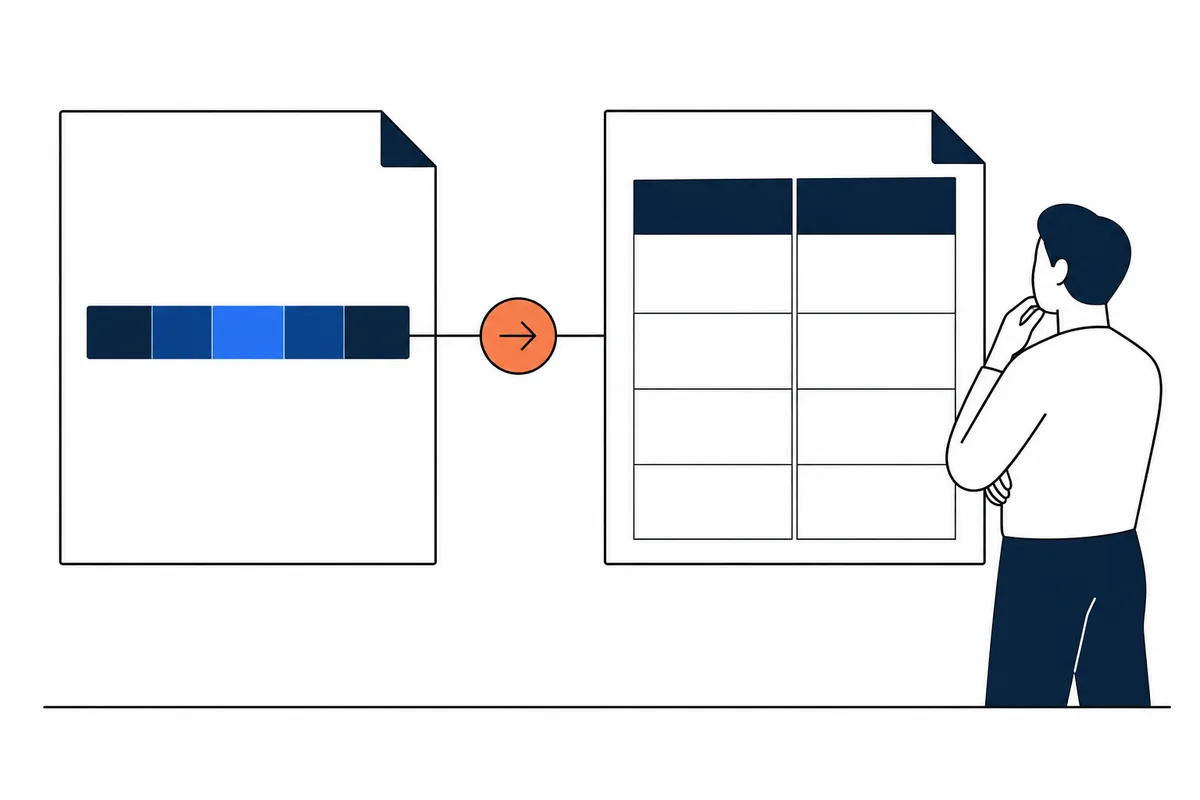
A conversation becomes practice only when an idea is carried into an observable action and someone can examine what happened. Hearing what a report label means may be useful, and choosing a next step may make the interpretation more concrete. Neither activity shows how the step will sound to another person or what gets in its way at work. A buyer looking for help changing a recurring interaction should ask where the offered conversation ends and what support follows it.
Illustration only, not a real case or a demonstrated effect: imagine a report theme leads someone to wonder whether they ask for enough feedback. In an interpretation conversation, they might clarify what the theme describes and whether it fits their own recent behavior. The discussion could then turn that broad question into one observable move: after presenting a proposal, ask a colleague, “What part would you want me to clarify before you can respond?” That sentence gives the person something specific to try. It does not prove that the report identified the cause of a past disagreement, or that the colleague will answer in a particular way.
Planning ends with a chosen behavior and a time or situation in which to try it. Practice adds a chance to say the words aloud before that moment. The buyer can hear whether the question sounds open or presses for approval, and can revise it while the stakes are low. If the provider offers feedback, ask what it is based on: the wording heard in the room, the buyer's stated intention, or an observation from a later workplace attempt. These sources answer different questions. A facilitator listening to a rehearsal can comment on that rehearsal; they cannot know how the colleague will receive the question in a real meeting.
The workplace attempt produces information neither report nor rehearsal contains. Perhaps the colleague names a missing assumption; perhaps the timing is poor and the question gets postponed; perhaps the buyer decides the issue needs a private conversation. Each outcome would call for a different next move. A later review can compare what the person intended to do with what they actually did and what response followed. That review might help them adjust the behavior, though one exchange still cannot establish a stable pattern. The sequence matters because “action plan” may describe only the choice of a next move, while continued practice requires opportunities to try it and a way to learn from those attempts.
This makes the distinction between a modest deliverable and an ongoing promise easier to hear. A single meeting that clarifies a report and ends with one reasonable first step may be worthwhile if that is the buyer's aim. It should not be priced or described in the buyer's mind as though it also includes rehearsal, observation at work, feedback after the event, or repeated review. Those later activities require additional contact or an agreed source of feedback. A buyer can ask, in plain terms, which step happens during the session, which happens afterward, who will provide feedback, and whether another appointment or fee is involved.
The buyer also supplies parts of the chain. They choose a situation that can be discussed without turning a score into a verdict about a colleague, decide whether the proposed action fits the work, and make the attempt. If they want someone to assess what happened, they need to know whether that person will actually observe the interaction or simply hear the buyer's account afterward. A provider's role may stop at helping formulate the plan. Naming that boundary does not make the offer less useful; it lets the buyer judge it by the outcome it can reasonably deliver.
A person who mainly wants to understand a confusing passage may not need a rehearsal or follow-up. Someone hoping to change how they ask for feedback may value help making the behavior concrete, then decide whether they can try it independently. The useful question to put to a provider is therefore not simply whether the service includes “practice.” Ask what will be practiced, what feedback the session can supply, and what happens after the buyer returns to work. The answer reveals whether the purchase is interpretation, a first-step plan, or support that continues into the situation where the behavior matters.
What can training studies tell you about a debrief?
Training research makes emotional-skill development plausible, but the studies closest to that claim examine programs with practice and instruction, not a paid EQ-i 2.0 interpretation appointment. In “Training emotional competencies at the workplace: a systematic review and meta-analysis,” the authors reviewed interventions involving emotional intelligence, emotion regulation, and empathy. Their controlled-trial synthesis included 27 trials and found a positive pooled effect on measured emotional competencies: standardized mean difference 0.46, with a 95% confidence interval from 0.30 to 0.63, as reported in the PubMed abstract. A standardized mean difference expresses the average separation between intervention and comparison groups in standard-deviation units, allowing outcomes measured on different scales to be combined. It is an average across those studies, not a predicted change for one person or a guarantee of a workplace behavior.
That positive average deserves weight: the review suggests structured interventions can improve measured competencies across the programs it gathered. Yet the programs and outcomes were not all the same, and the review reports substantial heterogeneity and low methodological quality. Heterogeneity means study results varied more than a single common effect would imply; the pooled estimate summarizes that spread rather than erasing it. The review's detailed manuscript gives an I-squared estimate of 68% and a broad prediction interval that crosses zero, indicating that the average does not assure a positive result in every setting. These details counsel against treating the pooled number as a forecast for an undefined service. They do not cancel the evidence that some structured workplace programs produced positive measured gains.
A second review, “Emotional intelligence training among the healthcare workforce: a systematic review and meta-analysis,” narrows the population to healthcare workers and includes 17 longitudinal studies with pre- and post-training measures. All 17 reported higher emotional-intelligence measures after the intervention. But formats ranged from short sessions to programs lasting months, and the reviewers cautioned that weaknesses in study methods could overestimate the gains; they also called for more evidence about duration and delivery. The finding is encouraging within this workforce literature. It cannot show which program ingredient mattered, whether a brief interpretation meeting would have produced the same pattern, or whether a reported score change translated into a colleague noticing different conduct.
Together, the reviews support a measured conclusion: emotional competencies can be developed through structured training, although the size and consistency of gains remain uncertain across settings. Their evidence sits several steps away from the commercial question. Neither review tests people who receive an EQ-i 2.0 debrief against people who only read their report. Neither isolates explanation of a result from instruction, rehearsal, repeated practice, or other parts of a program. Neither establishes that one paid conversation changes how a particular buyer handles a disagreement, asks for feedback, or repairs a missed handoff. Direct evidence for that specific comparison and outcome is absent from these reviews; absence here is a limit on the inference, not evidence that a debrief cannot help.
The positive results still matter to a buyer. They make it reasonable to value an offer that clearly includes a structured opportunity to develop a behavior, especially when the buyer wants more than a clearer explanation of a score. But the value has to be judged from the promised service itself: what activity the buyer will actually do, whether there is a chance to try the behavior, and what feedback or review is available. The reviews cannot supply those missing details about a provider's offer, nor can they turn the phrase “development session” into evidence that a program was delivered. A buyer who wants only interpretation can assess whether that explanation is worth its fee without claiming that the training literature proves behavior change. That distinction is useful when reading promotional language: a research-supported possibility at program level does not tell you whether the provider has scheduled another conversation, how an attempt will be reviewed, or whether the fee covers only a single explanation. Those are facts about the service to establish directly, not effects to infer from a pooled training estimate.
There is also a meaningful counterpoint to an overly skeptical reading. The workplace synthesis included controlled trials and found a moderate positive pooled effect, while every study in the healthcare review reported post-training increases. Those are not trivial observations, and they argue against assuming emotional skills are fixed or that development programs have no value. Their proper reach is the studied interventions and measured outcomes. To extend them to a one-off EQ-i debrief would require evidence that evaluates that service, its comparison condition, and a relevant behavior over time. Until such evidence is available, a buyer can treat program-level training results as support for the possibility of development, not as a promised return on a single appointment.
So the studies do not settle whether a particular interpretation session is worthwhile. They change what a buyer can reasonably expect from it. A clear explanation may be a worthwhile service in its own right; a session that promises altered workplace habits is making a larger claim and should specify what happens beyond interpretation. The training reviews offer grounds for taking structured development seriously, while leaving the result of an unspecified one-session service open.
Sources: Training emotional competencies at the workplace: a systematic review and meta-analysis; Emotional intelligence training among the healthcare workforce: a systematic review and meta-analysis
When is the report enough for now?
Take one result that has stayed with you and write down the exact passage, scale, or description. Then finish this sentence: “I still need to know ___.” Make the blank a question you could answer, not a feeling such as “I need more clarity.” For example, you might need to know what a scale label means in the report, whether a particular work exchange fits the pattern it describes, or what to try the next time a familiar interaction occurs. This short prompt is an editorial aid for sorting your need; it is not a validated tool or a score about whether you should buy a service.
Now write what answer would be enough to move forward. Keep it small and observable. “I want to understand what this phrase means in my report” has a different stopping point from “I want to know whether I interrupted in that meeting” or “I want to respond differently when a colleague disagrees.” In the first case, a plain explanation may settle the question. In the second, you may need to review what you remember and distinguish your own actions from what you do not know about the other person. In the third, you need a behavior you can recognize when you try it. Naming the finish line prevents a broad wish for insight from silently becoming a request for every kind of help.
Read the report again with that question in mind. If the wording already answers it, or gives you a prompt you can use, let that answer stand for now. You do not have to turn every score into a meeting or an action plan. A result can be useful because it gives you a thought to carry into the next relevant conversation. Note what you want to watch for, then see whether it arises in ordinary work. If nothing comes to mind, waiting is also a decision: there is no need to manufacture a problem to justify the assessment you took.
If a phrase remains hard to interpret, keep the request at that level: ask for an explanation of the specific wording and how it relates to the report you received. You can decide whether that answer is worth a fee after hearing what the provider will explain. You may discover that the report's own description was enough, or that a short clarification resolves the confusion. Either outcome can close the question without turning it into a larger development project.
If your question is about what another person felt, intended, or took from an exchange, mark that as information you do not have yet. A score or an interpreter cannot supply that person's account. You might decide to ask them directly, using a question that leaves room for an answer you did not expect: “How did that handoff land for you?” A paid conversation could help you prepare what you want to ask or sort your own recollection, if that is actually offered. It cannot substitute for hearing from the person involved. If the conversation is not appropriate or possible, keep the interpretation provisional instead of paying someone to make the uncertainty sound settled.
If the question is about a behavior you want to change, name the moment when you would notice the old pattern and the action you want to try instead. “Handle disagreement better” does not tell you what help to request. “When I hear an objection, ask what concern matters most before defending the proposal” is concrete enough to discuss. Then ask yourself what support is missing: choosing the action, saying it aloud once, getting feedback on a rehearsal, or reviewing what happened after a real attempt. Those are different needs. You might be able to make the next attempt on your own; if not, ask a provider which of those activities is included, rather than assuming that a conversation covers them all.
The exercise ends when you can name both the open question and a proportionate next step. The next step may be to reread one passage, ask for a definition, speak with the person whose response matters, try one behavior, or request a clearly described form of support. If you cannot yet say what answer would help, leave the decision open. Uncertainty by itself is not a reason to purchase more interpretation, and a useful next step does not have to come from a paid conversation.
Should you book the conversation?
Before booking, write one question the report has left unanswered. Ask the provider what the fee includes and which specific deliverable will address that question. Pay only if the described help is valuable to you on its own terms. A useful reply should let you picture what you will leave with: an explanation of a passage, help applying it to your own example, or another defined activity you asked about. You do not need to buy a broader package to obtain a narrow answer. A direct reply gives you something concrete to compare with the question you wrote; promotional language about insight or transformation does not tell you what the appointment will do. If your report already gives you a useful next step, or the provider cannot make the offer clear, wait; you can return to the decision if a more specific need emerges.
A separate option is EQ Test’s private 32-item Emotional Skills Profile. It is distinct from EQ-i 2.0 and supports educational self-reflection on recent behavior and authored scenarios. It has no validated norms and is not an ability score or an EQ-i debrief. It offers a different route for someone who wants to reflect on their own emotional habits, rather than interpret an EQ-i result with a paid provider. If that is relevant to your question, [explore the Emotional Skills Profile](/assessment).
Questions readers ask
Does an EQ-i 2.0 report already include interpretation?
Some report formats include explanatory commentary and reflection prompts. MHS’s Workplace Coach Sample Report illustrates one format; check your own report type and version to see what it explains.
What can a paid EQ-i 2.0 debrief add?
A provider may explain report language in relation to a question or work example you bring. MHS’s handbook describes feedback and debrief practices, but neither it nor a sample report establishes the value of a particular provider’s session.
Does a paid EQ-i 2.0 debrief improve workplace behavior?
Reviews of workplace and healthcare emotional-skills training report gains across varied programs. They do not test whether one paid EQ-i 2.0 debrief changes later behavior.
What should I ask before paying for an EQ-i 2.0 debrief?
Ask how the session will address your question, what activities and follow-up are included, and the total fee. Confirm the report version and any relevant privacy terms; provider examples describe specific offers, not typical market packages.
Sources
- EQ-i 2.0 Emotional Intelligence Assessment
MHS currently describes EQ-i 2.0 as an online assessment with five composite areas, 15 subscales, available report and norm-group options, and practitioner training that includes interpretation guidance; these are publisher descriptions of the instrument and service, not independent evidence that a paid debrief improves outcomes.
- EQ-i 2.0 User's Handbook: Part I, Introduction
The publisher handbook describes the EQ-i 2.0 structure, standard-score comparisons, reports and interpretation resources, and a best-practice feedback debrief as part of practitioner training. It establishes intended report features and maker guidance, not independent debrief efficacy.
- The psychometric properties of the Emotional Quotient Inventory 2.0 in South Africa
A South African study of 1,144 standardization respondents used Rasch item analysis, reliability estimation and confirmatory factor analysis. Most items fit their respective subscales and the authors found generally satisfactory reliability/factorial evidence in that context, but the total-EQ model was an exception; measurement invariance remained a research need. The author was employed by the South African distributor.
- ITC Guidelines on Test Use, final version 1.2
The International Test Commission guidance treats responsible test use as requiring user competence and attention to test choice, administration, scoring, interpretation, reporting and feedback. It is professional guidance, not a trial of EQ-i 2.0 debriefs or proof that a specific facilitator is competent.
- Training emotional competencies at the workplace: a systematic review and meta-analysis
The 2024 review synthesized workplace interventions in emotional intelligence, emotion regulation and empathy; a controlled-trial meta-analysis (27 trials) reports a moderate positive pooled effect on measured emotional competencies (PubMed abstract: SMD 0.46, 95% CI 0.30–0.63). The full article reports high heterogeneity and low methodological quality, so this does not establish that a single EQ-i 2.0 debrief changes a particular work behavior.
- Emotional intelligence training among the healthcare workforce: a systematic review and meta-analysis
This review included 17 longitudinal studies of EI training among healthcare workers aged 18 or older; all reported post-intervention EI increases, while authors warned methodological limitations could overestimate effects and called for research on duration and delivery. It studies programs in healthcare, not report interpretation sessions or other workplaces.
- EQ-i 2.0 Workplace Coach Sample Report
The publisher's sample demonstrates that one report format can already contain scores, interpretive narrative, workplace examples and development prompts. A sample illustrates available report content; it cannot establish what a reader's purchased report includes or whether the narrative is helpful to them.
- EQ-i 2.0 Individual Assessment, Report and Private Debrief
One provider page bundles an individual EQ-i 2.0 report, private debrief and action plan. This provider-specific offer helps show why buyers should inspect deliverables and boundaries; it provides no independent comparison, general market price, or evidence of service quality or outcomes.
Apply it to the real situation
Turn a general result into one behavior to examine
From this guide: If you want a private way to reflect on emotional habits after reading about report interpretation, the Emotional Skills Profile can help organize your own observations.
The Emotional Skills Profile is a separate 32-item educational reflection tool. It offers a private report about emotional skills and practical development priorities, so you can consider which observable behavior you want to examine next. It is not the EQ-i 2.0, and its results are not validated norms or an ability score. Explore it if a self-reflection starting point would help you identify a question to work on.