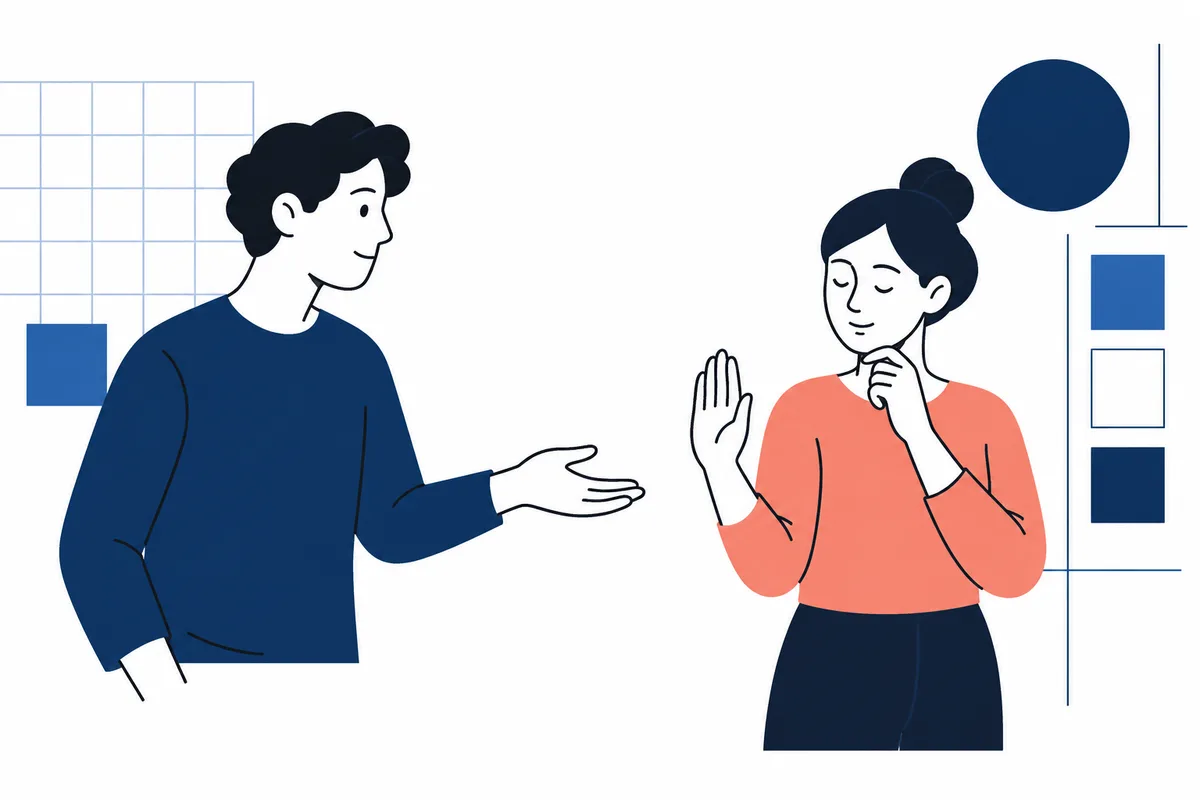
The Emotional Skills Profile can provide a structured starting point for reviewing your own reported emotional habits and scenario judgments after a sibling declines help. It cannot reveal your sibling’s reason or grade the exchange. Separate what you felt, what you inferred, and what you did next; accept the refusal and leave future help optional.
What kind of reflection can this profile support?
When your sibling declines help, the Emotional Skills Profile can offer a structured starting point for reviewing your own response. It cannot tell you why your sibling said no or decide whether either of you handled the exchange well. For that, keep three things distinct: what you felt, what you inferred from the refusal, and what you did next. The profile can help you examine the first and third; the second remains a question unless your sibling chooses to explain.
The profile is an educational self-reflection tool with 32 original items across recognition, understanding, regulation, and responding to others. Its recent-behavior summary asks you to consider your reported tendencies; its authored-scenario judgments invite reflection on choices in set situations. Neither is a recording of this conversation. The first may prompt you to notice, for example, whether disappointment tends to make you offer again. The second may give you a chance to consider how you would respond to a described refusal. These are starting points for inquiry, not findings about what happened between you and your sibling.
In “The Measurement of Emotional Intelligence: A Critical Review of the Literature and Recommendations for Researchers and Practitioners,” the authors distinguish self-report measures, which ask people about typical behavior or perceived ability, from ability measures, which ask them to solve emotion-related problems. That distinction matters here because a remembered tendency is not a replay of a particular exchange. Use any result to check your own account against what you recall saying and doing. The scope is your reaction and next behavior; your sibling’s motive, feelings, and judgment are not measured by your profile.
Sources: Emotional Skills Profile; The Measurement of Emotional Intelligence: A Critical Review of the Literature and Recommendations for Researchers and Practitioners
Why can an offer meant as care still be declined?
A sibling’s refusal can sting, especially when the offer felt like an ordinary expression of care. But the offerer’s intention and the recipient’s experience answer different questions. The intention may be generous; the help may still arrive at the wrong time, address the wrong need, or ask the recipient to take on a cost they do not want. A no therefore does not, by itself, establish rejection of the relationship or of the person offering help. In “Thanks, but no thanks: Negotiating face threats when rejecting offers of unwanted social support,” Floyd and Ray asked 503 adults to recall a time someone offered support they considered unwanted and burdensome. Participants answered open-ended questions about the offer, why they did not want it, and how they responded. The researchers coded recurring reasons, including a threat to autonomy, mismatch between need and offered support, concern about burdening the provider, privacy invasion, and threats to feeling respected, capable, or included. The study describes recipients’ accounts; it does not test what caused a particular person to refuse. The sample included offers from several kinds of relationships, including siblings, but sibling offers were only a minority. Its categories are useful prompts for reflection, not probabilities about siblings. They do not tell us that a sibling who declines practical help feels incapable, or that they are protecting privacy. They show that accepting help can carry costs alongside its intended benefit, and that people may weigh those costs differently. The form of help matters. Advice can require listening to a solution the recipient did not request. Practical assistance may mean coordinating schedules, explaining private details, or feeling indebted. Company or reassurance can create pressure to talk when someone would rather be alone. These are examples of how an offer might fit poorly; they are not explanations to attach to a sibling without asking, and the sibling need not provide an explanation for a refusal. A useful review question is: Did the offer match what my sibling asked for, or would accepting it have created work, exposure, obligation, or less choice for them? Look at the specific offer and the words around it. An open-ended “I can help if you want” leaves more room than repeatedly naming what the person should accept. Still, even a carefully phrased offer can be declined. The recipient’s answer is the clearest evidence about whether to proceed now. This study relied on adults’ memories of unwanted offers and grouped their written explanations into categories. It cannot determine the motive behind this sibling’s no, and its results should not be treated as sibling-specific findings. They do offer a useful check on the assumption that care should automatically be welcomed: good intent does not settle whether help fits. For the moment, the refusal is enough reason to stop or change the offer.
Sources: Thanks, but no thanks: Negotiating face threats when rejecting offers of unwanted social support
What should you separate before interpreting the refusal?
A useful review keeps three records separate: what happened, what you felt, and what you concluded about the refusal. “My sibling said no to the ride” is an observable exchange. “I felt disappointed” names your emotional response. “They do not value me” is an interpretation. The first two describe your side; the third makes a claim about someone else’s thoughts. This three-part claim audit is a practical reflection method, not a validated test or scoring rule. Write the words you remember and the action that followed them as plainly as possible. Then name the emotion you noticed,. Finally, write the meaning you attached to the refusal as a hypothesis. The separation reveals when a conclusion has outrun the evidence. Your sibling declined this offer; you can respect that answer without deciding what it says about the whole relationship. The distinction matters because noticing a feeling and understanding its trigger are different steps. Disappointment might arise because you wanted to help, because the refusal felt abrupt, or because you expected the offer to be welcomed. In “The Measurement of Emotional Intelligence: A Critical Review of the Literature and Recommendations for Researchers and Practitioners,” the authors distinguish measures of typical emotional behavior from tests of maximum performance. Self-report can organize what you believe you tend to do in emotional situations; it does not verify what happened in one conversation. A feeling is information about your experience; its cause may need further thought. The review can then turn toward action. Suppose you offered to take care of a small errand, heard “No, I’ve got it,” and felt an immediate urge to explain why accepting would be easier. The observable details are the refusal and your urge to persuade. The emotion might be worry or disappointment; the interpretation might be that your help was rejected personally. Before responding, pause long enough to separate the urge from the next behavior. You could accept the answer and leave the offer there. Regulation means choosing what to do with the feeling. Evidence on unwanted offers gives a reason to keep the recipient’s perspective in view, while leaving their motive undecided. “Thanks, but no thanks” reports a study in which 503 participants recalled support offers they found undesirable or burdensome. Respondents described autonomy threats, mismatched help, privacy concerns, provider burden, and relationship or competence concerns. Siblings were the source in 7.4% of recalled offers. These categories span varied relationships and cannot identify this sibling’s reason. A refusal alone does not tell you whether the offer felt mismatched, intrusive, unnecessary, or simply unwanted at that time. The Emotional Skills Profile’s recognition, understanding, and regulation areas can give the reader prompts for examining those parts of their own response. Recognition concerns noticing an emotion; understanding asks what may be contributing to it; regulation concerns the response chosen while feeling it. These distinctions guide reflection; the profile cannot reconstruct the exchange. Notice a reported habit, then check it against your words and actions. If the evidence supports only “I felt disappointed and wanted to persuade,” keep the conclusion there. A hurt feeling is real as a feeling; it is not proof that the sibling intended rejection. The separation identifies what you can examine and change while leaving your sibling’s reasons with them.
Sources: The Measurement of Emotional Intelligence: A Critical Review of the Literature and Recommendations for Researchers and Practitioners; Thanks, but no thanks: Negotiating face threats when rejecting offers of unwanted social support
How is a reflection profile different from a performance test?
The difference is what the person taking the test is asked to do. A self-report profile asks you to describe your usual responses or emotional tendencies. A performance-based measure gives you emotion-related problems and scores how you solve them. The critical review “The Measurement of Emotional Intelligence: A Critical Review of the Literature and Recommendations for Researchers and Practitioners” draws this distinction between typical behavior and maximal performance. It also cautions that emotional-intelligence measures are not interchangeable simply because they share a label. Their results answer different questions. The Emotional Skills Profile belongs on the self-reflection side of that divide. Its 32 original items cover recognition, understanding, regulation, and responding to others. The report keeps summaries of recent behavior separate from judgments about authored scenarios. The first asks you to look back at your own tendencies; the second asks you to consider what you might do in a described situation. Neither is an observation of what happened when your sibling declined your offer. A profile may therefore help you notice a pattern worth checking, such as whether you tend to keep offering after a refusal. It cannot establish that you did so in this exchange, and an authored scenario cannot replay the conversation for you. GECo, the Geneva Emotional Competence Test, makes the contrast concrete. Its PubMed record describes a workplace ability measure with tasks covering emotion recognition, understanding, regulation, and managing others. These are problem-solving tasks assessed through a scoring method, rather than statements asking someone to characterize their ordinary habits. It does not validate the Emotional Skills Profile, and workplace tasks do not show what either sibling felt during this particular exchange. For this question, that distinction matters more than a contest over which format is better. A performance test can sample how someone reasons about emotional situations under test conditions. A self-report can organize reflection on how that person believes they tend to respond in everyday situations. Since the reader wants to examine their own response, a recent-behavior profile has a relevant prompt: what do I notice I usually do when my help is declined, and what might I practice next? It does not measure maximum emotional ability or provide a norm-referenced rank. Self-report also leaves room for a gap between intention, memory, and what another person experienced. Remembering that the offer was meant kindly says something about the offerer's intention; it does not tell us whether the sibling experienced it as welcome, badly timed, or burdensome. Nor does the sibling's refusal alone tell us which of those possibilities applied. The event itself supplies better evidence: the words exchanged, whether the offer stopped, and what happened afterward. If the reader remembers continuing to persuade, that is a specific behavior to reflect on. If the reader accepted the no immediately, the profile cannot turn the refusal into proof of a personal failing. The critical review explains why a report of typical tendencies differs from a scored ability task. The GECo record illustrates the latter with a workplace instrument whose evidence belongs to that instrument. For this sibling exchange, let the profile organize a question about your own habits, then compare that reflection with what you actually said and did.
Sources: The Measurement of Emotional Intelligence: A Critical Review of the Literature and Recommendations for Researchers and Practitioners; The Geneva Emotional Competence Test (GECo): An ability measure of emotional intelligence
When does timing and choice change how support lands?
An offer’s usefulness depends partly on whether it meets a current need and leaves the recipient room to choose. This helps explain why good intentions alone cannot settle whether an offer felt supportive. Research points to need, timing, relationship, and choice as relevant features, though none of the studies below establishes why a sibling declined an offer. In “When Is Received Social Support Related to Perceived Support and Well-Being? When It Is Needed,” two studies compared a simple count of support received with a measure that considered whether the person needed support at the time. In Study 1, the need-sensitive measure, the proportion of times support arrived when needed, had stronger correlations with perceived support and mental-health measures than the unqualified amount did. Study 2 replicated the stronger relationship with perceived support and mental health. These are associations, not proof of causation. The practical question is whether the offer matched what the other person wanted then, in the form they wanted it? A large amount of help is not automatically a good fit. A more specific study examined emotional support between parents and emerging adults. In “A Helping Hand Isn’t Always So Helpful,” 194 college students aged 18 to 25 recalled a recent instance of receiving emotional support from a parent and rated how effective it felt. The researchers found that, when parental autonomy support was low, participants perceived unsolicited support as less effective than support they had sought. They also found that parental emotional responsiveness and cognitive support related to higher perceived effectiveness at higher levels of autonomy support. Here, autonomy means having meaningful choice and agency in whether or how support is given. The study used participants’ reports about parent-child interactions at one point in time; it does not show that every unsolicited offer is unwelcome, or tell us how siblings respond to practical help. That qualification matters. “Intrusive Social Support Among Black and White Individuals With Type 2 Diabetes” analyzed semi-structured interviews with 32 adults managing type 2 diabetes. The participants’ accounts showed that unsolicited and overprotective family support was not uniformly experienced as negative. Perceived limits on autonomy generally made support less welcome; for some Black participants, seeing the support as an expression of love made it more acceptable. This small, illness-specific qualitative study describes varied experiences in chronic-illness care. Its findings cannot be carried over as a rule about race, sibling relationships, or an ordinary offer. They do challenge a blanket claim that any unasked-for help is harmful. Taken together, these studies make fit and choice useful questions for reflection, not a way to infer a sibling’s private reason. Parent-youth emotional support and family care around diabetes differ from siblings offering everyday help. A sibling may simply prefer to handle the matter alone, or the timing or kind of help may not suit them; those are possibilities, not explanations to assign. If they have said no, the immediate response can still be clear: accept it. Ask permission before offering a different kind of help or bringing the subject up again. A polite “maybe later” leaves the next step with them; it is not an invitation to keep checking.
Sources: When Is Received Social Support Related to Perceived Support and Well-Being? When It Is Needed; A Helping Hand Isn’t Always So Helpful: Mothers’ and Emerging Adults’ Emotional Support, Autonomy Support, and Perceived Effectiveness of Unsolicited Support; Intrusive Social Support Among Black and White Individuals With Type 2 Diabetes
What does the profile result let you practice?
A result becomes useful when it points to a behavior you can notice and choose to handle differently. The Emotional Skills Profile keeps two kinds of reflection distinct: a summary of reported recent behavior and judgments about authored scenarios. The first can prompt a question about a habit you recognize in daily life; the second can invite you to think through a set situation. Neither is a record of what you said to your sibling, and neither tells you whether your offer was welcome. The product describes these as separate parts of an educational profile, so use them as separate prompts rather than combining them into a verdict about the exchange. Suppose a result brings your attention to how quickly you act when someone close to you is struggling. After a sibling declines help, that prompt might lead you to notice disappointment, then check whether you followed the refusal with another offer, advice, or a request for an explanation. You can use the moment to ask whether the pattern fits your own experience, then choose one small action to try next time. For instance: after hearing “no,” acknowledge the answer once and leave the next step to your sibling. This is a practice intention, not a promise that the next exchange will go smoothly. Keep the target concrete enough to revisit. “Be more emotionally intelligent” gives you no clear way to tell what you did. “I will pause before sending another message after a refusal” describes an action you can remember later. On a later occasion, you can ask whether you paused and whether you respected the answer. That comparison is about your chosen behavior, not a rising score or a claim that the relationship improved. There is a difference between choosing a practice and showing that a skill changed. In “Can We ‘Brain-Train’ Emotional Intelligence?,” a narrative review of 25 ability-EI training studies describes varied programs involving instruction, practice, reflection, role-play, and other activities. The authors discuss the importance of measuring claimed improvement with objective criteria or active comparison groups. The reviewed studies differed in participants, activities, and methods, so the review does not give one estimate that applies to every kind of reflection. Their review concerns ability-EI training research; it does not test this profile, informal reflection after a family conversation, or whether a reader’s behavior changes. It therefore supports a narrow point: insight or intention alone is not evidence of measured improvement. Treat a profile result as a starting point, choose one response within your control, and later compare your action with that intention. The product offers prompts across emotional skills and separate scenario judgments; it does not select the right practice for you. Your own later behavior supplies the relevant check.
Sources: Emotional Skills Profile; Can We “Brain-Train” Emotional Intelligence? A Narrative Review
What is a useful response after the no?
Accept the refusal as the answer for this moment. A short response such as “Okay. If you want help later, you can ask” makes the choice clear without requiring your sibling to defend it. Then stop offering the same help in another form, unless they reopen the subject. The point is not to discover the hidden reason behind the no. It is to let the other person decide what support, if any, they want. That can feel harder when your offer was sincere. Floyd and Ray’s study, “Thanks, but no thanks: Negotiating face threats when rejecting offers of unwanted social support,” helps explain the awkwardness. In a recall study, 503 participants described offers of support they had considered unwanted or burdensome. They reported reasons that included a mismatch between the support and the need, threats to autonomy, and concern that accepting the offer would burden the provider. Sibling cases were only a subset, and the study cannot explain this refusal. Its practical relevance is that a helper’s good intention cannot settle the recipient’s experience, and a refusal can be difficult when the recipient expects the helper to feel hurt. Your next move can reduce that burden. If you notice yourself wanting to ask “Why not?” or “Are you sure?” pause before asking. A question may be caring, but immediately after a clear refusal it can also make the sibling explain or soften a decision they have already expressed. You can note the question for yourself instead: Was my offer specific to what they asked for? Did I leave room for a simple no? Those are checks on your approach, not invitations to investigate your sibling. Mental Health First Aid Australia’s article “Someone I’m concerned about doesn’t want my help. What now?” addresses mental-health conversations, a more specific and potentially higher-stakes setting than an ordinary offer between siblings. It advises reflecting on whether poor timing, pressure to talk, or not listening created a barrier, and apologizing if that reflection identifies one. Applied carefully to everyday help, this supports a brief repair when you can name what you did: “I kept pushing after you said no. I’m sorry. I’ll leave it there.” The guidance also recommends keeping the door open for the other person to return on their terms. A simple future-facing sentence does that without asking for reassurance. It does not need a second apology, a request to confirm everything is fine, or a discussion of the sibling’s motive. If there is no immediate danger, an ordinary refusal is enough reason to stop. The narrow exception is a credible, immediate risk of harm; that changes the practical situation and may call for appropriate outside help. A declined offer by itself is not evidence of such a risk. This article is about everyday help, not how to assess a crisis. The observable response is what you can review now: did you accept the no, press again, withdraw warmth, or leave the choice open? A self-report profile may later prompt reflection on your habits, but it cannot establish how this exchange unfolded. If you pressed, a short apology followed by space is more useful than asking your sibling to help you feel better about it. The immediate aim is modest: make the refusal effective and leave future help available only if they choose to ask.
Sources: Someone I’m concerned about doesn’t want my help. What now?; Thanks, but no thanks: Negotiating face threats when rejecting offers of unwanted social support
How should you use the Emotional Skills Profile here?
Use the Emotional Skills Profile if a guided review would help you notice a response you want to handle differently. Its 32 items offer a private structure for considering emotional habits and judgments about authored situations. The assessment page describes these as separate parts of the profile; neither can replay this conversation or tell you what your sibling meant. The useful question is narrower: is there a response of yours you want to practice changing? You might choose to acknowledge a refusal once and wait for your sibling to reopen the subject. That does not require agreement about why the offer was declined. Mental Health First Aid Australia’s guidance on declined help recommends reflecting on whether pressure or poor listening shaped the exchange, and apologizing for a specific action when needed. Its advice concerns mental-health support, so an ordinary family refusal should not become a sign of crisis. A brief repair can name what you did: “I kept pushing after you said no. I’m sorry. I’ll leave it with you.” The profile may help you decide whether this is a recurring habit worth examining; it cannot guarantee that a later conversation will go well. Your sibling’s preference and your next behavior guide this moment. If a structured look at your own patterns would help, [explore the Emotional Skills Profile](/assessment). It can sharpen the question you ask yourself; accepting the no is the practical response your sibling can see.
Sources: Emotional Skills Profile; Someone I’m concerned about doesn’t want my help. What now?
Sources
- Emotional Skills Profile
Supports the product description, item count, skill areas, and distinction between recent-behavior summaries and authored-scenario judgments.
- The Measurement of Emotional Intelligence: A Critical Review of the Literature and Recommendations for Researchers and Practitioners
Supports the distinction between self-report of typical behavior and performance-based ability measures.
- Thanks, but no thanks: Negotiating face threats when rejecting offers of unwanted social support
Supports reported reasons for declining unwanted support, based on 503 adults’ recalled offers across several relationships.
- When Is Received Social Support Related to Perceived Support and Well-Being? When It Is Needed
The accessible abstract supports the reported association between support considered against need and perceived support and well-being.
- A Helping Hand Isn’t Always So Helpful: Mothers’ and Emerging Adults’ Emotional Support, Autonomy Support, and Perceived Effectiveness of Unsolicited Support
Supports findings about emerging adults’ perceived effectiveness of solicited versus unsolicited parent support and autonomy support.
- The Geneva Emotional Competence Test (GECo): An ability measure of emotional intelligence
Supports the comparison with a workplace ability-EI measure using scored emotion-related tasks.
- Intrusive Social Support Among Black and White Individuals With Type 2 Diabetes
Supports the context-specific finding that unsolicited family support was not uniformly experienced as negative in 32 interviews.
- Can We “Brain-Train” Emotional Intelligence? A Narrative Review
Supports the distinction between choosing a reflective practice and demonstrating measured change in ability-EI training research.
- Someone I’m concerned about doesn’t want my help. What now?
Supports proportionate guidance to reflect on pressure or listening, apologize for a specific barrier, and leave future contact optional.
Apply it to the real situation
Choose one response to practice after a refusal
From this guide: Decide whether a guided review of your emotional habits and scenario judgments would help you notice a recurring response.
The profile can organize reflection on your own reported habits and judgments about authored situations. It cannot explain your sibling’s reason for declining or replay the exchange. If a structured look at your patterns would help you choose one response to practice, explore the private 32-item Emotional Skills Profile. Accepting the refusal remains the practical response your sibling can see.