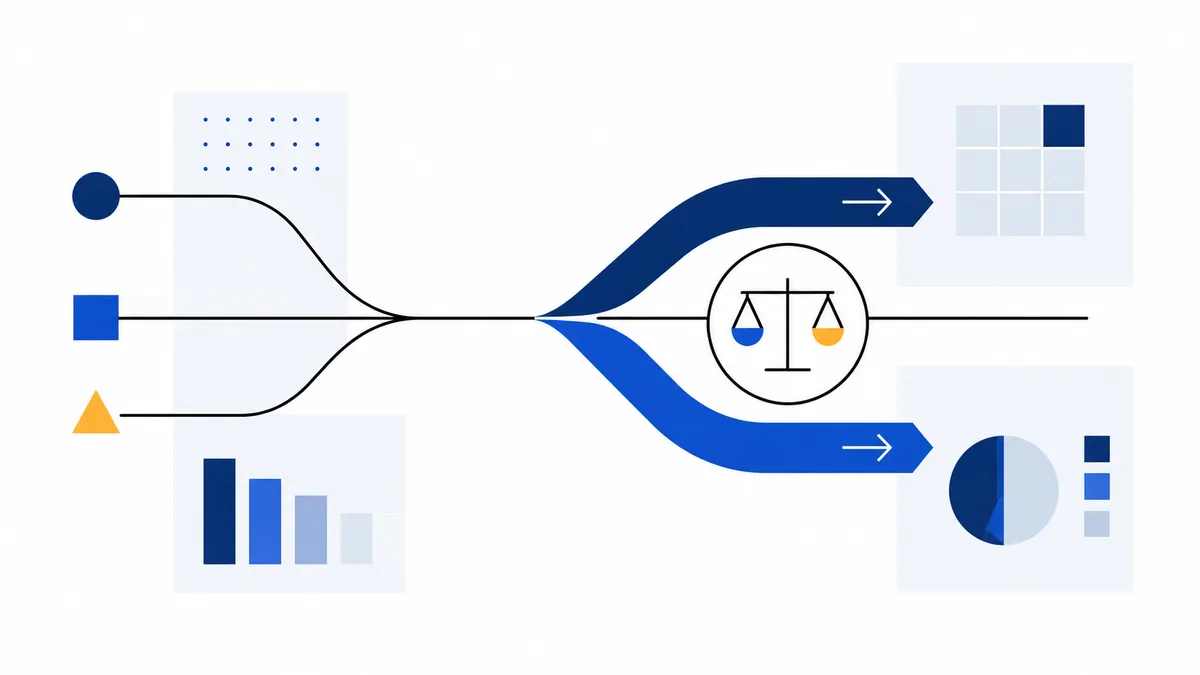
Emotional intelligence may contribute to some ethical judgments and workplace behaviors, and a recent two-study paper reports an indirect statistical association through self-efficacy. That makes confidence a plausible part of the link, but does not show it causes ethical action. Emotional awareness, ethical judgment, confidence in following through, and workplace conditions are separate considerations; an EQ score cannot predict ethical conduct.
Opening answer
When a work decision could benefit one person or protect someone else from harm, emotional intelligence (EI) may bring emotional and interpersonal information into view. The evidence supports a qualified yes: EI has been associated with some ethical judgments and work behaviors, and a recent two-study paper reports an indirect statistical link through self-efficacy. That pattern makes confidence relevant, but does not show it causes ethical action. A feeling of capability cannot establish that the choice is sound or that a person will carry it out. In “Emotional Intelligence and Business Ethics: Feeling Confident in Doing the Right Thing,” Study 1 included 230 employed participants. The authors report that EI positively predicted ethical business decisions and organizational citizenship behaviors, and negatively predicted counterproductive work behaviors. Study 2 included 143 business students and found significant indirect effects through self-efficacy. The abstract lacks enough detail about measures, effect sizes, or timing to establish a causal sequence. It cannot tell us whether confidence came first or led to action, or how the findings apply to an employee facing a choice. That distinction matters when someone is deciding whether to raise a concern, correct a report, or challenge a decision. Emotional skills may shape what they notice and how they handle the exchange; the ethical merits, confidence in following through, and workplace route for acting need separate consideration. An EQ score cannot settle these questions or forecast ethical conduct. The evidence below helps identify what EI may contribute and what must be judged on its own.
Sources: Emotional Intelligence and Business Ethics: Feeling Confident in Doing the Right Thing
What does emotional intelligence contribute to the judgment?
Emotional intelligence may help a person notice how their own feelings and other people’s reactions bear on a decision. That can improve the information available for deliberation, but emotional awareness does not supply the ethical standard or guarantee a sound conclusion. A colleague’s visible worry, for example, may signal that a proposed change carries a cost the meeting has not discussed. Recognizing the signal can bring that cost into view; it cannot by itself decide whether the cost is justified, whose interests should take priority, or what duties apply.
Emotional intelligence (EI) is not one uniform test result. Depending on the model, a measure may assess emotion-related abilities or a person’s reported tendencies and confidence in handling emotional situations. Those outputs answer different questions. For this argument, the plausible contribution is narrower: recognizing an emotion and understanding how it may shape attention can help someone notice information that a rushed or defensive response might miss. Regulation may then help keep a disagreement usable long enough to examine that information. Neither step makes a person morally right. A calm explanation can still defend a harmful choice, and strong concern for another person can coexist with an incomplete account of the facts.
The recent paper, “Emotional Intelligence and Business Ethics: Feeling Confident in Doing the Right Thing,” defines its ethical business decision outcome as decisions that prioritize stakeholders’ well-being above personal or organizational gains. Its abstract reports a study of employed participants (N=230): EI positively predicted ethical business decisions and organizational citizenship behaviors, and negatively predicted counterproductive work behaviors. This gives the question a workplace connection beyond hypothetical moral judgment alone. Yet the abstract’s definition also shows what the outcome does and does not capture. Attending to stakeholders’ well-being matters, but ethical judgment can require weighing competing claims, obligations, fairness, and foreseeable harms. The reported association does not show that emotion recognition settles those questions or that every decision favoring a stakeholder is ethically sound.
The article “Feeling confident in doing the right thing: How emotional intelligence shapes ethical leadership,” published by Ivey Impact, summarizes the same research and its authors’ interpretation: recognizing one’s emotions and other people’s feelings may make social consequences more salient. That explanation is plausible, but the institutional article is coverage of the study, not an independent replication. It should not be counted as a second body of evidence. The distinction is useful in practice: noticing that a decision could burden customers or coworkers expands the picture a decision-maker must consider; standards and evidence are still needed to judge what response is fair.
So EI is best understood here as a possible input to ethical judgment. It may help keep emotions and interpersonal consequences available for consideration, particularly when self-interest or organizational gain competes with others’ well-being. Whether that attention produces a sound judgment depends on the reasons and facts brought to bear. The paper’s abstract reports associations and, in its student study, an indirect statistical link through self-efficacy; it does not establish a causal chain from an emotional skill to a correct ethical decision. EI can support the work of noticing and deliberating. It is neither a moral compass nor a measure of ethical character.
Sources: Emotional Intelligence and Business Ethics: Feeling Confident in Doing the Right Thing; Feeling confident in doing the right thing: How emotional intelligence shapes ethical leadership
A judgment is one stage of ethical action
Noticing a concern, deciding what should be done, choosing to give that judgment priority, and carrying it out are related but distinct processes. A finding about one stage cannot establish the others. That distinction matters when an employee sees that a report presents a project as safer or more successful than its underlying figures support. Recognizing that the presentation could mislead readers is different from deciding what correction is required, and both are different from making time to raise the issue or knowing how to do so.
Rest’s four-component model gives names to these steps. Moral sensitivity is noticing and interpreting the ethical stakes: who may be affected, what the available actions are, and what consequences they could have. Moral judgment weighs those options and evaluates what ought to be done in the circumstances. Moral motivation means giving the selected moral action priority over competing goals. Moral implementation is having the skills, persistence, and practical knowledge to carry it through. The components can influence one another; the model presents a useful order for analysis, not a claim that people move through a fixed sequence.
In the report example, sensitivity might involve recognizing that a missing qualification changes what a reader would infer. Judgment concerns which correction is justified by the evidence and the employee’s responsibilities. Motivation becomes relevant when raising the correction competes with a deadline, loyalty to a colleague, or concern about appearing difficult. Implementation concerns the actual steps: checking the source figures, identifying the right recipient, and communicating the correction clearly. These are illustrative distinctions, not observations from a workplace study. They show why a person can understand the ethical issue and still fail to act on that understanding.
The study “Moral Motivation, Moral Judgment, and Antisocial Behavior” tested part of this gap in 440 undergraduates at two Midwestern US universities. Participants completed survey measures of moral judgment, moral motivation, and past antisocial behavior. In a statistical model, the researchers reported that motivation to maintain an ethical focus was a stronger predictor of antisocial behavior than moral judgment, while both were unique predictors. Their motivation measure included citizenship, unselfishness, and ethical identity. The study authors explicitly said that the measures did not test causality. Its outcome was students’ self-reported past antisocial acts, not workplace ethics or whether employees correct misleading reports. It therefore supports the narrower point that judgment alone is an incomplete proxy for behavior; it does not show that motivation, much less emotional intelligence, causes ethical action at work.
For EI research, this framework is a useful check on what an outcome can bear. A scenario answer may capture a judgment about what should happen. A self-report of ethical conduct or a measure of workplace behavior reaches a different part of the process, though each still has its own limits. To interpret a reported link between EI and ethics, ask whether the study measures noticing, judging, prioritizing, or implementing. Evidence at one stage may help explain another, but the stages should not be collapsed into a single claim that someone with higher EI will do the right thing.
Sources: Moral Motivation, Moral Judgment, and Antisocial Behavior
Does ethical confidence explain the connection?
Self-efficacy is a person’s belief that they can manage a particular challenge or carry out a particular action. It is narrower than general confidence: believing you can stay composed in a tense meeting, for example, is not automatically the same as believing you can identify an ethical issue, defend a sound decision, or follow through when it costs you something. Those beliefs can interact, but they answer different questions.
The paper “Emotional Intelligence and Business Ethics: Feeling Confident in Doing the Right Thing” examines self-efficacy as a possible link between emotional intelligence and ethical outcomes. Its first study involved 230 employed participants. The authors report that emotional intelligence positively predicted ethical business decisions and organizational citizenship behaviors, and negatively predicted counterproductive work behaviors. They define the ethical-decision outcome as choices that prioritize stakeholders’ well-being above personal or organizational gains. In a second study, with 143 business students, the authors report significant indirect effects through self-efficacy for ethical decision-making, citizenship behaviors, and counterproductive behaviors. Confidence belongs in the explanation because this pattern is consistent with emotional intelligence relating to efficacy connected with those outcomes.
“Indirect effect” is a statistical description of a relationship that runs through a proposed middle variable. Here, the reported pattern fits a route in which emotional intelligence relates to self-efficacy, which in turn relates to measured ethical outcomes. The term does not show that the first factor changed the second, or that the second caused later conduct. Establishing that sequence requires evidence that can distinguish cause from correlation. The accessible publisher abstract reports samples and findings, but not effect sizes, instruments, or enough detail about measurement timing and design to support a causal reading. The result should therefore be described as an indirect statistical association, not proof that confidence produces ethical action.
That boundary matters because “confidence” can conceal different capabilities. Someone may feel able to regulate frustration while a colleague challenges a decision, yet doubt their ability to explain the relevant policy. Another may feel sure they can speak up, while reaching a poor judgment because they missed a key fact or an affected person’s interests. A third may know what should happen and be capable of saying so, but lack an available process for correcting the problem. These are practical distinctions, not measures reported by the studies. The abstract does not say the researchers tested moral courage, confidence in resisting pressure, or safe reporting channels. Treating self-efficacy as evidence for any of those specific capacities would overstate the finding.
The samples also contribute different pieces. Employed participants connect emotional intelligence with work-related ethical decisions and behaviors; business students provide the mediation analysis. Together they make self-efficacy a plausible candidate mechanism, but the abstract does not show that the same measured pathway was demonstrated among employees, or that confidence preceded the outcomes. A group-level association also cannot tell an individual whether their confidence is well calibrated: feeling capable is not evidence that a particular judgment is correct.
When reflecting on a difficult work decision, ask what confidence refers to. Can I keep listening while defensive? Can I check who is affected and what obligation applies? Can I explain my concern clearly? Is there a workable way to act? One answer does not settle the others. An emotional-skills reflection can help someone notice habits around emotion and interaction, but it does not measure ethical self-efficacy or establish whether a decision is right. In this evidence, confidence is a candidate link between emotional intelligence and selected outcomes. It remains a question to examine separately, not a proven bridge from EQ to ethical conduct.
Sources: Emotional Intelligence and Business Ethics: Feeling Confident in Doing the Right Thing
What changes when studies measure different outcomes?
Calling all of these outcomes “ethical decision-making” hides important differences. A scenario response records how someone evaluates a described choice. A survey about ethicality or perceptions records what respondents say about themselves or others. Workplace citizenship and counterproductive behavior concern actions that benefit or harm colleagues or the organization, but neither label tells us whether a particular morally difficult decision was correct. Read together, the studies suggest a bounded relationship between emotional intelligence (EI) and several ethics-related outcomes; they do not show that one EQ score predicts an employee’s conduct. The 2018 study “The Impact of Emotional Intelligence on Ethical Judgment” asked 100 MBA students in the US and India to complete an EI survey and respond to three scenarios using four ethical perspectives. Regression analyses found significant relationships between the composite EI score and the relativism perspective, and between an EI decision-making subscale and that perspective. Age was also significant. the reported relationship concerned one perspective among four, in a student sample making scenario judgments. It says nothing about whether participants later acted on those judgments at work. A different kind of evidence appears in “Emotional Intelligence, Individual Ethicality, and Perceptions.” Its survey of 198 respondents found that EI statistically predicted individual ethicality, perceptions of others’ ethicality, and the belief that unethical behavior can facilitate success. The authors also report that self-esteem fully mediated the association between EI and that last belief. a survey association does not establish later observed conduct. “Predictor” here describes a statistical relationship in the survey; it should not be read as proof that changing EI would change behavior. The self-esteem result concerns a belief about success, not confidence to speak up or carry through a specific ethical decision. The 2026 paper “Emotional Intelligence and Business Ethics: Feeling Confident in Doing the Right Thing” separates outcomes more explicitly. In its first study, 230 employed participants’ EI positively predicted ethical business decisions and organizational citizenship behaviors, and negatively predicted counterproductive work behaviors. The paper defines ethical business decisions as choices that prioritize stakeholders’ well-being above personal or organizational gains. In a second study with 143 business students, the authors report significant indirect effects through self-efficacy for ethical business decision-making, citizenship behavior, and counterproductive behavior. This makes self-efficacy a plausible link. The accessible abstract omits effect sizes, measures, and design details needed to show that confidence came first and caused action. These outcomes should not be collapsed into a single scale of “being ethical.” A favorable response to a scenario is not the same observation as helping a colleague; a report about one’s ethicality is not an independent record of conduct; and a lower association with harmful work behavior does not establish that a person will challenge a misleading decision. Citizenship behavior can occur for many reasons, while a counterproductive act can be harmful without being the specific ethical choice at issue. The studies use different populations and measures, so their results cannot be combined into an individual prediction. Each measure answers a different question. Scenario studies test judgments under described conditions; surveys capture respondents’ perceptions and self-reports; workplace behavior studies examine broader conduct categories. Across them, EI is associated with selected ethical judgments, beliefs, and behaviors, and the newer studies report an indirect statistical pattern involving self-efficacy. The evidence does not establish a uniform effect or a causal route from emotional skill through confidence to correct action. When someone applies this research to a real work concern, the measured outcome, sample, and method matter more than the shared label “ethical decision-making.”
Sources: The Impact of Emotional Intelligence on Ethical Judgment; Emotional Intelligence, Individual Ethicality, and Perceptions; Emotional Intelligence and Business Ethics: Feeling Confident in Doing the Right Thing
Can personal confidence overcome the conditions at work?
No individual skill guarantees follow-through when the workplace context shapes what someone can safely or practically do. Ethical conduct is better considered at three connected levels: what happens within a person, between people, and across the organization. The Annual Review article “Toward a Better Understanding of Behavioral Ethics in the Workplace” uses those levels to organize research. Its framework matters here because confidence is only one part of a decision made inside relationships and work arrangements. Suppose an employee believes a report leaves out a material risk. Feeling able to question the omission may help them begin a conversation. Their confidence does not establish that the risk is material or the proposed correction accurate. Capacity to act is separate from evidence and responsibility. Self-efficacy means belief in one’s capability to manage a specified challenge or carry out an action. It is therefore more precise to ask, “Can I raise this concern clearly with the person responsible?” than to ask whether someone is generally confident. Such a belief concerns perceived capability, not the soundness of the judgment or what the person will do. Evidence linking emotional intelligence and self-efficacy to selected ethical outcomes can make confidence a plausible part of the explanation; it cannot turn confidence into proof of ethical judgment or implementation. The three-level framing in “Toward a Better Understanding of Behavioral Ethics in the Workplace” also makes clear why a person’s capacity should not be treated as the whole story. A concern may be discussed with a colleague, shaped by a manager’s response, and constrained by how responsibilities are assigned. At the organizational level, unclear authority or an absent process may leave no obvious next step. Incentives may reward speed or a favorable result while giving little room to correct the record. Retaliation risk may also shape the choice. These conditions are worth inspecting, but the EI studies summarized here did not test them. This distinction changes how a stalled response should be interpreted. Silence could reflect uncertainty about the facts, limited confidence in a difficult conversation, a reasonable concern about consequences, or a workplace with no credible path for correction. An EQ score cannot sort those explanations or show that the organization has made responsible action possible. Treating silence as a simple shortage of emotional skill risks locating the problem entirely inside the employee when the relevant obstacle may sit in a working relationship or the organization’s arrangements. Confidence can still matter. Someone who believes they can ask a careful question may be more prepared to seek clarification, state the observed discrepancy, or request that the responsible decision-maker review it. That is a practical possibility, not a result established by the cited EI findings. It may help with the first move while leaving facts, duties, and follow-through unresolved. If the route is unclear, confidence supplies neither authority nor protection. For an individual facing such a choice, keep the checks distinct. First, establish what is known and what remains an interpretation. Then identify who may be affected and which responsibility or rule bears on the decision. Next, consider the action within your control and the person or process that can address the issue. Finally, take stock of what makes that step feasible: authority, access to the relevant decision-maker, a clear procedure, and the likely consequences of raising it. This applies the three levels as a reasoning aid, not as a tested intervention or guarantee of safety. A development conversation can focus on one observable behavior, such as asking for the evidence behind a decision without escalating the exchange. That reflection concerns how a person handles emotion and interaction. The ethical assessment still depends on the facts and responsibilities at stake; workplace support depends on what channels and authority actually exist. Confidence is one personal resource, not a substitute for sound judgment or a workable route.
Sources: Toward a Better Understanding of Behavioral Ethics in the Workplace
What can an EQ reflection help you do next?
An EQ reflection can help identify emotional habits to examine in a difficult exchange; it cannot tell you whether your ethical judgment is correct or predict that you will act on it. A person may recognize that a colleague will be affected and feel uneasy about challenging a decision, while still needing to establish what the facts show and which responsibility applies. Emotional awareness can make part of the situation easier to notice. It does not settle the ethical question. A useful reflection begins with the decision itself. State it in plain language: what is being decided, changed, reported, or left uncorrected? Then name who may be affected, including people who are not present in the conversation. The 2026 paper, “Emotional Intelligence and Business Ethics: Feeling Confident in Doing the Right Thing,” defines its ethical-business-decision outcome around prioritizing stakeholders’ well-being above personal or organizational gains. The result suggests asking whose interests may be missing, though it does not supply a universal rule for conflicts of duties. Next, notice what is happening emotionally before interpreting the feeling as evidence. Anxiety about disagreeing may signal that the conversation feels risky; irritation may make a quick explanation seem more convincing than it is. Neither reaction proves that the proposed decision is unethical. Pause to separate the feeling from the claim: what do I know, what am I inferring, and what should I check? That small separation is a practical use of emotional regulation. This is a reasoned reflection routine, not an intervention shown to improve ethical outcomes. Then check the obligation and the available facts. A concern about unfair treatment, inaccurate reporting, or a decision’s effect on others calls for the relevant record, rule, commitment, or explanation. Keep the question narrow enough to answer: which part of the decision seems troubling, and what information could confirm or change that view? This prevents an emotional reaction from doing the work of evidence while preserving the reaction as a reason to look more closely. Emotional skill may help someone ask a question without escalating the exchange, or hear a response without immediately treating disagreement as hostility. When facts remain unclear, ask for clarification or consult an appropriate source before making an accusation. If the facts are clear, identify a credible person or process through which the issue can be raised or corrected. Confidence deserves its own check. Ask, “What action do I think is warranted?” and separately, “What would make it possible for me to take that action?” The first question concerns judgment; the second concerns perceived capability and the route available. An EQ reflection does not measure moral self-efficacy, and feeling capable does not establish sound judgment. Workplace conditions may also affect what action is feasible. The 32-item Emotional Skills Profile at /assessment offers a private educational reflection on reported emotional habits and judgments about authored scenarios. It has no validated norms or established ability-test validity, and it does not assess ethical character, moral self-efficacy, or workplace outcomes. It may help someone choose a modest practice target, such as asking a clarifying question before responding defensively. The ethical facts, responsibility, and route for acting still need separate attention. A practical next step is therefore small and specific: choose one observable emotional behavior to practice in the conversation, and identify one fact, obligation, or source of workplace support that needs clarification. Ask whether the habit made it easier to hear, ask, or respond; judge the decision and follow-through on their own evidence and conditions.
What the evidence supports—and where the answer stops
These studies support a possible contribution of emotional intelligence to selected ethical judgments and workplace behaviors. The 2026 paper, “Emotional Intelligence and Business Ethics: Feeling Confident in Doing the Right Thing,” also reports an indirect statistical association through self-efficacy. That pattern makes task-specific confidence relevant; it does not show that confidence causes a person to choose well or act on that choice. The Annual Review synthesis of behavioral ethics supplies a boundary: ethical conduct is examined at individual, interpersonal, and organizational levels, so an individual tendency cannot stand in for the whole situation.
The remaining question is sequence. The accessible account does not establish whether emotional skills precede confidence, whether confidence precedes later ethical action, or how those processes relate in working populations over time. Better methods detail and longitudinal or experimental evidence could clarify those links or qualify the current interpretation. Until then, an EQ result should not be read as a forecast of ethical character. Emotional skills can be a resource for noticing interpersonal stakes and handling a difficult exchange. Judgment still needs to answer to relevant facts and obligations; follow-through depends on a feasible route to act.
Sources: Emotional Intelligence and Business Ethics: Feeling Confident in Doing the Right Thing; Toward a Better Understanding of Behavioral Ethics in the Workplace
Questions readers ask
Does emotional intelligence make someone more ethical at work?
The available studies associate emotional intelligence with selected ethical judgments, beliefs, and workplace behaviors. They do not establish that emotional intelligence causes ethical conduct or predicts an individual employee’s choices.
Is confidence part of the link between emotional intelligence and ethical decisions?
A 2026 paper reports indirect statistical associations through self-efficacy, a person’s belief in their capability to manage a particular challenge or action. The accessible abstract does not establish that confidence causes ethical decisions or later action.
Can an EQ test show whether I will act ethically?
No. The Emotional Skills Profile is a private educational reflection on reported emotional habits and judgments about authored scenarios. It does not assess ethical character, moral self-efficacy, or workplace outcomes.
Sources
- Emotional Intelligence and Business Ethics: Feeling Confident in Doing the Right Thing
Publisher abstract reports two studies and an indirect statistical association through self-efficacy, but lacks method details needed for causal interpretation.
- The Impact of Emotional Intelligence on Ethical Judgment
University record describes a study of 100 MBA students and a relationship between emotional intelligence and a relativism perspective across three scenarios.
- Emotional Intelligence, Individual Ethicality, and Perceptions
Publisher abstract reports survey associations with ethicality and perceptions, including a self-esteem mediation result for a belief about unethical behavior and success.
- Moral Motivation, Moral Judgment, and Antisocial Behavior
Research article explains Rest’s four processes and reports student-sample findings on moral motivation, judgment, and self-reported antisocial behavior.
- Toward a Better Understanding of Behavioral Ethics in the Workplace
Annual Review synthesis organizes workplace behavioral ethics research at intrapersonal, interpersonal, and organizational levels.
- Feeling confident in doing the right thing: How emotional intelligence shapes ethical leadership
Institutional research communication summarizes the study and the authors’ interpretation of emotional recognition and regulation.
Apply it to the real situation
Choose one emotional habit to examine in a difficult work conversation
From this guide: The evidence separates emotional habits from ethical judgment, confidence, and the workplace route for acting. An individual reflection can help identify a behavior to pay attention to in your own conversations.
The Emotional Skills Profile offers a private, educational reflection on reported emotional habits and judgments about authored scenarios. Use it to identify one behavior to consider in a difficult exchange, such as pausing to ask a clarifying question. It does not assess ethical character or predict what you will do; the facts, responsibilities, and available route for acting remain yours to examine.