
Emotional intelligence may shape how people respond to stress and recover, and some workplace training studies have measured perceived stress, burnout, and wellbeing. Those measures deserve attention, but the available evidence does not establish that emotional intelligence reliably reduces recurring workplace pressure. Observe emotional behavior, strain, and changing work conditions separately.
Does emotional intelligence reduce workplace stress or change the response?
Emotional intelligence may shape how a person reacts to a stressful moment and recovers afterward; training studies also measure some direct stress-related outcomes. The evidence does not establish that emotional intelligence reliably removes the ongoing demands of a job. Those are different questions: exposure is the pressure a worker faces, acute response is what happens during a particular challenge, recovery is how quickly that response settles, and reported strain is the person's broader experience over time. Improvement in one can matter without proving change in the others. To answer the question, the evidence below moves from controlled acute-stress experiments to workplace observations and training research, then considers what conclusions each design can support. A lower pulse or smaller emotional reaction during a short task would speak to immediate response; a reported change in burnout or perceived stress after a course would address a broader outcome. Neither finding alone shows that the workload, deadline, or conflict that helped produce strain has eased. Keeping those endpoints distinct lets us recognize real improvement in experienced stress without attributing every improvement to a change in exposure. The central issue is therefore not whether emotional intelligence can matter, but which part of the stress process the available evidence actually measured.
What can an acute-stress experiment tell us?
An acute-stress experiment gives researchers a way to observe a response around a defined challenge. A participant may face a time-limited cognitive task, a competitive situation, or an emotionally charged stimulus; researchers can then measure changes during the challenge and, in some designs, how those measures move afterward. That setup can test whether a measured form of emotional intelligence is associated with lower reactivity or quicker recovery under specified conditions. It cannot by itself show whether a person encounters fewer deadlines, conflicts, or workload pressures in ordinary employment. The experiment holds the stressor within a study procedure; the worker's exposure in a job is produced by a much wider set of decisions and conditions.
The systematic review *Does Emotional Intelligence Buffer the Effects of Acute Stress? A Systematic Review* examined 45 experimental studies. Its answer is conditional: evidence for an emotional-intelligence buffer was only partial, and results varied with both the stress context and the way EI was measured. The review describes lower reactivity in some sports and cognitive-stressor settings, while comparable patterns did not consistently appear for psychosocial stress or emotive stimuli. That unevenness matters. A result from a performance task cannot simply be carried over to a tense conversation with a colleague, because the demands and emotional material differ. The review supports asking which kind of challenge and which response measure produced a finding, rather than treating “stress” as one interchangeable outcome.
The distinction between trait and ability measures further limits what a finding means. Trait EI concerns a person's reported tendencies in emotional life; an ability approach assesses performance on emotion-related problems. The review found more evidence for trait EI in the acute-stress literature, while ability-EI evidence was comparatively sparse. If people reporting stronger emotional tendencies show lower reactivity in a particular paradigm, that is informative about that association and setting. It is not the same result as demonstrating that emotional skill measured through performance protects someone, and neither measure establishes a universal buffer. Differences in operational definitions also make results harder to combine: studies may use different EI concepts, stressors, and indicators of response or recovery. There is also a difference between experimentally assigning a stress task and experimentally changing EI. A standardized challenge can make the immediate trigger more comparable across participants, but a measured trait may still reflect other differences between people. The review’s pattern therefore cannot tell us that raising a self-reported trait score would produce the same response change. Studies of ability measures address a different operational question, and their smaller evidence base leaves that route less tested. This is why the review’s measure-specific finding matters for interpreting development claims.
The positive findings still deserve their proper weight. Lower reactivity or faster recovery in some studied contexts makes a stress-buffer hypothesis plausible: emotional tendencies may help shape what happens during certain challenges. But the review's mixed pattern makes the hypothesis conditional, not a rule for every kind of pressure. Where the stressor is cognitive or competitive, the pattern may look different from a social-evaluative or emotionally evocative challenge. An average label such as “work stress” can conceal these differences, so a study's result should be read at the level it tested.
The review also identifies methodological concerns and publication bias, alongside variation among paradigms and measures. These issues make the overall pattern less secure than a simple count of positive studies might suggest. Even a well-conducted bounded experiment addresses a short episode; recurring work demands unfold across days and involve changing workload, authority, support, and relationships. Acute findings therefore offer evidence about possible reactivity and recovery pathways, not a direct estimate of whether EI lowers chronic occupational strain or changes the amount of pressure a role imposes. That next inference requires workplace evidence that measures those outcomes in their setting.
Sources: Does Emotional Intelligence Buffer the Effects of Acute Stress? A Systematic Review
What does a workplace burnout association establish?
A study of nurses brings the question from a bounded experiment into a setting where emotionally demanding work and burnout coexist. In “Emotional Intelligence Buffers the Effects of Negative Emotions on Job Burnout in Nursing,” questionnaires from 188 female nurses at three hospitals in northern Poland measured trait emotional intelligence, anger and sadness at work, and burnout. The study examined whether trait EI changed the association between reported negative emotions and burnout. Its result was moderation: the association between those emotions and burnout differed with reported trait EI. In other words, the relationship was not identical across levels of the trait measure. This is workplace evidence about how emotional tendencies and strain may relate in a particular occupational sample, rather than a laboratory estimate of immediate reactivity.
The moderation result adds a plausible qualification to the acute-stress literature. A measured emotional tendency may matter alongside negative emotions in the work setting, where the outcome of interest is burnout rather than a short-lived physiological or reported reaction to a task. That makes the question more occupationally relevant: researchers studied actual nurses reporting work emotions and burnout, not participants responding to an experimentally assigned challenge. But “moderates” describes a statistical relationship in the observed data. It does not mean the study assigned nurses to different EI levels, changed their skills, or tracked burnout before and after an intervention. The study therefore cannot show that increasing EI would weaken the emotion–burnout link for a given worker.
The measurement design also matters. The nurses reported the relevant emotions, trait EI, and burnout through questionnaires in a cross-sectional study. Because these reports were collected without establishing which came first, the analysis cannot determine whether trait EI preceded lower burnout, whether strain influenced how participants described their emotional tendencies, or whether another factor shaped both. Workload, staffing, support, experience, and other differences could contribute to the observed pattern; the study does not isolate them as causes. Its sample is also limited to female nurses in three hospitals in one region of Poland, so the result should not be treated as a general estimate for workers in other roles or labor contexts.
“Trait EI” is also a specific kind of measure: it captures self-reported emotional tendencies, not maximum performance on an emotion problem or a demonstrated change in workplace behavior. The study therefore links nurses’ perceptions of their own emotional functioning with their reports of work emotions and burnout. That does not make the association meaningless; self-perceived tendencies may be part of how people experience difficult work. It does mean the three measured domains share a questionnaire and respondent, so the reported relationship cannot by itself separate a behavioral effect from differences in perception or reporting. An intervention study would need to show that a change in emotional skill came before a change in burnout to test that pathway.
The appropriate inference is modest but useful: in this sample, trait EI statistically conditioned the association between negative work emotions and burnout. That finding makes the workplace relationship worth investigating and gives more direct context than an acute task experiment. It leaves open whether emotional skill changes strain over time, whether strain alters self-reported emotional tendencies, or whether shared work conditions account for part of the association. A workplace setting strengthens relevance to occupational experience; it does not settle temporal order or causation. To ask whether development programs actually change reported stress or burnout, the evidence must turn to training studies and check which outcomes those studies measured and pooled.
Sources: Emotional Intelligence Buffers the Effects of Negative Emotions on Job Burnout in Nursing
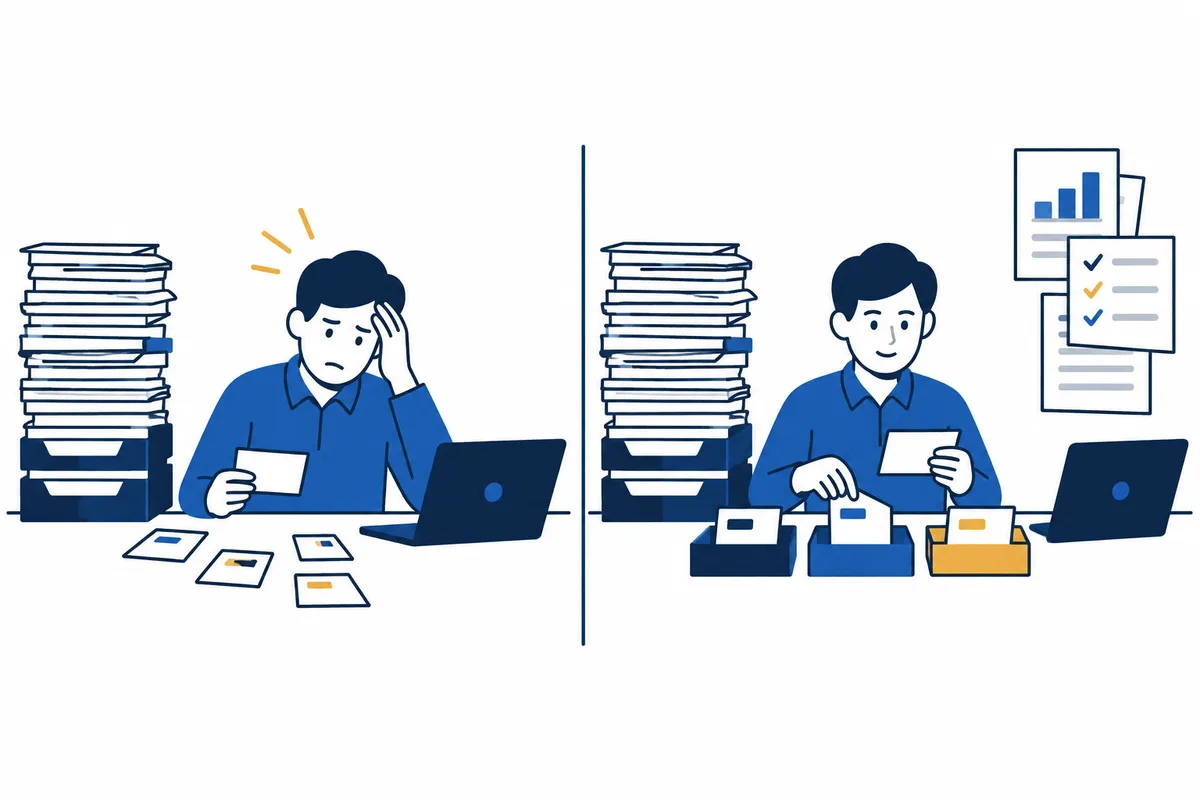
Did workplace EI training change stress outcomes too?
Yes, the workplace-training literature includes studies that measured stress-related outcomes. The important distinction is what the 2024 review actually combined statistically. “Training emotional competencies at the workplace: a systematic review and metaanalysis” included employed adults and analyzed 50 studies, with 3,233 participants, for pre-to-post change in emotional competencies. A separate analysis considered 27 controlled trials. These pooled endpoints concern measured competencies after training; they are not pooled estimates of perceived stress, burnout, or wellbeing. The review’s abstract reports moderate average effects for competency measures, while its outcome inventory also notes that general wellbeing, perceived stress, burnout, and job satisfaction were assessed in several included studies. Both facts belong in the account, but they answer different questions.
The distinction is visible in the measures named in the review. It says several studies assessed general wellbeing with the GHQ-12, perceived stress with the Perceived Stress Questionnaire (PSQ), and burnout with the Maslach Burnout Inventory (MBI); some also assessed job satisfaction. This is direct evidence that workplace training research did not limit every assessment to competency scores. A stress questionnaire or burnout inventory can record an outcome relevant to workers’ experience. Yet an outcome’s presence in individual studies does not mean the review produced a pooled effect for that outcome, nor does it tell us from the inventory alone whether each study found improvement, no change, or a mixed result. The paper’s central meta-analyses aggregate emotional-competency outcomes, and those estimates cannot be relabeled as stress reductions.
For the 50-study pre-post competency synthesis, the review reports an average standardized mean change of 0.44 across time periods; for the 27 controlled trials, its abstract gives a comparative standardized effect of 0.46. The detailed primary pre-post analysis at the first assessment within four weeks reports 0.52, with a 95% confidence interval from 0.32 to 0.71. These numbers describe change in emotional competencies, not a change on the PSQ or MBI. They support the narrower conclusion that measured emotional competencies improved on average in the included workplace training research. They do not estimate how much work stress or burnout changed because of training. The review provides no pooled stress-effect estimate that would justify converting the competency results into a general claim of stress relief.
The authors make that gap explicit in their discussion: available data are not extensive enough to provide a comprehensive overview of work-related outcomes, and further research is needed on the relationship between emotional-competency training and outcomes including work stress. That statement does not erase the direct measures already used. It tells the reader why their existence is not yet enough to answer the broader effectiveness question. Different studies may have assessed different secondary outcomes, with different instruments and designs; the review identifies them as measures used in several studies, not as a common outcome series with one combined estimate. The accurate reading is therefore neither that no stress-related outcomes were measured nor that the meta-analysis showed training reduces workplace stress. It documents measurement, while its synthesis and conclusion leave the general stress effect unresolved.
The strength of the pooled competency result also needs to be read alongside the review’s study-quality findings. Its ROBINS-I assessment judged 18 of the 50 studies at critical risk of bias, largely because before-and-after designs with one post-training assessment leave participant characteristics and time effects as possible confounders. Another 28 studies were rated at serious risk, including concerns about confounding and outcome measurement. In 25 studies, participants and outcome assessors knew about the intervention, and outcomes were self- or peer-reported. Those concerns apply to the competency evidence the review assessed; they are especially relevant when interpreting self-reported change after participants know they received training. They also caution against assuming that the more limited stress measures produce a firm causal result.
Heterogeneity is another material limit. For the primary pre-post competency effect, the review reports I² of 91%, indicating that study estimates varied substantially. Removing studies at critical risk changed the average only modestly, but heterogeneity remained high at 85%, and the prediction interval extended across possible negative and positive effects. The controlled-trial analysis also reported evidence of publication bias; after excluding an influential outlier, the competency effect was smaller. These checks help qualify the competency synthesis. They do not yield a stress estimate, and the wide differences among studies make it harder to assume that an average competency change translates uniformly into workers’ experience of strain.
There is a practical reason to retain both sides of this finding. Perceived-stress and burnout measures show that researchers have begun to assess outcomes closer to the worker’s reported burden, so it would be too narrow to describe this literature as measuring only emotional skill. But the review pools skill outcomes rather than those stress endpoints and says the available data cannot yet give a comprehensive picture of work-stress effects. A worker or manager should therefore treat training as a plausible route to changed emotional competencies, while looking for direct and well-reported stress outcomes before claiming that it reduces strain. Evidence that the skill measure changed and evidence that stress changed are related parts of an evaluation; the former cannot stand in for the latter.
Sources: Training emotional competencies at the workplace: a systematic review and metaanalysis
When is a skill gain evidence of stress relief?
A gain on an emotional-intelligence measure is evidence that the measured capacity or reported tendency changed; it becomes evidence of stress relief only when the evaluation also shows a stress-related outcome changing in the same intervention, over a relevant period, against a credible comparison. The distinction matters because a training program can teach a skill, participants can score higher on it, and the pressure they face can remain exactly as demanding. The score gain is worth reporting. Its endpoint determines what conclusion it can carry.
“Emotional intelligence training among the healthcare workforce: a systematic review and meta-analysis” examined longitudinal training studies involving healthcare workers. Across 17 included studies, the review assessed EI before and after training and reported increased EI measures following intervention. This is meaningful evidence for modifiability in the settings studied: the measured scores were not simply fixed attributes in these samples. A nurse or other healthcare worker may learn to recognize an emotional cue, regulate a response, or handle an interaction differently, and an EI measure may register some change after a course. The review’s result supports a training-related change in EI measurement; by itself, it does not say whether participants experienced less stress at work.
That boundary follows from the outcome, not from a judgment that score change is unimportant. An EI instrument answers a question about the skill or tendency it measures. A perceived-stress scale, burnout measure, or other direct strain outcome answers a different question about workers’ experience. To connect the two, an evaluation needs to measure both and establish their sequence: did the intervention precede a change in the targeted EI skill, and did that change precede a change in stress? If stress improves without a corresponding skill change, the program may have worked through another route. If skill scores improve while stress does not, the training may still have developed a competency, but the evidence does not support a stress-relief claim.
A comparison group strengthens that inference by showing what happened over the same period without the training. Otherwise, a lower stress score after a course could coincide with a quieter rota, completed project, staffing change, or other shift in exposure. Timing also has to fit the claim: a measure collected immediately after a workshop might capture short-term response or expectation, while persistent strain requires follow-up long enough to see whether change lasts under ordinary working conditions. The stress measure should match the claim as well. A calmer response during a simulated conversation is not equivalent to reduced ongoing workload or burnout across months. Context matters too: healthcare roles differ in patient contact, shift patterns, staffing, and exposure to distressing events. A training effect observed in one workforce cannot automatically predict the experience of an office worker facing conflicting deadlines, or even another clinical unit with different demands. Evaluators need to describe the conditions under which both skill and strain were assessed, including follow-up duration and the workers’ actual exposure during that period.
The healthcare review’s authors describe heterogeneous studies, substantial reliance on self-report, small samples, design flaws, and possible publication bias. Those limits narrow how confidently its pooled EI change can be generalized, but they do not erase the signal that measured EI increased after training in the included research. The careful conclusion is two-part: healthcare training studies offer evidence that EI scores can move, while the size and durability of that change—and whether it translates into lower strain—need outcomes and comparisons designed to test those links. Skill gains deserve credit as skill gains; stress relief requires its own evidence.
What if the pressure stays after the response changes?
When strain keeps returning, examine the work conditions that repeatedly produce the demand as well as the response a person can practice. Emotional skill operates at the level of noticing, interpreting, and responding to an event. Work design operates at the level of how much work arrives, how much control workers have, what support is available, and whether responsibilities are clear. Improving the first may help someone navigate a difficult exchange; it cannot by itself redistribute workload, clarify authority, or create the time needed to finish a task. Keeping the levels distinct also prevents a useful personal skill from becoming an all-purpose explanation for strain. If a worker stays composed during a rushed handoff, that may improve the interaction; it does not establish that the handoff was adequately staffed or that its deadline was workable.
The World Health Organization’s “WHO guidelines on mental health at work: Recommendations” places organizational interventions among its recommended approaches to workplace mental health. These interventions are directed at psychosocial risks in the work environment, and the guideline calls for risk assessment to inform planning and monitoring. Workload, job control, support, and role ambiguity are examples of conditions that can shape recurring exposure. The recommendation is conditional, and WHO rates the certainty of evidence for universal organizational interventions as very low. That is a reason to assess risks and choose responses with care, not a basis for promising that a particular redesign will resolve stress.
The guideline’s structure also matters: it addresses organizational interventions alongside manager training, worker training, individual interventions, and return-to-work support. WHO therefore treats action at work-design and individual levels as parts of a broader response, rather than assuming one level can substitute for the other. A worker might practice naming frustration before replying to a colleague; if the same conflict repeats because decision rights are unclear, the response skill and the role condition call for different actions. One can change the conversation; the other may require a manager or organization to review how the work is assigned and governed.
For an individual, this distinction gives a practical way to describe a recurring problem. Bring a specific pattern to an appropriate work conversation: what demand keeps recurring, what part of the response is within your control, and what condition—capacity, priorities, support, or clarity—would need review? This is not a diagnosis of the workplace or proof that a condition caused a particular episode. It makes the concern concrete enough to discuss, instead of treating every difficult week as evidence of a personal deficit. A conversation might lead to clarifying which requests take priority, checking whether staffing matches expected demand, or agreeing on who can resolve a blocked decision. These are questions for review, not prescribed fixes: the appropriate response depends on what the assessment shows and on the workers affected. WHO’s recommendation supports taking the risks seriously while its very low certainty rating cautions against assuming that one universal organizational measure will work in every setting. WHO’s emphasis on assessing psychosocial risks supports that kind of examination while leaving the choice and effect of any intervention open to local evidence.
A difficult interaction can still call for better listening, emotional regulation, a boundary, or repair. Those practices matter because they shape what a person contributes to the next exchange. But when the pressure persists across situations, treat repeated exposure as information about the system surrounding the interaction too. The distinction keeps personal development useful without asking it to solve a workload or role problem it cannot reach.
Sources: WHO guidelines on mental health at work: Recommendations; WHO guidelines on mental health at work

How could someone tell whether stress itself changed?
A practical claim becomes more credible when it rests on repeated episodes and keeps the emotional response separate from the demand that prompted it. This is an observation aid, not a validated checklist or a way to calculate how much stress EI removed. The point is to make the sequence visible: what was happening at work, what response someone tried, what changed around them, and how strain unfolded afterward.
Imagine a recurring Monday handoff where unfinished requests arrive just before a fixed deadline. In one instance, the employee notices irritation, pauses before replying, asks which request takes priority, and later records whether tension eased and how long it took to recover. The note should also capture the conditions: how many requests arrived, whether the deadline moved, whether a colleague helped, and whether responsibilities were clearer. If the next handoff feels easier after support was added, that change belongs in the account alongside any improvement in pausing or asking for clarity. Otherwise a change in workload could be mistaken for a change in emotional skill.
Over several comparable handoffs, brief notes can show whether a particular behavior is becoming more available and whether difficult episodes are followed by less lingering strain. They can also reveal a mismatch: the response improves, while the same late requests and deadline continue to produce exhaustion. In that case, the record gives the employee something more specific to raise in a work conversation—such as the recurring timing or unclear priority—than a general statement that work feels stressful. If the demand has changed, that is useful information too; it may explain why later episodes felt different.
A useful comparison does not require a formal scale. A few contemporaneous words may be enough to distinguish what someone noticed from what they inferred later: the request arrived after a late change; I asked which task could wait; my shoulders stayed tense through the afternoon. On another occasion, the same question may have led to a clearer priority and a shorter recovery. Concrete descriptions make the account easier to revisit without pretending that each episode is equivalent. If recording details becomes burdensome, keep only the observations that help answer the practical question at hand.
The comparison remains personal and imperfect. Memory favors vivid episodes, work rarely repeats under identical conditions, and a quieter week, extra support, or better sleep may coincide with a new response. A short log cannot hold all of those influences constant or show that EI caused a change in stress. Its value is narrower: it helps someone decide what to practice next and gives a manager a clearer account of recurring exposure. Keep any profile result upstream as a prompt for reflection. Whether behavior changed, pressure shifted, or recovery felt different must be judged from what happened in the work itself.
What can a profile responsibly help you choose?
Choose one behavior for a recurring moment: for example, naming the emotion before answering feedback, checking an assumption during disagreement, or making a clear request when priorities collide. Notice what happens when you try it, and keep the work demand and your later recovery in view. If the same pressure keeps returning, bring that pattern to an appropriate work conversation rather than asking a personal skill to solve it alone. Keep the choice small enough to notice in an ordinary exchange, and specific enough that another person could recognize it: ask one clarifying question, pause before sending a difficult reply, or acknowledge an impact and make a repair. The aim is a deliberate next practice, not a target score.
The private 32-item Emotional Skills Profile can give you a structured prompt for reflecting on recent behavior and scenario judgments across recognition, understanding, regulation, and responding to others. It is an educational profile, not proof that stress will fall. [Explore the Emotional Skills Profile](/assessment) and use the reflection to choose a behavior worth observing in your own work.
Sources: Emotional Skills Profile
Questions readers ask
Does emotional intelligence reduce workplace stress?
It may relate to stress responses and recovery in some contexts. Workplace training studies have also assessed perceived stress, burnout, and wellbeing, but the evidence is not sufficient to establish a dependable reduction in ongoing workplace stress.
Can emotional intelligence training reduce stress?
Reviews report improvements in measured emotional competencies, and some included workplace studies assessed stress-related outcomes. Competency gains alone do not show that stress fell; evaluations need direct stress outcomes and a credible comparison.
Can an EQ profile help with work stress?
The private 32-item Emotional Skills Profile can prompt reflection on recent behavior and scenario judgments. Use it to choose a behavior to observe or practice; it does not predict stress outcomes.
Sources
- Does Emotional Intelligence Buffer the Effects of Acute Stress? A Systematic Review
A review of 45 experimental studies finds mixed, context- and measure-dependent evidence on EI and acute stress reactivity/recovery; it cannot establish reduced recurring workplace demands.
- Emotional Intelligence Buffers the Effects of Negative Emotions on Job Burnout in Nursing
In questionnaire data from 188 female nurses at three hospitals in northern Poland, trait EI moderated associations between negative work emotions and burnout; cross-sectional self-report data do not establish causation or reduced exposure.
- Training emotional competencies at the workplace: a systematic review and metaanalysis
The review pooled workplace emotional-competency training evidence and also reports that perceived stress, burnout, general wellbeing, and job satisfaction were assessed in several included studies; it says evidence is insufficient for a comprehensive view of training effects on work stress.
- Emotional intelligence training among the healthcare workforce: a systematic review and meta-analysis
The review includes 17 longitudinal healthcare-worker training studies and reports post-intervention increases in EI measures; self-report reliance, small samples, design flaws, and publication bias constrain interpretation, and EI gains alone are not stress outcomes.
- WHO guidelines on mental health at work: Recommendations
WHO treats organizational interventions to mitigate psychosocial risks as a distinct intervention category and recommends assessing work-related risks; certainty for universal organizational interventions is very low.
- WHO guidelines on mental health at work
The WHO guideline covers organizational interventions, manager training, worker training, individual interventions, and return-to-work support, distinguishing levels of action relevant to workplace mental health.
- Emotional Skills Profile
The assigned product is a private 32-item educational reflection profile across recent emotional behavior and authored scenarios; the brief defines its scope and says it has no validated norms or established stress-reduction prediction.
Apply it to the real situation
Choose one emotional behavior to practice at work
From this guide: Notice whether a recurring stress moment involves a response you can practice, a work condition that needs attention, or both.
The evidence distinguishes emotional responses and recovery from the work demands that can keep returning. The private 32-item Emotional Skills Profile offers a structured way to reflect on recent behavior and scenario judgments, then choose a behavior to observe or practice. Use that reflection alongside what you notice about strain and work conditions. Explore the profile if a clearer view of your habits would help you decide what to practice next.