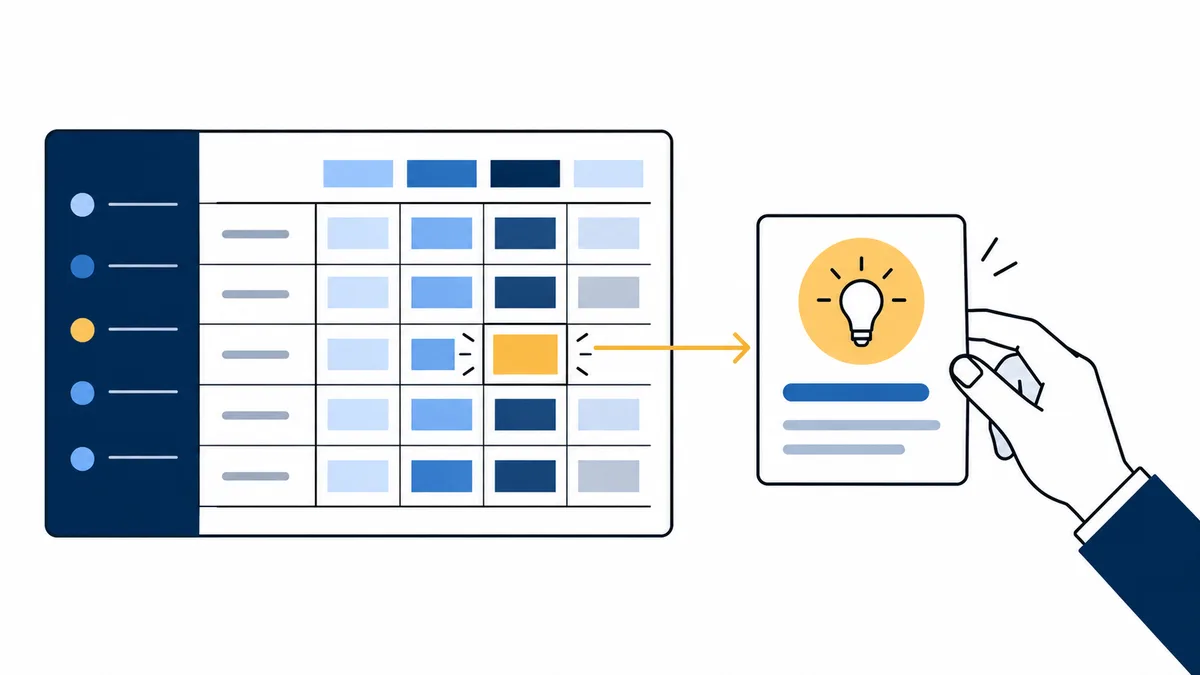
An EQ assessment can be worth paying for when its report gives you a structured, relevant behavior to examine and a way to turn that reflection into practice. A broad score alone is weak justification when you already know the one behavior you want to change. Self-report profiles summarize perceived typical habits; ability tests sample performance on emotion tasks. Neither automatically shows what happened in one conversation. For a specific work habit, begin with a recent example and behavior-focused feedback if those are available. Pay for added structure when it clarifies a useful next question you would otherwise struggle to form, then test that behavior in real interactions.
A score is useful only if it changes what you will practice
After a tense meeting, someone may decide they want to stop replying defensively to critical feedback. The paid-test question seems straightforward: will an EQ assessment tell them what to do differently next time? The answer depends on what the tool actually measures and what its report gives back. A single total score cannot, by itself, explain a particular exchange or identify the one move that would improve it.
The purchase is easier to judge as an incremental-value question. What would the assessment add beyond remembering one recent interaction, writing down what happened, and asking a trusted colleague for specific feedback? It might organize a broad concern into areas worth examining, or provide prompts that make reflection easier. If it only gives a general label or number, and the behavior is already clear, the reader may have little reason to pay for it.
This distinction matters because evidence that emotional competencies can develop is not the same as evidence that buying a test causes development. Training research evaluates programs involving teaching, practice, feedback, or other activities. The assessment may help someone choose a question, but the work of trying a different response happens afterward. The sound purchase standard is therefore modest: does this report make a useful practice target clearer, and is that extra structure worth its cost to me?
The same standard applies if the hoped-for benefit is confidence. A high or low result may feel decisive, but the decision at hand is narrower: what response would be useful when feedback lands? A report earns practical value only if it helps the reader form a better question or choose an action. The emotional label is background; the next observable move is what can be tried.
What would the assessment need to tell you?
Start by asking what kind of information would answer the question. Ability emotional intelligence refers to performance on tasks that involve emotional information. Trait emotional intelligence refers to self-reported typical tendencies and experiences. Mixed competency measures may combine self-ratings, broader workplace skills, or other perspectives. These formats overlap in subject matter, but their outputs are not interchangeable. O’Connor and colleagues’ critical review of six widely used measures recommends matching the measure to the purpose: ability tests for questions about maximal performance and trait measures for questions about typical performance.
Suppose the concern is speaking too quickly when a colleague challenges a proposal. A self-report item about how often someone pauses before responding asks them to summarize their perceived usual conduct. A performance task might ask which interpretation or response fits a written emotional scenario. An observer rating might record what colleagues see in meetings. Those are different evidence sources. None necessarily captures the exact meeting where the person felt criticized, and a task answer is not a recording of everyday behavior.
Before paying, read the tool’s explanation of its model and response format. Does it ask about recent behavior, broad self-perception, emotion problems, or observations from other people? Is its report designed to describe patterns, suggest development questions, or compare performance with a reference group? A tool that answers a different question from yours can be technically elaborate and still be a poor purchase. For one behavior to practice, a clear account of what you tend to do may be more relevant than a score from an emotion-reasoning task. That is a fit judgment, not a claim that one format is universally better.
The review concerns established measures examined by its authors; it does not validate every commercial product or the Emotional Skills Profile discussed later. It does, however, supply a useful buying test: judge the tool against the kind of evidence you need, rather than against the broad promise of measuring EQ.
It also helps to distinguish a measurement from a recommendation. A questionnaire can gather answers and summarize them according to its own model. A report may then add interpretations or practice suggestions. Those later steps are not all the same kind of evidence. A buyer can ask which parts come directly from their responses and which parts are guidance written by the provider. This is especially useful when a polished report sounds more certain than the response format warrants.
What can a self-report score support?
A self-report can summarize how a person sees their usual emotional habits. It does not directly document what they did in one disagreement. That distinction is easy to miss because reports often use behavioral language: listening, regulating a reaction, noticing another person’s feelings, or handling conflict. The respondent still supplies the account. Their answers can reflect what they remember, what they notice about themselves, and how they understand the question.
The 2019 critical review discusses self-report measures as relevant to typical behavior and notes that some trait measures may be useful in development and coaching. It also identifies reliance on self-knowledge as a limitation. If a person says they listen carefully, the answer tells us how they assess their usual listening. It does not establish whether they interrupted during Tuesday’s project review, or whether a colleague experienced that moment as dismissive. The report can suggest a hypothesis to check; a specific interaction supplies a different kind of evidence.
This is not a reason to dismiss a self-report. Broad self-perception can help someone notice a theme they had not named, especially when the questions ask about situations they encounter often. But a useful report should make it possible to move from a theme to an observable question. “I should be more empathetic” is hard to test. “When someone raises a concern, do I ask what they need before offering a fix?” describes an action that can be noticed in a conversation.
A sensible follow-up is to compare the report’s suggestion with a recent example. If the profile points toward listening, choose one exchange and recall what the other person said, what you did next, and what happened afterward. If memory is uncertain, ask someone who was present about the action, not for a verdict on your character. That makes the report useful as a starting point while leaving the behavior open to correction. It also keeps a broad score from carrying more authority than the information behind it supports.
Context can change how a self-report answer should be read. Someone may stay composed in routine one-to-ones and become abrupt when a deadline is threatened. If the questionnaire asks about behavior “in general,” the answer may average across both settings and hide the condition that matters. A reader can use the report to ask where a tendency appears: with whom, under what pressure, and at what point in an exchange. That refinement often matters more for practice than deciding whether a broad domain score is high or low.
Does a scored task settle the question?
A performance-based test samples how someone handles emotion-related problems under test conditions. That can answer a different question from “What do I tend to do when I feel challenged at work?” A score from a task is not a direct measure of a recurring conversational habit. Even the interpretation of established ability tests has been debated, so a paid test should not be assumed to provide a definitive explanation of everyday behavior.
The publisher abstract for Andrew Maul’s 2012 analysis of the Mayer–Salovey–Caruso Emotional Intelligence Test (MSCEIT) argues that the full reasoning from observed test performance to an underlying emotional ability had not been comprehensively examined. Maul calls for a stronger account of why people perform differently. This is a critique of the MSCEIT’s interpretive case, not evidence that all ability measures fail or that no test task captures emotional reasoning.
In a response published the same year, John Mayer, Peter Salovey, and David Caruso defend the MSCEIT scoring approach. Their abstract says they reanalyzed its standardization sample of 5,000 and organized evidence from four articles relating test scores to other measures. Because the response comes from the test’s developers, its claims should be attributed to them; it does not independently settle the disagreement. The two abstracts establish a real dispute about how observed answers support claims about an underlying ability.
For the buyer with one behavior in mind, the dispute changes the question to ask. If you want to know how you perform on emotional reasoning problems, an ability task may be relevant. If you want to stop interrupting during tense feedback, you need evidence about that behavior and a way to practice it. A scored task may enrich a broader picture, but its format alone does not make it a conversation-level diagnosis. The article’s practical comparison remains between the report’s added value and what focused reflection or feedback could already tell you.
A task can also have value without answering every question. It may show how a person handles the particular problems included under its scoring rules. The important boundary is the step from task answers to claims about behavior outside the test. The Maul and Mayer, Salovey, and Caruso exchange concerns that inferential step for the MSCEIT. Neither abstract makes the reader’s work situation disappear; neither supplies direct evidence about how often a respondent pauses, listens, or repairs a strained exchange.
Sources: The Validity of the Mayer–Salovey–Caruso Emotional Intelligence Test (MSCEIT) as a Measure of Emotional Intelligence; The Validity of the MSCEIT: Additional Analyses and Evidence
What is the fair free alternative?
When the target behavior is already fairly clear, try a short incident review before buying a general assessment. Write down the setting, the observable action, and what followed. Keep interpretation separate. “I interrupted before the project lead finished describing the delay” is an observation. “I am bad at empathy” is a broad judgment that the event does not establish. Then ask a person who was there a narrow question: “Did I cut you off before you finished? What would have helped you continue?”
This approach is informed by research on self-awareness learning, not by a trial proving that a free log is as effective as a paid EQ test. The Annual Review article “Developing Self-Awareness: Learning Processes for Self- and Interpersonal Growth” brings together work on reflection, feedback, mindfulness, and coaching. Its subject is how people develop self- and interpersonal awareness; it is not a direct price comparison between assessments and private reflection. The practical method here is an editorial synthesis of that broader evidence, not a protocol with a guaranteed result.
The free route has real limits. A single incident may be unusual. Memory can favor the explanation that feels most comfortable. A colleague may not have seen the exchange clearly, or may not feel safe giving candid feedback. Asking someone to rate your EQ also invites a vague overall judgment. Asking about one visible action gives the conversation a narrower job and makes disagreement easier to examine.
A paid report may add value when the concern is diffuse, when the person wants prompts to sort several areas, or when a private structure makes reflection easier than starting from a blank page. It may add little when the behavior and next experiment are already obvious. The fair comparison is not “test versus no development.” It is the report’s actual added clarity versus a low-cost process that can already define and check the behavior.
If you use a written log, keep it brief enough to repeat. Note what was said or done, the immediate cue, your response, and what you would try next time. Do not turn the page into a verdict about your personality. After a few relevant situations, look for whether the same action appears under similar conditions. This repetition is a practical way to avoid building a conclusion from one memorable exchange, though it still depends on honest recall and access to useful feedback.
Sources: Developing Self-Awareness: Learning Processes for Self- and Interpersonal Growth
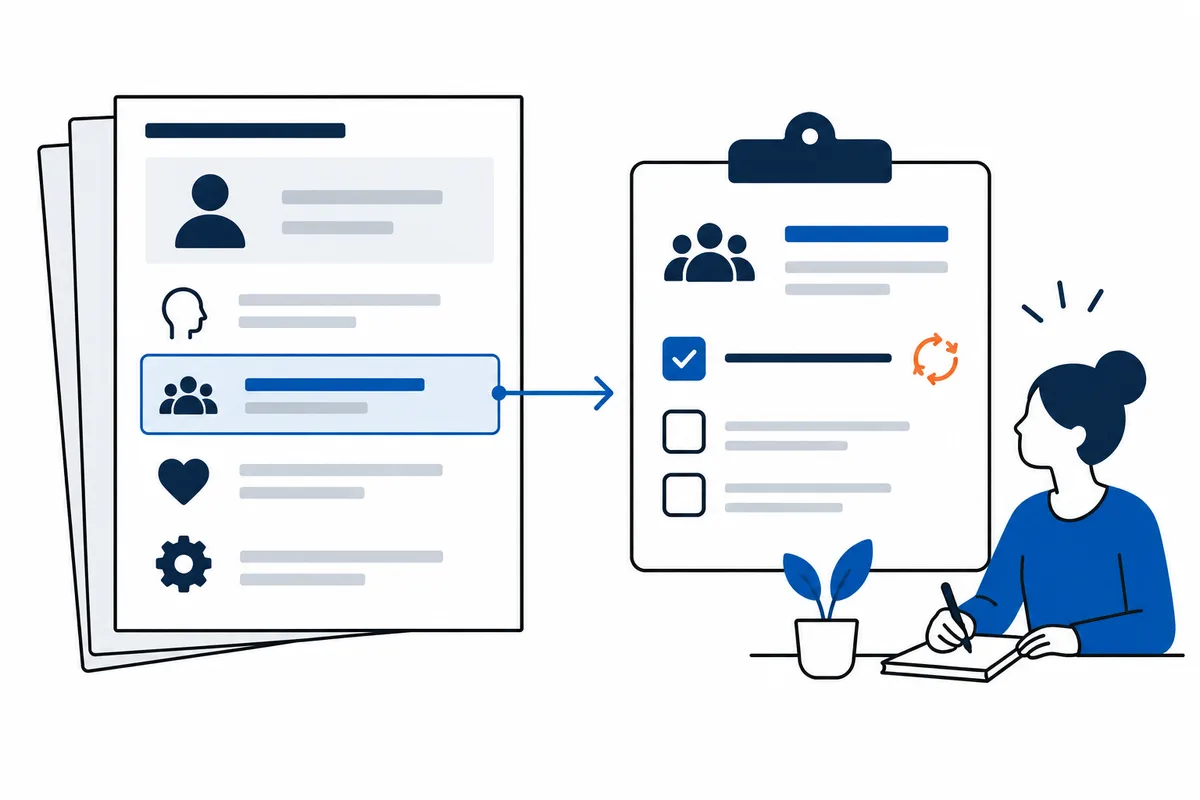
Does practice change behavior, or only the score?
Research supports the possibility that emotional competencies can improve through training, but it does not establish that purchasing an assessment is itself an effective intervention. That distinction should shape the budget. A report can frame a practice question; training, feedback, rehearsal, and use in real situations are the kinds of activities that may develop a skill.
In a 2019 meta-analysis, Victoria Mattingly and Kurt Kraiger combined 58 published and unpublished studies of emotional-intelligence training. They reported a moderate positive training effect and found that effects were relatively robust across gender and across ability and mixed-model measures. The authors also reported larger effects in published studies than in dissertations. The population and programs varied across the included research, so this result supports the general possibility of training-related change; it does not show that a self-guided buyer will improve after taking a test, or that a particular behavior will change by a predictable amount.
A 2024 systematic review and meta-analysis by Miriam Mehler and colleagues focused on workplace interventions. It included 50 studies in its pre-post analysis and 27 controlled trials in the comparison analysis. The controlled-trial estimate was a moderate average effect on emotional competencies (standardized mean difference 0.47, 95% confidence interval 0.31 to 0.62). The review reported high heterogeneity, a wide prediction interval, and substantial risk-of-bias concerns; most included studies used self-report measures, and only seven of the 50 used ability tests. The average therefore should not be read as a promise for every program, person, or skill.
Together, the reviews make practice a plausible investment, while leaving the value of assessment alone unanswered. Some programs include assessment, but their combined design cannot isolate the test’s independent contribution. If paying leaves no time, support, or intention to try a behavior, the research on training does not supply a reason to expect the score itself to do the work. A buyer should consider whether the report helps begin a learning process they will actually use.
The effect estimate is a group-level summary across interventions and outcomes, not a forecast for a reader. The wide prediction interval in the workplace review makes that distinction visible: results varied, and some settings could plausibly see smaller or different effects. The review’s follow-up analysis also draws on only eleven studies, with very high heterogeneity. This evidence makes a confident promise about a single person’s timeline inappropriate. It supports a more limited conclusion: structured development can help on average, while the size and transfer of benefit remain dependent on the program and its measurement.
Sources: Can emotional intelligence be trained? A meta-analytical investigation; Training emotional competencies at the workplace: a systematic review and metaanalysis
When does a paid report add enough value?
A report is easier to justify when it names what it measures, gives information relevant to the reader’s concern, and helps turn a broad theme into a behavior worth checking. That standard does not require a universal price threshold. What feels worth paying for depends on the price, the reader’s alternatives, and whether the structure solves a real problem for them.
A sample Emotional Intelligence Appraisal report from TalentSmart illustrates one possible product format. The provider says respondents report what they perceive themselves doing regularly; the sample report presents an overall score, four skill scores, lower-rated behaviors, practice strategies, reflection questions, and a development-planning tool. This tells us what the provider’s sample includes. It does not show that those recommendations cause behavior change or that the same features are present in other products. The sample is useful for inspecting deliverables before purchase: does the report offer a practice prompt, or mostly a score and descriptive language?
The 32-item Emotional Skills Profile at EQ Test is an educational reflection tool. It covers recognition, understanding, regulation, and responding to others, with summaries of recent behavior kept separate from judgments on authored scenarios. It has no validated norms or established ability-test validity. A reader considering it can value the privacy and structured prompts as practical features, while understanding that it does not provide a standardized ability rank or externally verified account of a specific conversation.
Before paying for any profile, check whether its method and report explain what the answers represent; whether the feedback is specific enough to become one action; whether scenario judgments and self-described habits are distinguished; and whether an accessible alternative would give you the same next step. A modest report can be personally worthwhile without being a validated predictor. For EQ Test’s profile, the supported offer is a private, organized starting point for reflection, not a guarantee that it will identify the right behavior for everyone.
A buyer can also inspect what happens after the result appears. Does the report explain its terms in plain language? Does it invite the reader to consider a situation and choose an action, or does it present a category as if it settled the issue? Is the report private in the way the reader expects? These are practical product questions, not psychometric evidence. The brief describes EQ Test’s profile as a private local report; readers should still review the live page’s current details before deciding whether its format and privacy information suit them.
Sources: Results Report for: Emotional Intelligence Appraisal – Self Edition
Choose one next behavior, then see what happens
Return to the original question: does an assessment provide enough evidence to justify paying when you need one behavior to practice? Sometimes. If the report adds a useful structure, clarifies a question you could not yet name, and gives you a prompt you are willing to check, paying may be reasonable. If you already know what you want to practice and can get specific feedback, start there. A broad EQ score is not, by itself, a strong reason to buy.
For the opening example, the next action could be small: in the next feedback conversation, wait until the other person finishes, then ask one clarifying question before explaining your view. Afterward, note what you observed and whether the exchange unfolded differently. This is a practical experiment, not a validated intervention or a promise of improved outcomes. If the action does not fit the situation, revise it rather than treating one attempt as a verdict on ability.
The assessment earns a place when it makes that next experiment clearer. The experiment supplies the next piece of evidence about the behavior. Readers who want a structured, private reflection route can explore EQ Test’s Emotional Skills Profile at /assessment; its result is a starting point for examining habits and scenarios, not a finding about what happened in any one meeting.
For a useful trial, choose a narrow response that can be remembered without monitoring yourself constantly. Pausing long enough to ask one clarifying question is easier to review than trying to “be more emotionally intelligent” all day. You can note whether the question helped reveal the other person’s concern, whether it changed your interpretation, and whether another response would fit better next time. The point is to learn from the exchange, not to force the situation to confirm the profile.
Questions readers ask
Can an EQ test tell me the exact behavior to practice?
It may suggest an area for reflection, depending on its model and report. A self-report summarizes perceived typical habits, while an ability test samples performance on emotion tasks. Neither automatically documents a specific workplace exchange. Check any suggested behavior against a recent example or focused feedback.
Is a free EQ assessment enough?
It may be enough if it helps you name a behavior and choose a useful next step. Compare what the free option actually provides with the paid report’s added structure, guidance, and privacy terms. A price or longer questionnaire does not by itself establish better evidence.
Does taking an EQ assessment improve emotional skills?
Training research finds average improvement across evaluated programs, but those programs include learning activities and do not show that assessment alone causes change. Treat the assessment as a possible way to frame reflection; practice and feedback are separate parts of development.
What is the EQ Test Emotional Skills Profile?
It is a private, 32-item educational reflection profile covering recognition, understanding, regulation, and responding to others. Recent-behavior summaries are kept separate from scenario judgments. It has no validated norms or established ability-test validity, so use it as a reflection starting point rather than a standardized score.
Sources
- The Measurement of Emotional Intelligence: A Critical Review of the Literature and Recommendations for Researchers and Practitioners
Reviews six established measures, distinguishes ability, trait, and mixed approaches, and recommends matching measure type to maximal- or typical-performance questions.
- The Validity of the Mayer–Salovey–Caruso Emotional Intelligence Test (MSCEIT) as a Measure of Emotional Intelligence
The publisher abstract presents Maul’s critique that the full inference from MSCEIT performance to underlying ability had not been comprehensively examined.
- The Validity of the MSCEIT: Additional Analyses and Evidence
The publisher abstract records the test developers’ response defending scoring and reporting reanalysis of a standardization sample of 5,000.
- Developing Self-Awareness: Learning Processes for Self- and Interpersonal Growth
A review synthesizing learning processes for self- and interpersonal awareness, including reflection, feedback, mindfulness, and coaching; it is not a paid-test comparison.
- Can emotional intelligence be trained? A meta-analytical investigation
University-hosted record for a meta-analysis of 58 published and unpublished EI training studies reporting a moderate positive training effect.
- Training emotional competencies at the workplace: a systematic review and metaanalysis
Workplace review includes 50 pre-post studies and 27 controlled trials, reports a moderate mean controlled effect, and discusses high heterogeneity and risk-of-bias limitations.
- Results Report for: Emotional Intelligence Appraisal – Self Edition
Provider sample shows the report’s stated deliverables, including self-perceived behavior summaries, strategy prompts, reflection questions, and development planning; it is not outcome evidence.
Apply it to the real situation
Turn an EQ reflection into one behavior to examine
From this guide: A general theme can still leave you wondering what to try in your next conversation.
The Emotional Skills Profile offers a private, structured reflection across recognition, understanding, regulation, and responding to others. It separates summaries of recent behavior from judgments on authored scenarios, giving you material to consider as you choose a practical question for yourself. Use the profile as a starting point for reflection, then compare any useful prompt with what happens in real interactions.